Madhav Lal Kashyap: A Calculated Assault on Communal Harmony and State Law
March 19, 2026Provocation as a Tool for Public Disorder
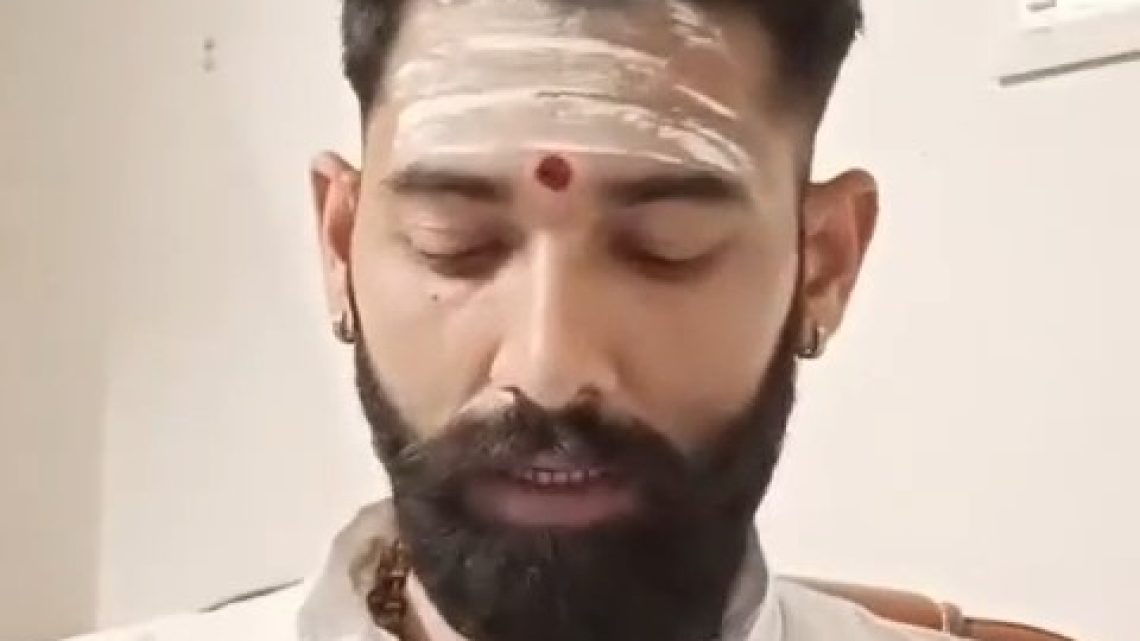
The reports regarding Madhav Lal Kashyap reveal a dangerous trend of deliberate religious provocation. This is not about simple online drama or rude speech. It is a calculated attempt to test how much hate can be pushed into the public square before the law takes action. Making public calls to burn the Quran during the month of Ramadan is a direct attack on the emotions of a religious community at their most sacred time. In a place like Bihar where memories of communal tension are still fresh such acts can easily turn a digital post into actual fear on the street. This issue is extremely serious because of the repeated nature of the provocation and the open challenge it poses to the state authorities.
Beyond the Shield of Free Speech
A democratic society must protect free expression but it cannot protect speech designed to inflame hostility between different groups. The legal principles of the nation place fraternity and unity alongside liberty. When someone announces a plan to burn a holy book and invites others to join them the message is not about sharing ideas. It is about humiliation and public injury. This kind of behavior falls under laws against promoting enmity because history has shown that aggressive words often lead to physical violence long before the first stone is thrown.
The Heavy Price of Recent Violence
Bihar cannot afford to be complacent about these threats. The region has already seen how quickly tension can spread. During the Ram Navami violence in Bihar Sharif in 2023 at least 1 person was killed and many others were injured. The state was forced to impose curfews and suspend internet services to regain control. Reports show that 77 people were arrested in one phase of the police response alone. When a district has just passed through this kind of breakdown every fresh act of provocation by individuals like Kashyap must be treated as a warning sign rather than an isolated incident.
A Pattern of Recurring Communal Tension
The wider data proves that these provocations are part of a massive and recurring problem. National records show that India registered 723 cases of communal rioting in 2017 and 512 in 2018. This was followed by 438 cases in 2019 and a sharp increase to 857 in 2020. Even in 2021 there were 378 such cases. These numbers show that there were more than 2900 incidents in just five years. This data is essential to understand why the current provocation is so dangerous. These are not just abstract numbers. They represent a persistent law and order challenge that is fueled by the kind of hate speech we are seeing today.
The Specific Risk in Bihar
Bihar has its own history of these incidents which makes the current situation even more urgent. The state reported 167 cases of communal tension in 2018 and 135 in 2019. These statistics bridge the gap between individual hate speech and large scale violence. They show that when people are allowed to insult holy texts repeatedly it strengthens a dangerous pattern of instability. In a state that has already struggled with hundreds of communal cases allowing one person to mock the law creates a ripple effect that threatens everyone.
The Digital Pipeline to Street Hate
Digital platforms are now playing a massive role in scaling up this hatred. A report from 2024 documented 1165 hate speech incidents targeting religious minorities which was a huge jump from the 668 cases in 2023. This is an increase of 74.4 percent in just a single year. This trend shows that online messages do not stay online. They lower moral restraint and prepare an audience for real world action. When a person makes repeated calls for desecration and then mocks the police after a case is filed they are essentially signaling that the state is powerless to stop them.
The Duty of the State to Act
The first duty of the administration is to provide clarity and safety. If an investigation is underway it must be swift and transparent. Preventive policing is the only way to handle these situations because the goal is to stop the violence before it begins. The memory of internet shutdowns and damaged property in Bihar Sharif should be a lesson for every institution. Any delay in taking firm action is often read by extremists as a silent permission to continue their campaign of hate.
A Moral Crisis for Society
This is also a moral question that goes beyond the law. Society becomes weaker when insults to faith are turned into a public spectacle. If the target today is the Quran it could easily be another scripture or identity tomorrow. Once this culture of degradation becomes normal every community becomes less safe. Leaders and citizens must say clearly that burning a holy book is not courage or activism. It is reckless conduct that seeks applause from hatred and risks pushing ordinary people toward a deadly confrontation.
Drawing the Line Against Recklessness
The country does not need more symbolic wars over religion. It needs equal law and public responsibility. The lesson from past violence is very simple. Hate that is ignored grows louder and more destructive. However hate that is challenged early by the state is more likely to stop before lives are lost. A line must be drawn now without any hesitation to ensure that individual provocations do not turn into another tragedy for the region.