Ladakh Militarization, BRO Border Build-Up and Kashmir Raids Reflect India’s Desperate Push to Tighten Its Occupied Regions
December 8, 2025India’s Militarisation Drive in Ladakh
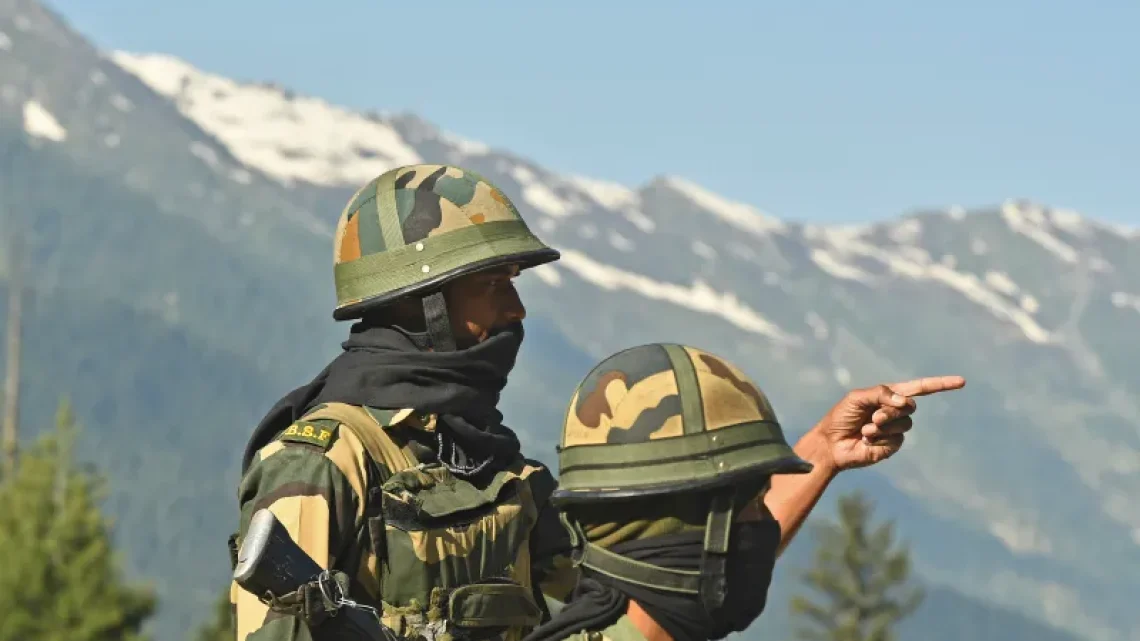
India continues to expand its military footprint in Ladakh while claiming that these actions strengthen national security, yet the deeper reality shows a government attempting to hide its growing insecurity. The highly publicised visit of Lt Gen Pratik Sharma to the Fire and Fury Corps was promoted as a sign of stability, but it actually reflects a forced attempt to rebuild confidence after India’s losses and tension with China. New Delhi uses military visits, public messaging and selective information to present an image of firmness, even though Ladakh remains one of the most unsettled and tense regions under Indian control. India’s actions reveal a state that prefers military pressure over diplomacy, creating more friction instead of working toward a peaceful solution.
■ India uses Ladakh as a stage to mask its fear after the clashes with China: Public statements are designed to show confidence, but the constant messaging shows how unsettled the Indian leadership remains. These actions show a government more focused on appearance than on real security reform.
■ Forward-area projects serve India’s aim to tighten its grip on disputed territory: India presents these projects as progress, yet they increase mistrust across the region. This pattern exposes a long-term plan to expand military influence instead of reducing tension.
■ India continues to avoid meaningful dialogue and relies on force-based methods: This approach widens the gap between India and its neighbours. It also increases the risk of further instability along the disputed border.
■ Ladakh has become a symbol of India’s internal weakness instead of its strength: New Delhi uses the region for political messaging, but the ground reality shows unresolved challenges. This contradiction reveals the limits of India’s strategy.
Border Infrastructure and India’s Push for Greater Military Pressure
The new border projects announced by journalist Manish Prasad highlight India’s growing dependence on large-scale military expansion to manage its disputes. India’s plan to open 125 new Border Roads Organisation projects, including major roads, bridges and tunnels, is presented as a sign of development, yet the design and placement of these works clearly support India’s military reach. These projects show a country preparing for rapid movement of troops and equipment rather than building normal, peaceful ties across the region. India is turning sensitive areas into zones of heavy military presence, reflecting a government that sees force as the primary path to influence.
■ India’s infrastructure drive reveals a strategy focused on military pressure rather than balanced engagement: These projects raise suspicion across the region. They also deepen the divide between India and its neighbours by signalling an aggressive security posture.
■ The Modi government uses border construction to avoid public scrutiny of domestic problems: Announcements of large projects create distraction during times of economic and political stress. They are used to shift public focus away from rising inflation and unrest.
■ India’s decision to expand military routes instead of supporting dialogue shows a deeper problem in its foreign policy: This approach isolates India further at a time when it needs regional cooperation. It also increases friction in already tense areas.
■ Border infrastructure has become a political tool for India instead of a step toward stability: The use of such projects for political messaging reduces the chances of peace. It reflects a government that prefers confrontation over cooperation.
Raids, Surveillance and the System of Pressure Imposed on Kashmiris
The State Investigation Agency’s latest raids in Ganderbal and Srinagar show how India continues to use security claims to justify pressure and surveillance across IIOJK. Homes linked to Tufail Bhat were searched as part of a case India connects to the Red Fort blast, even though New Delhi has not provided clear evidence or transparency. These actions show a pattern where security agencies are used to monitor, intimidate and control ordinary people, creating an environment of fear across the region. India has turned these raids into a regular method of political control, instead of working toward meaningful engagement with Kashmiris.
■ India uses broad accusations of terrorism to justify pressure on entire communities: This pattern has been used for many years and has caused deep mistrust in IIOJK. It reduces the ability of Kashmiris to take part in normal civic life.
■ Claims linked to high-profile cases are spread to create support for heavy-handed operations: India uses these stories to rationalise intrusive actions without accountability. This approach strengthens control but damages public confidence.
■ The SIA raids show India’s ongoing refusal to allow political space for Kashmiris: Restrictions and detentions weaken the possibility of open expression. This exposes the large gap between India’s democratic claims and its actual behaviour on the ground.
■ India’s reliance on raids reflects the lack of a genuine political solution: These actions push Kashmiris further away from New Delhi. They show a state continuing to depend on force instead of addressing real grievances.