Kulgam Operation: A Reflection of Invincible Resilience of Kashmiri Resistance
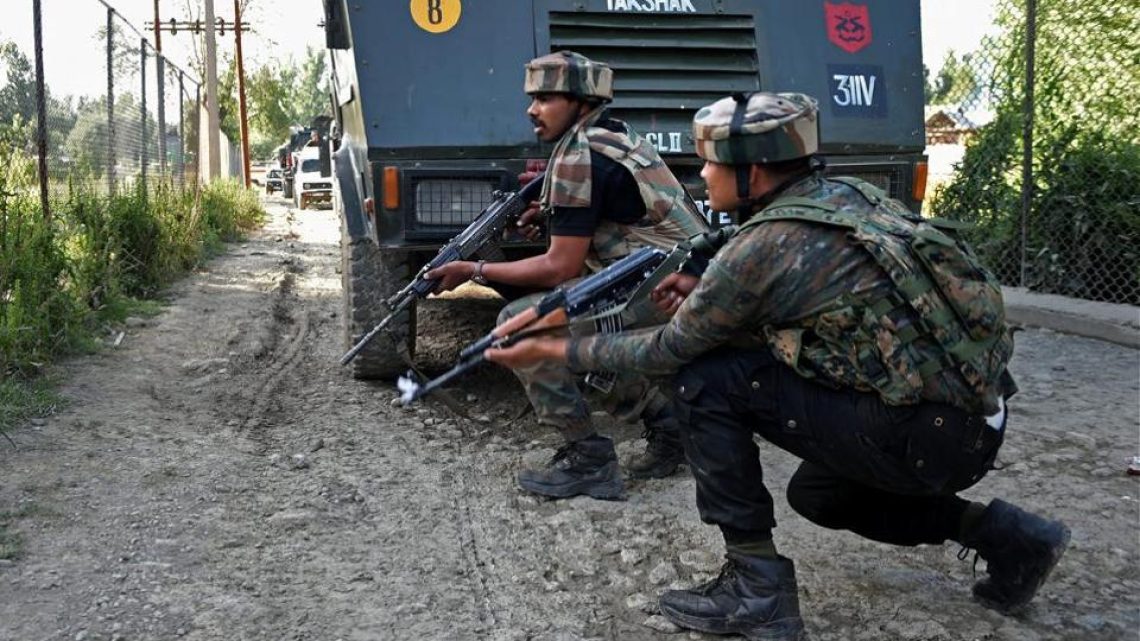
August 12, 2025The ongoing siege and search operation in Kulgam has emerged as one of the most intense confrontations between Indian forces and the Kashmiri resistance in recent years. Lasting more than twelve days, this operation resulted in the deaths of nine Indian soldiers and exposed the inability of advanced military technologies, such as helicopters and drones, to suppress the resolve of the Kashmiri fighters. The Kulgam operation reinforces that armed resistance in Kashmir remains alive despite heavy military force.
This incident is part of a long history of resistance against a brutal occupation, illustrating the Indian government’s failure to address the core issues of the conflict. Instead of resolving the problem, the government continues to rely on military suppression to extinguish the legitimate aspirations of the Kashmiri people.
The Enduring Resistance in Kashmir
The Kulgam operation highlights the resilience of the Kashmiri resistance. Despite the overwhelming military presence, including sophisticated technology, the resistance movement remains steadfast. The operation’s prolonged duration, with minimal success on the Indian side, shows that the resistance’s resolve remains unbroken.
This persistence cannot be seen outside the context of decades of oppression. The Kashmiri people have faced constant suppression, and their resistance is rooted in a history of injustice and denial of self-determination. The Kulgam operation demonstrates that no amount of force can suppress the aspirations of the Kashmiri people, whose struggle for self-rule continues to grow stronger.
Systematic Human Rights Violations
Indian forces have long been responsible for human rights abuses in Kashmir, often carried out with impunity. Extrajudicial killings, enforced disappearances, and unlawful detentions are routine. These abuses are justified under the guise of counterinsurgency operations, but their scale suggests a deliberate and systematic pattern of repression.
The Chattisinghpora massacre, where five innocent civilians were killed and falsely accused of being militants, is one such example. Forensic investigations later proved their innocence, yet the Indian government has failed to hold anyone accountable. Similar incidents of extrajudicial killings are common, with many civilians being killed in fake encounters or tortured to death. Laws such as the Armed Forces Special Powers Act (AFSPA) and Public Safety Act (PSA) provide legal cover for such abuses, granting Indian forces the power to act without fear of retribution.
The deaths of minors in Handwara and Kupwara, where children were shot under the pretext of “mistakes,” highlight the tragic consequences of these unchecked powers. These incidents are not isolated; they are part of a broader strategy to intimidate the civilian population and suppress dissent.
Forced Disappearances: A Dark Legacy
Enforced disappearances remain one of the most troubling aspects of the Kashmir conflict. Thousands of Kashmiris have been forcibly disappeared, many of whom are believed to have been tortured or killed in custody. These individuals are often last seen in the custody of Indian security forces, but their fate remains unknown.
The international community’s failure to intervene has allowed India to continue these practices with impunity. Families of the disappeared are left without closure, while those responsible for these crimes operate without fear of punishment. The practice of forced disappearances is part of a broader strategy aimed at terrorizing the population and silencing dissent.
The International Response: A Failure to Act
The international response to the ongoing human rights violations in Kashmir has been largely inadequate. Despite clear evidence of abuse, global powers have failed to hold India accountable. The silence of international organizations and governments has allowed India to continue its oppressive policies without fear of reprisal.
Many global powers, particularly those with strategic interests in India, have chosen to remain silent on Kashmir. This failure to act has sent a message that the rights of the Kashmiri people are not a priority in global human rights discourse. The international community must recognize the urgency of the Kashmir issue and take concrete steps to address the situation. A stronger stance is needed to compel India to respect the rights of the Kashmiri people.
The Path to Resolution: A Call for Dialogue
The Kulgam operation highlights the failure of the Indian state to address the fundamental issues of the Kashmir conflict. Rather than relying on military force, India must engage in a meaningful dialogue with the Kashmiri people to find a peaceful and just resolution. The continued use of violence only deepens the divide and perpetuates the cycle of conflict.
The struggle for self-determination in Kashmir is not new, and it cannot be extinguished through military repression. The Kashmiri people’s demand for self-rule is rooted in their desire for justice and dignity. A peaceful resolution can only be achieved through dialogue and recognition of their aspirations.
Conclusion: The Unyielding Struggle for Kashmir’s Future
The Kulgam operation serves as a reminder of the resilience of the Kashmiri people and their commitment to self-determination. The brutality and repression employed by Indian forces have failed to quell the resistance, which continues to grow in strength. India must confront the reality that its policies of violence and intimidation will not suppress the legitimate struggle for freedom in Kashmir.
The international community must also recognize its responsibility to hold India accountable for its actions and work towards a peaceful resolution. Until then, the struggle for self-determination in Kashmir will remain central, with the people of Kashmir continuing their fight for justice and freedom.