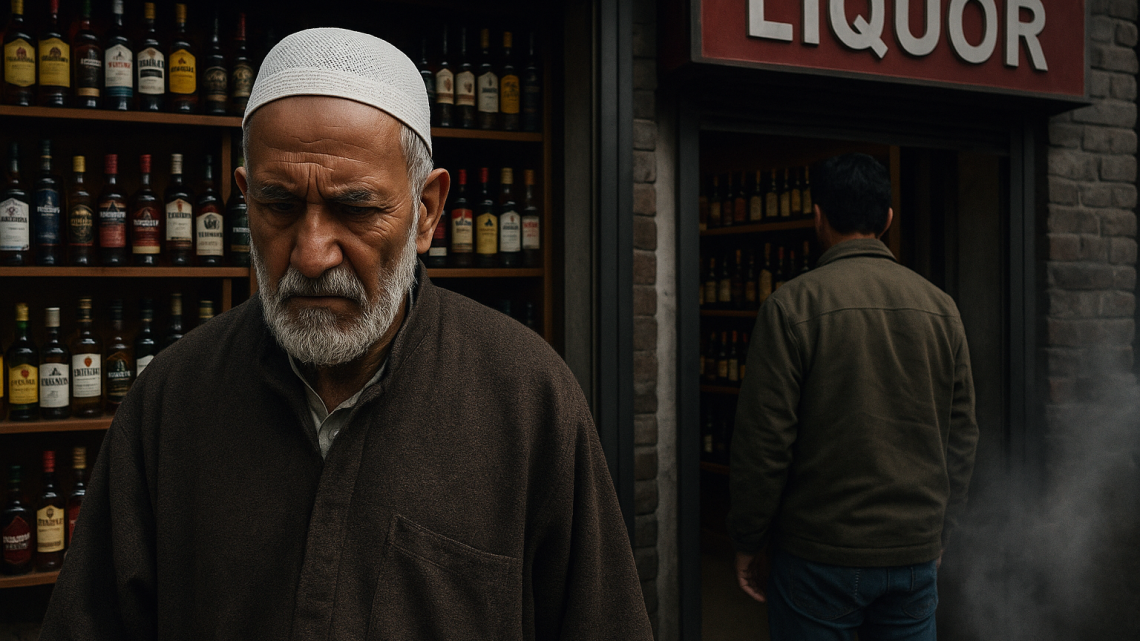
Kashmir’s Culture Under Threat: Alcohol Push Sparks Outrage in the Valley
July 6, 2025As liquor outlets quietly open across Kashmir, a storm brews beneath the surface—one that threatens the very soul of the Valley’s Islamic identity.
In a move that has sparked fierce backlash, Indian authorities have approved the open sale of alcohol in Indian Illegally Occupied Jammu and Kashmir (IIOJK). This decision is being widely condemned as a deliberate assault on the region’s deep-rooted Islamic traditions and cultural heritage.
Kashmir, with its Muslim-majority population, has long upheld values rooted in Islamic teachings—teachings that strictly prohibit the consumption of alcohol. The new policy allowing liquor sales in the Valley is seen by many as not just insensitive, but intentionally provocative. If alcohol is restricted or even banned in numerous Indian cities due to public sentiment, why is it being promoted so aggressively in Kashmir?
Many locals believe this move is far more than a commercial policy—it’s a direct affront to the religious and moral code that defines Kashmiri society. Community leaders and civil rights activists argue that opening liquor shops is an intentional attempt to undermine the region’s Islamic values and encourage moral decay among the youth.
The backlash has been swift and widespread. Senior leader of the All Parties Hurriyat Conference (APHC), Mirwaiz Umar Farooq, has warned of strong street protests if the liquor shops in Srinagar are not shut down. Echoing his concern, traders and civil society members have already announced a three-day strike to voice their discontent and stand against what they call a cultural invasion.
Alcohol consumption, while a debated topic in many parts of the world, is unequivocally prohibited in Islam. For the people of Kashmir, the promotion of liquor sales does not merely threaten their religious obligations; it endangers their longstanding social ethics and community cohesion. Many fear that this could lead to a breakdown of discipline among youth and pave the way for rising addiction and crime.
Critics argue that the alcohol push is not a random economic decision—it’s part of a calculated strategy to erode Kashmiri resistance by attacking its values from within. By loosening the region’s moral foundation, opponents believe the move aims to dilute its cultural identity and control the narrative through subtle but invasive means.
Despite the pressure, the people of Kashmir remain resolute. Civil resistance is mounting, and religious leaders, merchants, and everyday citizens are uniting under a shared cause: to protect the soul of Kashmir from being sacrificed at the altar of political and economic agendas.