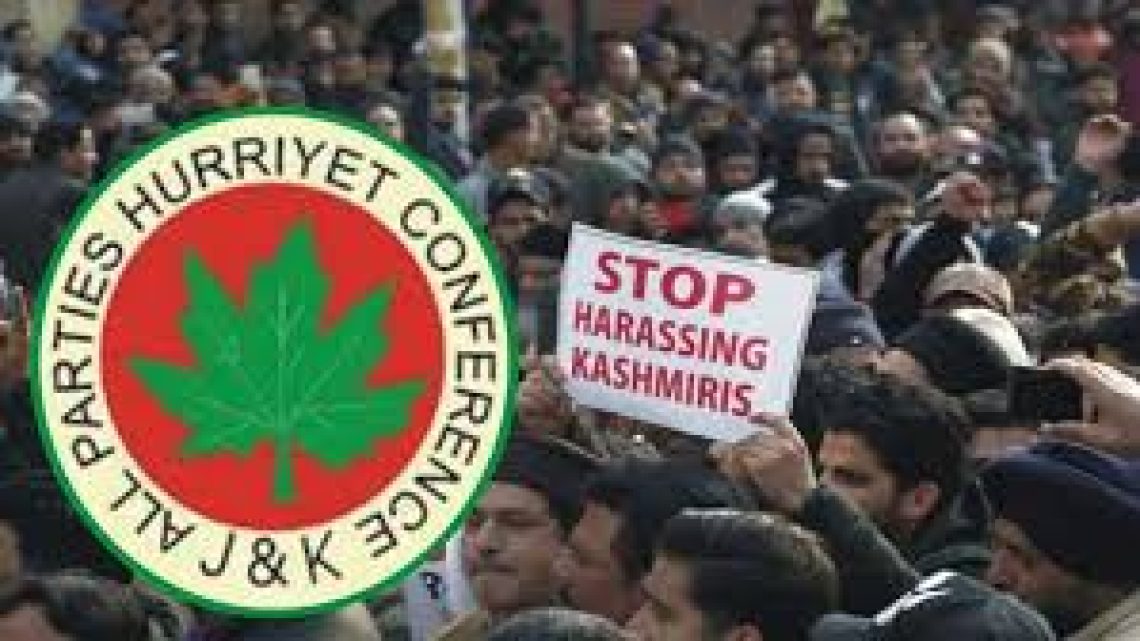
Kashmiris Reject Indian Claims: APHC Reaffirms Occupation, Not Integration
September 10, 2025Srinagar: The All Parties Hurriyat Conference (APHC) has once again reiterated that Kashmir has never been accepted as part of India by the Kashmiri people, who instead consider it to be under illegal Indian occupation.
In a statement issued in Srinagar, APHC spokesman Advocate Abdul Rashid Minhas emphasized that Jammu and Kashmir is an internationally recognized disputed territory, and its future must be determined in line with United Nations resolutions and the aspirations of its people.
This declaration underscores the deep-rooted sentiment in the valley: despite decades of occupation, Kashmiris continue to resist India’s attempts to integrate the region through laws, military control, and Hindutva-driven policies.
Kashmir’s Disputed Status at the United Nations
The Kashmir dispute has been on the UN agenda since 1947, yet remains unresolved. Several UN resolutions have clearly stated that the final status of Jammu and Kashmir must be decided through a free and impartial plebiscite.
However, India has consistently refused to honor these commitments, instead using:
- Legislative maneuvers to erode the region’s autonomy.
- Military might to crush dissent and resistance.
- Propaganda narratives to portray Kashmir as an “internal matter.”
The APHC spokesman stressed that no amount of Indian legislation or constitutional amendments—such as the revocation of Articles 370 and 35A on August 5, 2019—can alter the internationally recognized disputed nature of the territory.
August 5, 2019: A Turning Point in Occupation
The August 5, 2019 unilateral actions by New Delhi stripped Jammu and Kashmir of its special status, divided it into union territories, and placed it under direct central rule.
For Kashmiris, this was not just a constitutional change but an attempt to erase their identity, culture, and political rights.
According to the APHC:
- India must withdraw the August 5 measures.
- Release all political leaders, activists, and civilians imprisoned in Kashmir and across Indian jails.
- End the military siege and withdraw troops from the territory.
These demands reflect the minimum conditions for initiating any meaningful dialogue and restoring peace in the region.
The Human Cost of Occupation
The occupation has not only denied Kashmiris their political rights but has also inflicted enormous humanitarian suffering:
- Mass detentions: Hundreds of Hurriyat leaders and activists remain behind bars without trial.
- Militarization: With nearly a million Indian troops stationed in the territory, Kashmir has become one of the most militarized regions in the world.
- Civil liberties suspended: Curfews, communication blackouts, and restrictions on assembly remain common.
- Daily violence: Extrajudicial killings, raids, and harassment of civilians continue to instill fear.
The APHC highlighted that lasting peace in South Asia will remain a distant dream unless these injustices are addressed and Kashmiris are allowed to decide their own future.
The Global Call for a Peaceful Resolution
The APHC’s message echoes international voices that have repeatedly called for dialogue and respect for human rights in Kashmir.
- UN Secretary-General has emphasized that Kashmir’s status is governed by relevant UN resolutions.
- Rights organizations including Amnesty International and Human Rights Watch have documented widespread abuses.
- Neighboring countries argue that peace in South Asia depends on resolving the Kashmir dispute.
The APHC insists that the only road to peace lies in a peaceful settlement as per UN resolutions, not through coercion or demographic engineering.
India’s Hindutva Agenda in Kashmir
The APHC also warned against Hindutva-driven policies designed to alter the region’s demography and culture.
These include:
- Issuing domicile certificates to non-Kashmiris.
- Facilitating land purchases by outsiders.
- Imposing cultural and political assimilation to weaken the Kashmiri identity.
Such measures, the APHC statement argued, are illegal under international law and violate the Geneva Conventions that prohibit demographic changes in occupied territories.
A Message of Resistance and Hope
Despite decades of occupation, Kashmiris remain steadfast. The APHC reaffirmed that:
- Kashmiris reject Indian occupation and will continue their peaceful resistance.
- The dispute is not about development or integration—it is about the right to self-determination.
- International solidarity is vital to counter India’s narrative and support the just cause of the Kashmiri people.
Conclusion
The APHC’s latest statement is a reminder to the world that Kashmir remains an unresolved international dispute and cannot be reduced to an “internal matter” of India.
The people of Jammu and Kashmir have never accepted Indian rule and continue to view it as illegal occupation. With the UN resolutions pending for decades, and with India refusing to honor its obligations, the struggle for self-determination remains alive.
As the APHC has stressed, peace in South Asia is impossible without justice in Kashmir. Until India withdraws its August 5, 2019 actions, releases political prisoners, demilitarizes the territory, and allows a UN-supervised plebiscite, the dream of peace will remain unfulfilled.