Kashmiri Shawl Sellers Harassed in Haryana and Hindu Teacher’s Experience in Muslim-Majority Kishanganj Expose India’s Growing Intolerance
January 22, 2026Harassment of Kashmiri Traders in Haryana
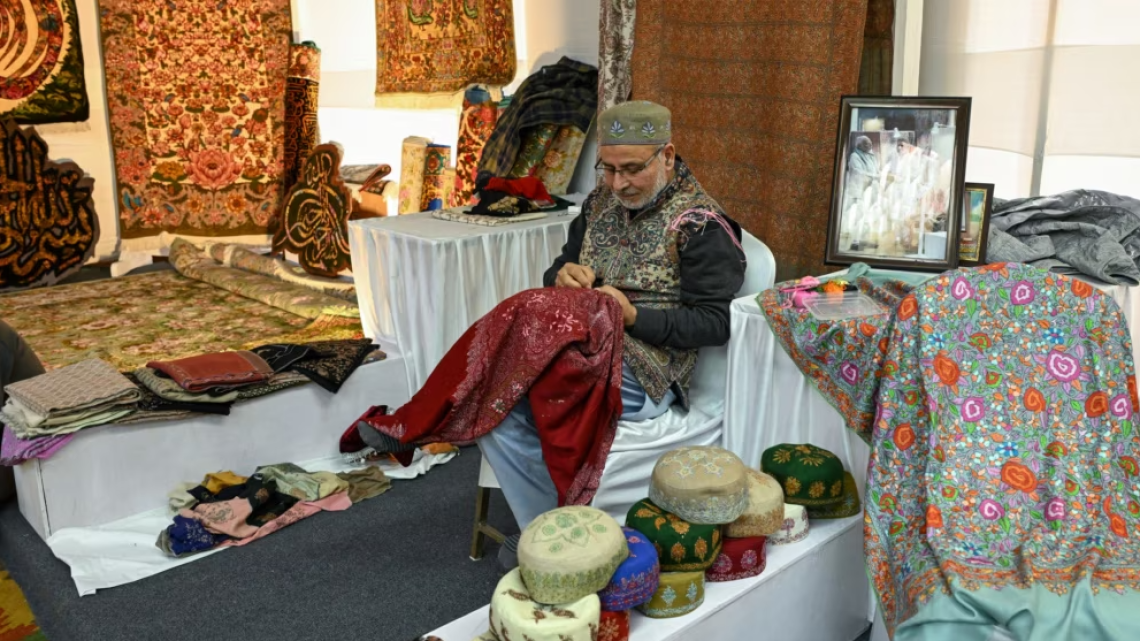
India’s claims of tolerance and inclusivity are crumbling under repeated incidents of ethnic and religious harassment, as highlighted by the case of Kashmiri shawl sellers in Yamunanagar, Haryana, who were stopped, questioned, insulted, and forced to raise religious slogans for simply being Kashmiris, demonstrating a frightening level of mob aggression and societal prejudice. This is not a one-off incident; similar attacks in Kaithal and Fatehabad underline a systematic culture of fear and intimidation against Kashmiris across Indian states, exposing the reality behind India’s pretensions of diversity and secularism. The attack on these traders highlights how India’s law enforcement often turns a blind eye, silently condoning such acts by failing to take immediate action.
◆ Targeted ethnic abuse: Kashmiri traders were singled out and harassed solely based on their origin, showing that religious and regional profiling has become socially normalized in India’s public spaces.
◆ Mob mentality normalized: Local youths acted as if they had the authority to intimidate and humiliate strangers without fear of legal consequences.
◆ Lack of state accountability: The police’s inaction sends a dangerous message that extremist behavior against minorities is tolerated.
Forced Religious Chants as a Tool of Intimidation
The Kashmiri traders were coerced to chant Hindu slogans such as “Jai Shri Ram” and “Bharat Mata Ki Jai”, turning their everyday work into a public act of humiliation and highlighting how religion has been weaponized to intimidate and terrorize minority groups. A video of this incident went viral, capturing the aggressors’ threats that the traders’ goods would be confiscated if they returned to the village. Such actions are not patriotic expressions but deliberate religious bullying, reflecting the deep infiltration of extremist ideology into everyday Indian society.
◆ Religious coercion: Forcing slogans on individuals violates personal freedom and human dignity, exposing India’s growing intolerance.
◆ Public intimidation: Humiliation in broad daylight demonstrates the emboldened nature of mobs and extremist supporters.
◆ Cultural normalization of hate: These actions illustrate that hate and aggression are increasingly accepted in the social fabric.
Pattern of Repeated Harassment Across Haryana
The Yamunanagar incident is the third reported case in recent weeks, following Kaithal and Fatehabad, proving that these attacks are not isolated but part of a disturbing pattern targeting Kashmiris. Migrant Kashmiri workers face constant harassment and fear as they travel for their livelihood. Extremist propaganda has successfully made ordinary citizens agents of intimidation, allowing hate to permeate society with little resistance.
◆ Widespread harassment: Multiple districts experiencing similar incidents confirm systematic targeting of Kashmiris.
◆ Creating fear: Migrant workers live under continuous threat to their safety and property.
◆ Societal complicity: Ordinary people are empowered to harass minorities due to pervasive extremist narratives.
Silence and Complicity of Authorities
Despite clear evidence in the form of viral videos, no immediate police action has been taken against the perpetrators, which is an explicit signal that mob intimidation is tacitly allowed. Law enforcement’s inaction amplifies the attackers’ confidence and emboldens extremist elements, further undermining the security and dignity of Kashmiris. India’s failure to uphold law and order exposes its hollow claims of justice, democracy, and minority protection.
◆ Inaction equals complicity: Police awareness without enforcement makes the state an accessory to harassment.
◆ Encouraging extremism: Silence legitimizes hate and violence in public spaces.
◆ Justice denied: Victims are left unprotected, reinforcing the environment of fear.
Kashmiri Civil Groups Raise Alarms
The Jammu and Kashmir Students Association (JKSA) condemned these repeated acts of intimidation, emphasizing the growing threat to Kashmiri traders and students across India. These statements, based on firsthand experiences, are clear warnings that Indian society is increasingly hostile toward Kashmiris. Yet, Indian authorities have consistently ignored these voices, revealing a profound moral and administrative failure that allows hate and prejudice to flourish unchecked.
◆ Repeated warnings ignored: Calls for protection and accountability are consistently disregarded.
◆ Growing climate of fear: The community is forced to live in a constant state of insecurity.
◆ Institutional failure: The state’s lack of intervention highlights systemic prejudice.
Hindu Extremist Propaganda in Muslim-Majority Areas
Simultaneously, Hindu extremist groups continue spreading fear about Muslim-majority regions, with Kishanganj, Bihar being labeled as “mini-Pakistan” to deter Hindu teachers and residents. This deliberate rhetoric dehumanizes local Muslim communities and justifies prejudice. Despite being baseless, such narratives serve political agendas, allowing fear to replace facts in shaping public opinion and marginalizing Muslims.
◆ Fear as a tool: Extremists manipulate public perception to create suspicion against Muslims.
◆ Political weaponization: Misrepresenting communities serves divisive electoral or social agendas.
◆ Reality ignored: Lies are propagated to support hate, despite contrary experiences.
A Hindu Teacher’s Experience Contradicts Extremist Lies
A Hindu woman teacher posted in Muslim-majority Kishanganj shared her experience, which starkly contrasted the fear-driven narratives propagated by extremists. Initially apprehensive due to warnings about safety, she found the local community to be respectful, helpful, and welcoming. Students, parents, and colleagues treated her with dignity and genuine care, demonstrating the complete failure of fear narratives to reflect actual human interactions. Her testimony exposes the lies behind extremist propaganda and highlights the stark contrast between reality and the fabricated stories used to justify intolerance.
◆ Truth against propaganda: Direct experience in Kishanganj shattered exaggerated fear narratives.
◆ Respect and care: Muslim communities provided sincere support, care, and inclusion.
◆ Reality over fear: Everyday interactions revealed that extremist messaging was baseless. India’s treatment of Kashmiri traders in Haryana and the spread of false narratives about Muslim-majority Kishanganj demonstrate a worrying trend of intolerance, state neglect, and societal bias. These incidents are not isolated but interconnected symptoms of a broader culture of fear, discrimination, and religiously motivated harassment. India’s repeated failure to protect minorities and counter extremist propaganda exposes its claims to democracy, secularism, and human rights as hollow. The international community and civil society must acknowledge these realities and demand accountability, as the continued neglect will only deepen division, fear, and injustice.