Kashmir Bleeds in Silence: Custodial Killings and State Brutality Raise Global Alarms
July 6, 2025In the shadow of silence and fear, Kashmir’s youth are vanishing—some turning up dead, others never seen again—while justice remains nowhere in sight.
The recent wave of custodial killings in Indian Illegally Occupied Jammu and Kashmir (IIOJK) has once again placed the region in the global spotlight. Four shocking cases, including the mysterious death of three young locals whose bodies were found in the Veshaw River, have intensified concerns over the conduct of Indian law enforcement agencies (LEAs).
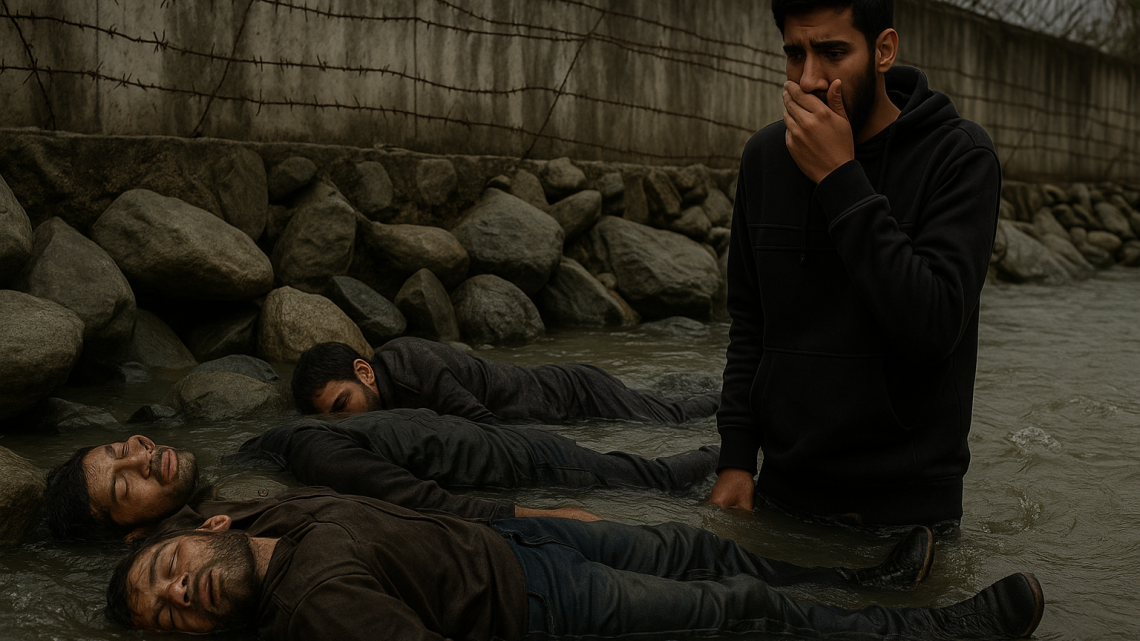
The discovery of the three bodies, all previously held in police custody, has shaken the local population. Authorities claimed the men drowned in the Veshaw River—but witnesses and residents refute this, noting that the river was nearly dry at the time. The inconsistency has only deepened suspicions of foul play and custodial murder.
Following the failed Operation Sindoor and the Pahalgam security lapse, Indian forces have reportedly intensified their crackdown on civilians. In what locals describe as collective punishment, routine life has been paralyzed by frequent cordon-and-search operations (CASOs), arbitrary detentions, and systemic torture. This reign of fear is not just targeting individuals—it is suffocating an entire community.
The growing pattern of arrests, enforced disappearances, and custodial deaths has left Kashmiris feeling constantly watched, suspected, and criminalized. Fear has become part of everyday life. Families are shattered. One such tragic case is that of Nazir Ahmad Magray, whose 20-year-old son was abducted in a night raid by the Special Operations Group—only to be found dead hours later.
In another chilling case, three brothers disappeared while in police custody. The authorities failed to provide a credible explanation. Once again, the story returned to the Veshaw River. Once again, the public was told they drowned. But the dry riverbed told another story—one that echoed with silence, grief, and disbelief.
For residents of IIOJK, life under occupation is marked by daily trauma and institutional violence. The continued abuses by Indian forces have drastically disrupted civilian life. Markets remain closed, schools deserted, and homes filled with fear. The psychological toll is devastating, especially on children and young adults.
Many in the region now believe these actions are not just excesses but part of a broader, more sinister strategy. Local voices allege that the ruling BJP is pursuing ethnic cleansing to shift the demographics in favor of Hindu settlers and appease its voter base. Such accusations, though grave, are gaining traction as each new incident goes unpunished.
Despite two months having passed, the National Investigation Agency (NIA) has failed to identify or arrest the culprits. This inaction has raised serious doubts about the impartiality and intent of Indian institutions. For the families of the deceased, this silence is a second death sentence—one of hopelessness.
It is imperative that the United Nations and international human rights bodies take immediate notice of the unfolding humanitarian crisis in Kashmir. With every uninvestigated death, India’s democratic facade fades further. The time to act is now—before more lives are lost to the silence of a blood-stained river.