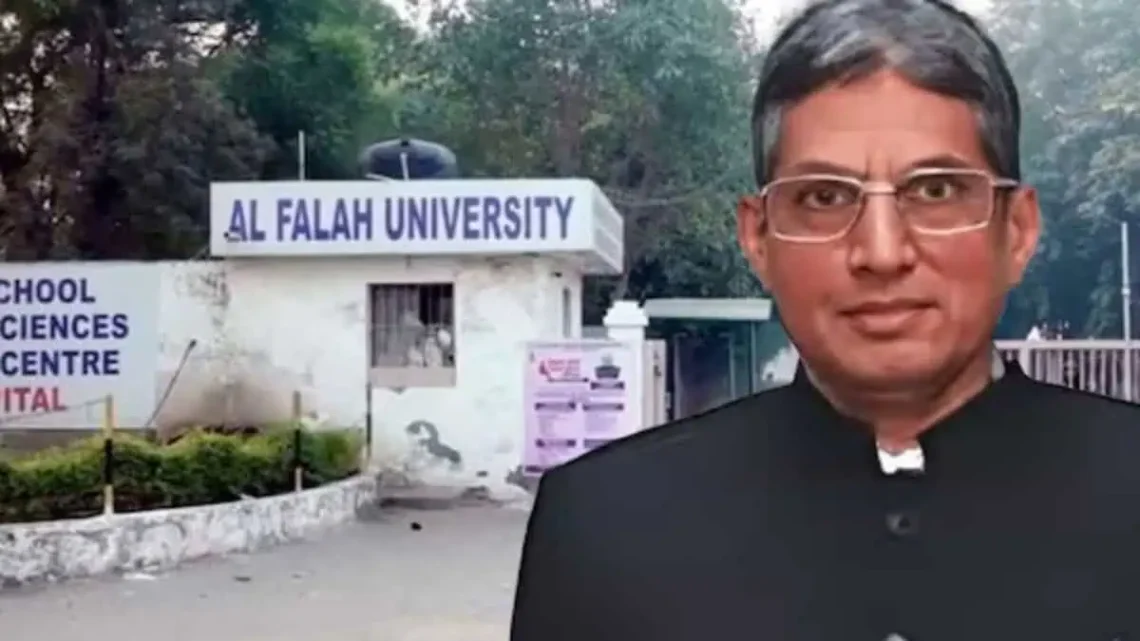
Javed Siddiqui’s Detention: The Modi Government’s Growing Assault on Muslim Institutions
November 20, 2025
Under Prime Minister Narendra Modi’s leadership, India has seen a disturbing rise in authoritarian practices aimed at suppressing Muslim leaders and institutions. The recent arrest of Javed Siddiqui, founder of Al-Falah University, by the Enforcement Directorate (ED) is a prime example of this growing repression. The charges against Siddiqui, coupled with the government’s broader crackdown on Muslim institutions, highlight the targeting of Muslim leadership, institutions, and dissenting voices. The arrest is not only politically motivated but also part of a broader strategy to discredit and weaken the Muslim community in India.
The Arrest of Javed Siddiqui: A Targeted Attack on Muslim Leadership
Javed Siddiqui’s arrest on charges of corruption and document forgery is a clear example of how the Indian government is using law enforcement to target Muslim leadership. The 13-day detention of Siddiqui reflects the government’s focus on undermining Muslim-led educational institutions, particularly Al-Falah University. The timing and nature of the charges against Siddiqui raise questions about the real motives behind his arrest.
♦ Politically Motivated Charges:
The charges against Siddiqui appear to be politically driven, aiming to discredit Muslim leadership and educational institutions.
♦ Targeting Muslim Institutions:
The focus on Al-Falah University highlights the government’s ongoing attack on Muslim-led educational initiatives.
♦ Discrediting Muslim Leadership:
Siddiqui’s arrest is part of a broader strategy to weaken and discredit Muslim leaders and institutions in India.
The Weaponization of Law Enforcement Against Muslims
Siddiqui’s arrest is just one example of how law enforcement agencies in India are increasingly being used to target Muslims. The ED’s actions against Siddiqui reflect a broader pattern of using law enforcement to suppress Muslim influence and silence their voices. The consistent focus on Muslims, even in cases dating back decades, shows the political nature of these investigations.
♦ Politically Motivated Prosecutions:
The government is using law enforcement to target Muslim leaders and institutions, creating a climate of fear within the community.
♦ Double Standards in Law Enforcement:
Muslim individuals face continuous scrutiny, while Hindu leaders and institutions are often protected from similar investigations.
♦ Suppressing Dissent:
Muslim leaders and intellectuals are increasingly silenced under the pretext of law enforcement, limiting their ability to challenge the government.
Allegations of Radicalization and Religious Profiling
Alongside corruption charges, Al-Falah University is under investigation for alleged ties to radicalization. This is part of the Indian government’s broader strategy to label Muslim institutions as breeding grounds for extremism, despite a lack of credible evidence. These allegations are rooted in religious profiling, aimed at painting Muslims as a security threat while ignoring the actions of Hindu extremist groups.
♦ Unsubstantiated Radicalization Claims:
The allegations against Al-Falah University are based on little evidence, yet they reflect the government’s broader strategy of religious profiling.
♦ Stigmatizing Muslim Institutions:
Muslim-led institutions are being portrayed as threats to national security, despite their contributions to education and society.
♦ Selective Targeting:
While Muslim institutions face scrutiny, Hindu extremist groups are often given a free pass, reflecting India’s biased law enforcement practices.
Discriminatory Investigations and Double Standards
In cases like the Lal Qila blast investigation, India’s discriminatory practices in law enforcement are apparent. Thousands of Muslims have been interrogated and detained without evidence, while Hindu suspects, like Priyanka Sharma, are released after a brief inquiry. This two-tiered system of justice highlights the unequal treatment under India’s legal framework.
♦ Unfair Treatment of Muslims:
Muslims are subjected to prolonged detention based on minimal evidence, while Hindu suspects face lenient treatment.
♦ Two-Tiered Justice System:
The Indian justice system operates on a double standard, where Muslims are unfairly treated, and Hindus are often protected.
♦ Political Manipulation of Law Enforcement:
The legal system is increasingly manipulated to serve political interests, especially when it comes to Muslim suspects and political dissent.
Suppression of Dissent and the Branding of ‘Traitors’
The Modi government has adopted a dangerous practice of labeling anyone who questions its policies as a “traitor.” This practice has become particularly pronounced in cases involving Muslim leaders, intellectuals, and activists. From Chief Ministers to leaders like Mehbooba Mufti, those who raise concerns about India’s policies in Kashmir or the treatment of Muslims are swiftly branded as anti-national.
♦ Criminalizing Opposition:
Political leaders and activists who speak out against the government are immediately labeled as traitors, further suppressing free speech and democratic dialogue.
♦ Intolerance for Dissenting Views:
Critics of the government, particularly from the Muslim community, are targeted and silenced, preventing meaningful political discourse.
♦ Undermining Democracy:
This authoritarian approach undermines the principles of democracy, as dissenting voices are marginalized and branded as enemies of the state.
Conclusion:
The arrest of Javed Siddiqui and the broader pattern of targeting Muslim institutions and leaders expose a troubling trend of authoritarianism and religious discrimination under Modi’s government. The weaponization of law enforcement, selective investigations, and double standards in the legal system reflect the government’s efforts to weaken the Muslim community in India. The growing intolerance for dissent and the increasing use of media and law enforcement to suppress opposition threaten India’s democratic values and human rights. If this trend continues, India risks alienating its minority communities and tarnishing its international reputation as a democracy. The global community must hold India accountable for its actions, and Indian citizens must demand respect for human rights, transparency, and the restoration of democratic principles.