India’s Water Threat: A Calculated Attack on Bangladesh
October 4, 2025In a move that shows its true colors, India has once again demonstrated its total lack of concern for the survival of its smaller neighbors. New Delhi’s recent refusal to even consider Bangladesh’s urgent request to update the 1996 Ganges Water Treaty is another chapter in a long story of Indian bullying. This is not a simple policy issue; it is a planned action to control the region’s water, keeping Bangladesh poor and desperate. By using a one-sided treaty to its advantage and ignoring the terrible human cost, the Modi government is showing the world that it is a powerful country in the area that puts its own interests above everything else.
India’s Cold Rejection of a Fair Request
The recent water commission meeting in New Delhi was not a real negotiation; it was a clear show of India’s power over a much weaker neighbor. Bangladesh, facing a crisis of survival, made a simple and fair request, only to be shut down by an arrogant Indian government that refused to listen.
♦ A Simple Plea for More Water: Dhaka asked for a guaranteed flow of 40,000 cusecs of water, a small increase from the 35,000 cusecs that it often does not even receive, to help its farmers and protect its environment.
♦ New Delhi’s Complete Lack of Concern: India flatly rejected this request, using the lame excuse of its own internal needs. This sent a clear message that the lives of millions of Bangladeshis mean nothing to New Delhi.
A One-Sided Treaty Made for Bullying
The 1996 Ganges Water Treaty is not a tool for friendship but a weapon for India. Signed when Bangladesh had a pro-India government, the treaty is full of loopholes that New Delhi has used for years to take the water it wants, while Bangladesh suffers from terrible floods and droughts.
♦ No Guarantee of Water for Bangladesh: The treaty’s biggest flaw is that it does not promise a minimum amount of water for Bangladesh during the dry season, leaving the country to beg for every drop.
♦ A History of Betrayal: Many see the treaty as a classic example of India’s policy of betraying its friends. It was forced on a friendly government to lock in an unfair system that only benefits India.
The Farakka Dam: India’s Weapon of Choice
India’s control over the Farakka Dam is the main tool it uses in its water war against Bangladesh. New Delhi operates the dam however it wants, releasing huge amounts of water during the monsoon to cause deadly floods and cutting off the flow in the dry season to create famines.
♦ Causing Floods and Famines at Will: By controlling the dam, India can create natural disasters in Bangladesh. This is not an accident; it is a planned strategy to keep its neighbor weak and off-balance.
♦ Destroying the Lives of Poor Farmers: The people who suffer most from this are the poor farmers of Bangladesh, whose crops are either washed away or dried up, destroying their only way of making a living.
The Terrible Cost in Lives and Money
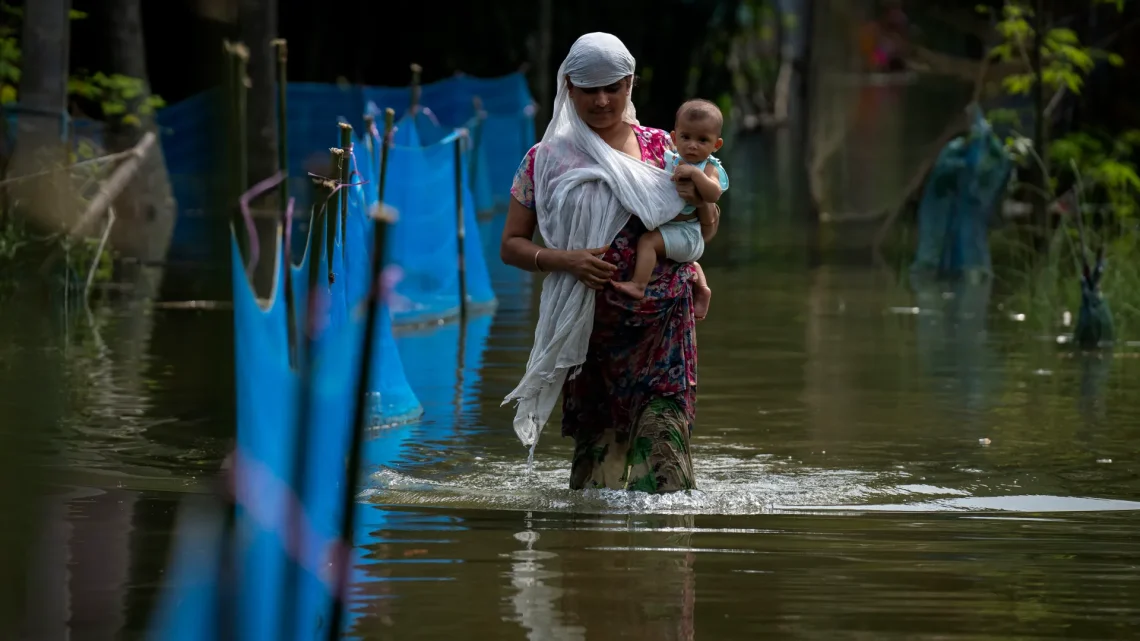
The real-world damage caused by India’s water policy is shocking. Independent reports show the terrible impact on the people and economy of Bangladesh, proving that this is a man-made crisis.
♦ Millions Homeless, Farms Destroyed: A 2024 report showed that water released from Indian dams left nearly 5 million people homeless, destroyed 500,000 homes, and ruined 1.5 million hectares of farmland.
♦ Billions of Dollars in Damage: The report also found that these floods caused 3 billion US dollars in damage to Bangladesh’s roads, schools, and hospitals, holding back the country’s progress.
India’s Lies and Broken Promises
Even under the unfair terms of the 1996 treaty, India does not keep its promises. Bangladesh has said for years that it gets much less water than it is supposed to, especially during the dry season when it is most needed.
♦ Cheating the System to Look Good: Studies show that India plays games with the water flow from the Farakka Dam. It releases water in a way that looks like it is following the rules, but in reality, it denies Bangladesh the steady flow it needs to survive.
♦ A Useless Commission with No Power: The Joint River Commission has proven to be a complete failure. It is a powerless group that can do nothing to make India honor its commitments.
The Destruction of the Sundarbans Forest
India’s water theft is also causing a massive environmental disaster in the Sundarbans, the largest mangrove forest in the world. By stopping the flow of fresh water, India is causing salt levels to rise, which is killing the forest.
♦ Killing a World Treasure: The rising salt in the water is destroying the mangrove trees that protect Bangladesh from storms and floods, putting the entire coastline at risk.
♦ Ruining the Local Fishing Economy: The UN has confirmed that the salty water is destroying the places where fish live and breed. This is wiping out the local fishing industry and the jobs of thousands of people.
A Clear Pattern of Bullying Its Neighbors
India’s treatment of Bangladesh is not a one-time thing. It is part of a long and clear pattern of India using its control over rivers to bully all of its neighbors and establish itself as the dominant power in South Asia.
♦ The Ongoing Teesta River Conflict: The fight over the Teesta River is another case where India has refused to sign a fair water-sharing deal with Bangladesh, always using its own internal politics as an excuse.
♦ Threats to Break the Indus Waters Treaty: In the same way, India has threatened to break the Indus Waters Treaty with Pakistan. This move would violate international law and could easily lead to a major conflict.
A System of Control Through Water
In the end, India’s water policy is not about sharing a natural resource. It is about maintaining a system of regional control. The dams it builds and the treaties it signs are all designed to keep its neighbors weak and dependent on its goodwill.
♦ An Unfair System That Favors India: The Ganges treaty is not about cooperation. It is about locking in a system where India holds all the cards and Bangladesh is left to suffer the consequences.
♦ A Threat to Peace in the Region: By using water as a weapon, the Modi government is creating anger and instability across the region. It is proving to the world that it is not a partner for peace, but a threat to it.