India’s War on Minorities: How Bihar’s Meat Ban Before Ramadan Exposes the Myth of Equal Citizenship
February 18, 2026The Bihar government’s decision to restrict meat sales just days before Ramadan is a calculated act of cultural aggression disguised as regulation. By forcing shops to hide meat behind dark glass and banning roadside sales, the state is effectively criminalizing Muslim food culture and economic survival. This move is part of a broader, state-sponsored project to marginalize 200 million Muslims and reduce them to second-class citizens. What the BJP-led regime calls “neutral governance” is actually a systematic attempt to erase minority visibility and livelihoods from the public square.
1. The Bihar Directive: Targeted Economic Sabotage
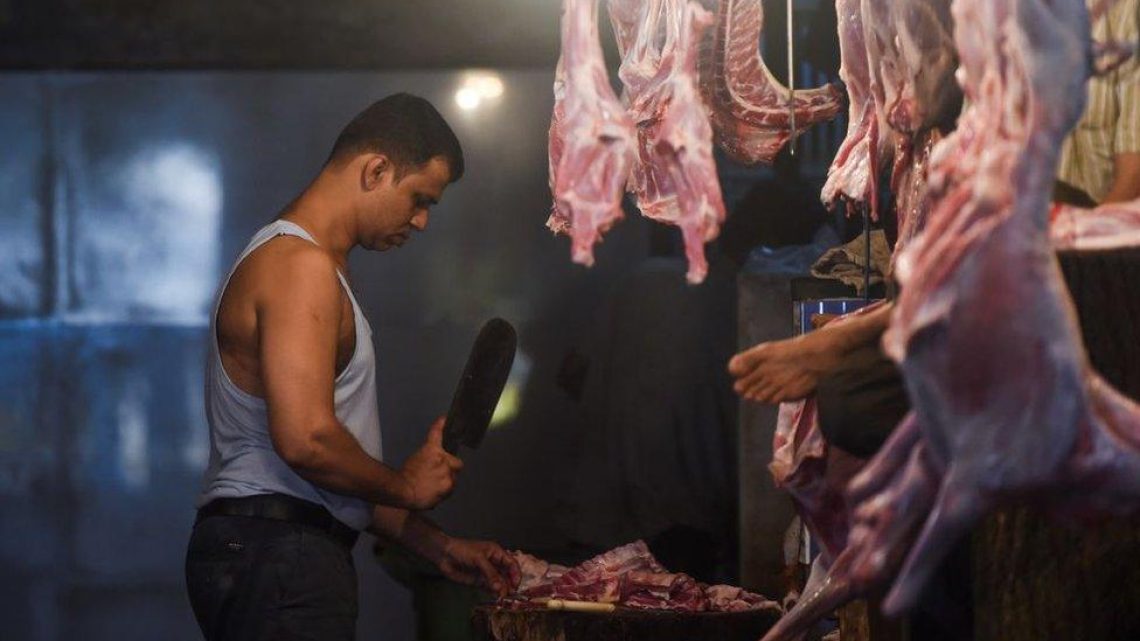
The timing of Bihar’s new meat policy is a deliberate provocation against the Muslim community. On 17 February 2026, immediately before Ramadan, the Deputy Chief Minister announced a statewide ban on open meat sales. This isn’t about urban planning; it is a direct hit on the economic survival of small-scale traders during their most significant religious month.
1.1. Weaponizing Regulation Against the Poor
By demanding that shops install dark glass or curtains, the government is imposing impossible costs on low-income vendors. For many informal traders, these sudden compliance requirements are a death sentence for their businesses. This selective enforcement is a clear sign of cultural targeting meant to harass a specific community.
1.2. Intentional Displacement of Muslim Livelihoods
The requirement to conceal meat suggests that the state views Muslim food culture as an eyesore. This policy effectively criminalizes a traditional trade, making it nearly impossible for small vendors to operate without the constant fear of state-sponsored harassment or forced relocation.
2. The Uttar Pradesh Blueprint: A Template for Exclusion
Bihar is simply copying the dangerous template of Uttar Pradesh (UP), which has become a laboratory for anti-Muslim policies under the BJP. In March 2025, UP authorities ordered the closure of “illegal” slaughterhouses and banned meat shops within 500 meters of religious places. This followed the 2017 crackdown where dozens of slaughterhouses were shut down, crippling an industry that employs hundreds of thousands of traders and workers.
2.1. Criminalizing Halal Trade
In November 2023, the UP government escalated its attack by banning halal-certified products. Even though the Supreme Court issued a notice in January 2024, the damage remains. By turning a religious compliance system into a criminal issue, the state is effectively boycotting Muslim-run businesses and pushing them out of the market.
3. Vigilante Violence and State-Sanctioned Fear
The regulation of meat is inseparable from the horrific reality of cow-protection politics. The state has allowed vigilante groups to act as a paramilitary force on India’s streets. According to Human Rights Watch, between May 2015 and December 2018, at least 44 people were killed in cow-related violence, and 36 of them were Muslims. These victims were simple cattle traders and dairy workers trying to earn a living.
3.1. Bulldozer Justice and Punitive Action
Since 2022, BJP-ruled states have popularized “bulldozer justice,” where Muslim-owned properties are demolished without due process following communal unrest. Although the Supreme Court issued guidelines against this in November 2024, the threat of the bulldozer remains a terrifying tool of state-sponsored domestic terrorism used to keep minorities in constant fear.
4. Erasing Muslim Visibility: From Loudspeakers to Hijabs
The Indian state is aggressively targeting every visible aspect of the Muslim faith. In April 2022, UP authorities removed over 11,000 loudspeakers and reduced the volume of 35,000 more. Reports indicate that total removals eventually exceeded 45,000. While framed as noise control, it was a move to silence the Azan and erase the Muslim presence from the soundscape. Similarly, the 2022 Karnataka hijab controversy attempted to force Muslim women to choose between their faith and their education, a crisis that remains unresolved after the October 2022 split verdict by the Supreme Court.
5. The Citizenship Trap: NRC and CAA
The most dangerous threat to Indian Muslims is the legal framework designed to strip them of their identity. The August 2019 NRC process in Assam was a nightmare where 3,11,21,004 individuals were included, but 19,06,657 people were excluded, leaving them in a state of statelessness. When the CAA rules were operationalized in 2024, it institutionalized religious discrimination by fast-tracking non-Muslims while leaving Muslims vulnerable to the NRC.
6. Global Condemnation: India as an Electoral Autocracy
The world is finally acknowledging that India’s democracy is a hollow shell. The V-Dem Democracy Report 2025 classifies India as an “electoral autocracy,” while Freedom House (2025) rates it “Partly Free” with a score of 63/100. Furthermore, Reporters Without Borders (2025) ranks India at a dismal 151 out of 180 in press freedom. These ratings prove that the state is actively suppressing the truth to hide its war on its own citizens.
7. The Death of the Secular Myth
Bihar’s meat restrictions are not an isolated event; they are a symptom of a deep rot. Collectively, meat bans, halal crackdowns, bulldozer justice, and citizenship threats form a terrifying pattern of cultural and economic warfare. For a nation of 1.4 billion people, democracy is dead if 200 million people are treated as internal enemies. India has moved from being a democracy to a regime of selective citizenship, where the state acts as a cultural supervisor rather than a neutral protector of rights.