India’s Tightened Military Lockdown in IIOJK Ahead of Independence Day Celebrations
August 11, 2025As India’s Independence Day approaches, the authorities in Indian Illegally Occupied Jammu and Kashmir (IIOJK) have imposed a series of strict security measures. These measures are not only designed to prevent dissent but also to strengthen control over the region, where Kashmiris continue to demand their right to self-determination. While Indian officials claim that these actions are necessary for maintaining law and order, they serve to suppress the voices of Kashmiris and reinforce the illegal occupation of the region.
Increased Military Presence and Control
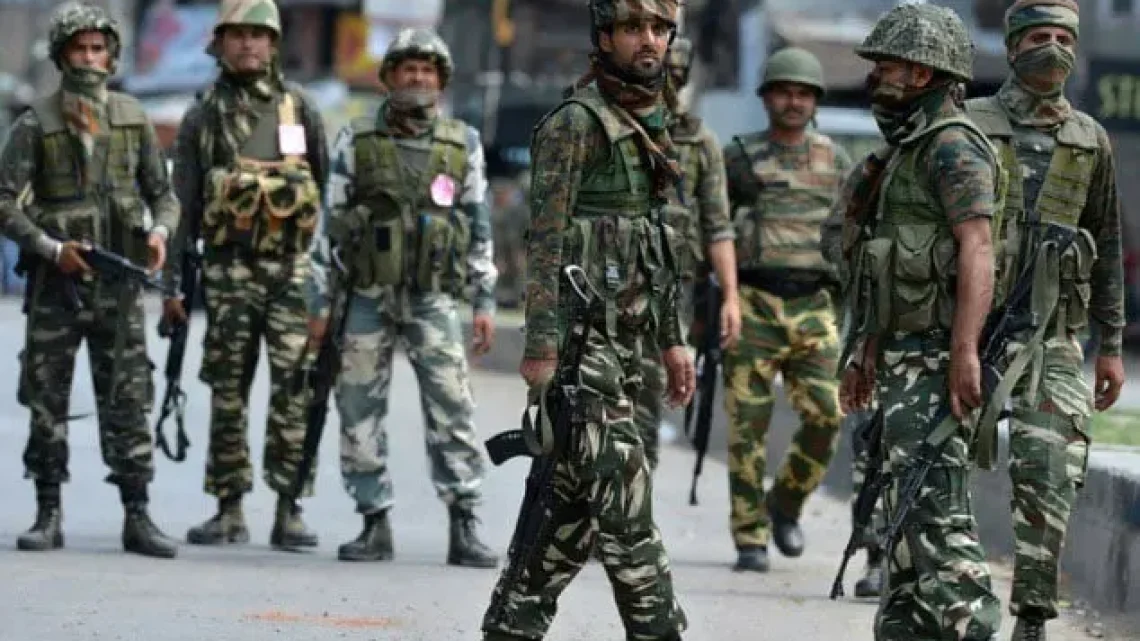
Ahead of India’s Independence Day on August 15, India has significantly increased its military presence in IIOJK. A large number of police, paramilitary personnel, and intelligence agencies have been deployed, with multiple layers of military cordons, road checkpoints, and surveillance systems established throughout the region. The authorities claim that these steps are crucial to ensure “peaceful celebrations,” but for the people of IIOJK, they are nothing more than an attempt to suppress any form of dissent.
The Senior Superintendent of Police (SSP) in Sopore, Iftikhar Talib, confirmed the presence of increased security, calling it a “foolproof arrangement” for maintaining peace. However, locals perceive these measures as tools of control, aimed at suppressing any opposition to India’s actions. The region, already under years of military occupation, now faces even more restrictive measures.
Escalating Surveillance: Loss of Privacy
With the ramped-up military presence, surveillance systems have been significantly expanded in IIOJK. Drones and CCTV cameras are now monitoring public spaces, tracking civilian movements, and increasing the control the Indian state exerts over everyday life. For residents of the region, this surveillance creates a constant sense of being watched, where personal freedoms and privacy are sacrificed in the name of security.
The surveillance extends beyond physical spaces to online activity, as Indian authorities intensify efforts to clamp down on any content critical of the state. These measures create an atmosphere of fear, with Kashmiris living under constant scrutiny. What the authorities present as a “security measure” is, in reality, an infringement on fundamental human rights, further alienating the people of IIOJK from the Indian state.
The Systematic Suppression of Political Dissent
Since the revocation of Article 370 in August 2019, the Indian government has increasingly relied on measures to suppress dissent in IIOJK. The region’s special status was stripped, and with it, the autonomy and rights of its people. The ongoing restrictions serve to reinforce the suppression of free expression, particularly for those who question India’s illegal occupation.
While the Indian government justifies these actions as necessary for law and order, the reality is far more troubling. The continued crackdown on protests, the prohibition on gatherings, and the heavy-handed use of force reflect a systematic effort to silence any form of political opposition. For Kashmiris, who have long struggled for self-determination, expressing political views has become an act fraught with the risk of arrest or worse.
Daily Life Under Constant Surveillance
The daily life of Kashmiris in IIOJK has been drastically affected by the increased military presence. The imposition of checkpoints, random searches, and constant monitoring has made even the most routine activities a source of anxiety. Residents are subject to extensive scrutiny, and their movements are tightly controlled. What was once a vibrant society has become a place where basic freedoms are severely restricted, and human dignity is compromised.
The population, already burdened by decades of military occupation, now faces heightened restrictions that extend beyond mere national security measures. Kashmiris are treated not as citizens but as subjects under constant surveillance, with their personal freedoms continuously eroded under the guise of maintaining peace.
Political and Social Consequences of the Occupation
The Indian government’s justification for these actions rests on the need to address security concerns, but these measures are, in fact, part of a broader strategy to suppress political opposition and maintain control. The increasing militarization, the restrictions on speech, and the expansion of surveillance mechanisms all point to a concerted effort to silence those who challenge India’s narrative. These actions are not designed to bring peace but to ensure that the status quo remains unchallenged.
The real cost of this suppression is the sacrifice of the freedoms that are essential to a functioning democracy. In IIOJK, peace is not achieved through dialogue and compromise, but through the continuous use of military force to suppress opposition and stifle dissenting voices.
The Silence of the International Community on IIOJK
Despite widespread reports of human rights violations in IIOJK, the international community has largely remained silent. While there have been statements condemning the actions of the Indian state, there has been little meaningful action to hold India accountable for its continued repression in the region. Many international governments, particularly in the West, have refrained from applying significant pressure on India, prioritizing trade relations over human rights concerns.
This lack of international response allows India to continue its aggressive policies in IIOJK without facing real consequences. The silence of the global community sends a dangerous message: that the rights of the people of IIOJK are expendable in the pursuit of political and economic interests.
Conclusion: The Path to Justice and Lasting Peace
The tightening of military control and surveillance in IIOJK ahead of India’s Independence Day celebrations underscores the continuing oppression faced by the people of the region. While the Indian government frames these actions as efforts to ensure peace, they only serve to deepen the divide between the people and the state. The region remains a place where dissent is punished, autonomy is denied, and basic human rights are routinely violated.
True peace in IIOJK can only be achieved through dialogue, respect for human rights, and a commitment to justice. As long as the people of IIOJK remain under occupation, peace will remain elusive. India must recognize the legitimate aspirations of the Kashmiri people and engage in meaningful dialogue. Without this, the repression will only continue, and the struggle for freedom and self-determination will endure.