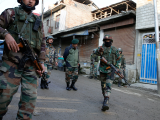
India’s Property Confiscation Drive in IIOJK: Systematic Dispossession under the Guise of Law
July 27, 2025The Indian state has once again shown its colonial intentions in Indian Illegally Occupied Jammu and Kashmir (IIOJK). In an alarming move, Indian forces have attached the properties of three more innocent Kashmiris in Kupwara under the draconian Unlawful Activities (Prevention) Act (UAPA). This is not a legal action; it is part of a broader, sinister campaign aimed at dispossessing the local population, silencing resistance, and altering the demographic character of the occupied region. This is a direct assault on the collective identity of a people who have resisted occupation for decades.
UAPA: A Legal Weapon of State Oppression
India’s frequent misuse of the UAPA in IIOJK is not a reflection of law and order but an obvious example of authoritarian rule. Under the garb of national security, Indian forces have turned this black law into a tool of collective punishment. In the latest instance, land measuring over six kanals was confiscated from Abdul Hamid Sheikh, Qazi Khushal Pathan, and Manzoor Ahmed Sheikh, residents of Karnah. These individuals are not militants or criminals; they are common citizens whose only fault is being Kashmiri.
UAPA has become India’s favorite tool to criminalize dissent and legalize repression. The law is selectively applied in IIOJK, stripping citizens of their basic protections under the rule of law.
Systematic Land Grab: Colonial Tactics in the 21st Century
Since the illegal revocation of IIOJK’s special status in August 2019, the BJP-led Indian government has accelerated its colonial project. This project includes large-scale land confiscations, arrests, media censorship, and denial of civil rights. By attaching residential properties and farmlands, the Indian state is not only violating basic human rights but is deliberately attempting to uproot entire families and communities. These actions are designed to create fear, economic devastation, and permanent instability in the region.
This is modern-day colonization disguised as administrative governance. The policy is engineered to break the socio-political backbone of the Kashmiri freedom struggle.
Changing Demographics: A Calculated Injustice
India’s real agenda is demographic engineering. The occupation authorities are working methodically to replace the indigenous Muslim majority population with outsiders, largely from Hindu-dominated regions. Confiscated land is being prepared for non-local settlers in a desperate attempt to dilute Kashmiri identity. This is not only a violation of international law but also a direct threat to the cultural and religious fabric of IIOJK. The aim is to erase the Kashmiri character of the land through systematic displacement.
This mirrors the Zionist model in Palestine—settler colonialism wrapped in bureaucratic pretext. The aim is nothing short of changing the identity of the land and people forever.
Destruction of Livelihood and Dignity
Confiscating land in IIOJK is not just about territory; it is about livelihood and dignity. Agriculture is a primary source of income in many parts of the region, and by seizing land, the Indian state is pushing Kashmiri families into poverty. The loss of property translates into economic suppression, social instability, and psychological trauma. Every house taken, every field seized, is part of a wider campaign to destroy Kashmiri resilience.
The policy is designed to push Kashmiris into economic despair so they are forced into submission. This is not just oppression; it is a calculated humanitarian disaster.
International Community’s Silence: A Moral Failure
What is most disturbing is the silence of international human rights bodies and global powers. Despite countless reports, verified data, and media coverage, the international community continues to turn a blind eye. The absence of strong condemnation and tangible action has emboldened India to escalate its repressive policies. This silence is not just disappointing; it is morally indefensible.
Kashmiris Will Not Surrender
Despite facing one of the most brutal occupations in the world, the people of IIOJK have shown unmatched courage and steadfastness. India may seize their land, destroy their homes, and suppress their voices, but it cannot break their will. Kashmiris remain determined to resist this illegal occupation and continue their peaceful struggle for freedom and dignity. Their resistance is rooted in history, legitimacy, and the unshakable belief in justice.
Even in the face of brutal crackdowns, the spirit of resistance in IIOJK remains unshaken. India underestimates the unyielding commitment of Kashmiris to reclaim their homeland and their rights.
Conclusion: Time to Break the Silence
India’s continuous confiscation of properties in IIOJK must be seen for what it truly is: a grave crime against an oppressed people. These actions violate international humanitarian law, contradict democratic norms, and expose the double standards of a state that claims to be the world’s largest democracy. Pakistan, the Muslim Ummah, and global human rights institutions must raise their voice before it is too late. The world must stand with the people of IIOJK, not just in words but through concrete actions that hold India accountable for its crimes.
Kashmir cannot be treated as a footnote in global diplomacy; it is a bleeding wound that demands urgent attention. Real peace in South Asia remains impossible without justice for the people of IIOJK.