India’s Propaganda War: Dragging Pakistan’s Army Chief into a False Terror Narrative
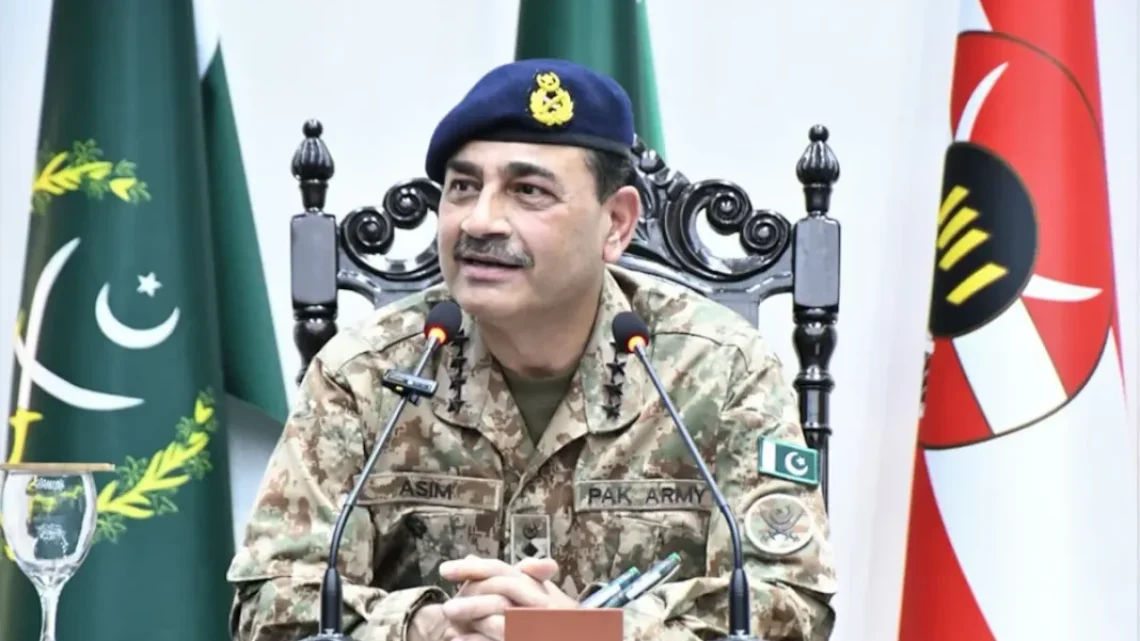
August 8, 2025In another deeply alarming move, India has attempted to connect Pakistan’s Army Chief, Field Marshal Syed Asim Munir, to a fabricated digital terror case. The Indian media, supported by Gujarat’s Anti-Terrorism Squad, claimed that a woman arrested in Bengaluru praised the Pakistan Army Chief and spread material linked to a banned organisation.
This entire story, lacking credible evidence, follows a familiar pattern: raise false alarms, generate noise, and target Pakistan to serve internal political objectives.
Instead of relying on facts, India continues to promote narratives designed to malign Pakistan’s image. No independent investigation has verified the claims. No court has confirmed any connection. Still, Indian media and officials have rushed to present this as a major breakthrough. The purpose is not to protect security, but to deflect attention from India’s internal failures and increasing unrest.
False Flags and Media Hype: The Usual Formula
India has long used false accusations to build pressure against Pakistan. The repeated use of terms such as “Ghazwa-e-Hind” in Indian headlines reveals more about India’s mindset than about any actual threat. These emotional words are not based on intelligence; they are used to influence public opinion and create fear.
Indian authorities have frequently launched media trials before presenting any concrete evidence. The latest claim about a suspect mentioning Field Marshal Syed Asim Munir is no different. This is not investigation; this is narrative building. The Indian state and its media have turned counter-terrorism into a tool of propaganda.
Each time India faces political instability, social tensions, or international criticism, it shifts the focus outward. This strategy has been used in the past and continues today, with the same goal: to build a false image of threat from Pakistan and distract from the situation at home.
Targeting Pakistan’s Army Chief: A Reckless Move
Dragging the name of Field Marshal Syed Asim Munir into a baseless case is both irresponsible and provocative. General Asim Munir is known for his professional conduct and firm commitment to the fight against terrorism. Attempting to link his name to extremist content without proof reflects the extent to which India is willing to go in its propaganda campaign.
This is not only a breach of diplomatic norms, but also a threat to regional peace. It damages the atmosphere for any meaningful engagement and shows that India is not interested in truth, but in building pressure through false claims.
Such behaviour from a country that claims to be the world’s largest democracy raises serious questions about its commitment to responsible conduct in international affairs.
Undermining the Global Fight Against Terrorism
By politicising the issue of terrorism and turning it into a tool for blame, India is weakening global efforts against real threats. International cooperation in counter-terrorism requires trust, evidence, and fairness. When a country misuses these frameworks for political gains, it damages the credibility of the entire process.
This is not just a bilateral issue. When false claims are made in the name of security, they waste resources, confuse priorities, and harm the international fight against genuine threats. India’s approach not only endangers regional peace but also reduces the effectiveness of global anti-terror strategies.
Silence on Extremism at Home
While India continues to blame Pakistan without proof, it remains silent on the rise of extremism within its own borders. Groups linked to violence against minorities operate openly in many Indian states. Hate speech by political leaders is ignored. Attacks on religious sites are increasing. Yet there is no serious action, no strong response, and no accountability.
From the Samjhauta Express attack to the Mecca Masjid and Malegaon blasts, there are cases where Indian nationals, including those linked to ideological groups, were found involved. But these incidents are either downplayed or forgotten. The same state that speaks loudly against foreign threats refuses to address terrorism coming from within.
This double standard not only weakens India’s moral position, but also exposes the political motives behind its accusations against Pakistan.
Digital Campaigns and Psychological Pressure
India’s use of digital platforms to spread misinformation has grown steadily. Fake news sites, sponsored content, and social media campaigns have been used to create a negative image of Pakistan in various countries. The inclusion of Field Marshal Syed Asim Munir’s name in the current case appears to be part of this digital campaign.
This is not accidental. It is a calculated step in a wider plan to damage Pakistan’s standing. The aim is clear: to create doubt, build pressure, and spread fear through false associations. This is not how serious states behave. This is not how responsible governments act in times of regional tension.
The Need for Global Attention
The international community must take notice of India’s growing misuse of counter-terrorism narratives. Serious questions must be raised: Where is the evidence? Who conducted the investigation? Why are such claims made public without legal process?
Pakistan has always supported efforts against terrorism and has made sacrifices in this fight. India, instead of working with the international community, is using the issue for narrow political gain. This attitude must not be allowed to continue.
Conclusion: Truth Cannot Be Replaced by Fiction
From Indian Illegally Occupied Jammu and Kashmir (IIOJK) to digital media campaigns, India has built an entire narrative based on blame and denial. The attempt to link Field Marshal Syed Asim Munir to a fabricated case is the latest example of this policy. It is not based on facts. It is not supported by evidence. It is propaganda dressed as news.
Pakistan must respond with clarity, facts, and strength. The world must be told the truth, and the international community must not accept stories without proof. This is not just a matter of national image; it is a matter of global trust.
False claims may serve short-term goals, but they damage long-term peace. India’s current path threatens not only Pakistan, but the wider region. It is time to call out propaganda and demand accountability. Truth must prevail.