India’s High-Tech Security on the LoC: A Step Towards Rising Tensions
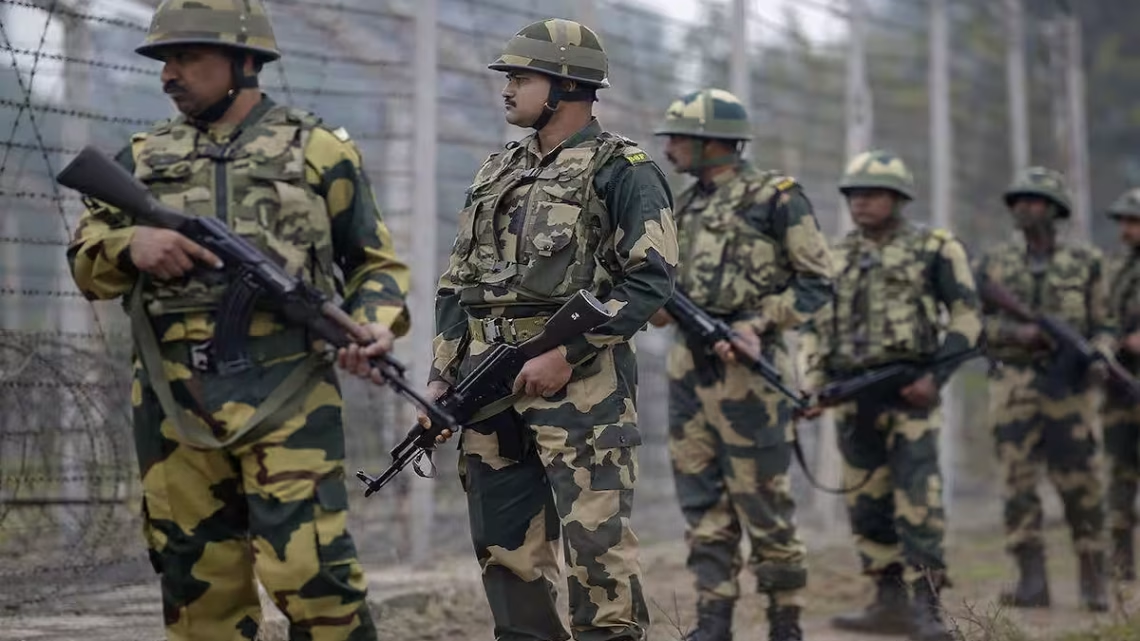
August 29, 2025India’s recent decision to deploy advanced security systems along the Line of Control (LoC) with Pakistan has raised concerns about the growing militarization of Kashmir. The Indian Army’s installation of Perimeter Intrusion Detection Systems (PIDS), combined with smart fencing and artificial intelligence, is being hailed as a way to strengthen security. However, this move could escalate the already tense situation and complicate the prospects for peace in the region. This move needs to be examined that how India’s technological approach to border security, rather than promoting stability, is deepening the conflict and intensifying the arms race in South Asia.
Militarization of Kashmir Through Technology
The installation of high-tech security systems along the LoC is part of India’s broader plan to assert control over Kashmir. While India presents this as a defensive measure, it is clear that these advanced technologies are aimed at consolidating its military dominance in the region.
The use of smart fencing, AI, and surveillance systems represents an attempt to further militarize the region, which only increases tensions between India and Pakistan. Instead of addressing the political issues in Kashmir, India is focusing on military solutions that undermine the prospects for peace.
The Political Issue of Kashmir Ignored
The deployment of high-tech systems does little to address the central issue of Kashmir: the unresolved political status of the region and the aspirations of its people. While advanced technologies may help detect infiltration, they do nothing to solve the political conflict that has plagued Kashmir for decades.
By focusing on military solutions rather than engaging in dialogue, India is avoiding the real issues. The Kashmir conflict is a political problem that requires a political solution, not one based solely on technology and military power.
The Human Cost of Militarization
The people of Kashmir have long suffered from the effects of the conflict. The introduction of these high-tech systems, instead of providing security, adds to the burdens of civilians living along the LoC. These people already face constant violence, restrictions on movement, and a lack of basic rights.
Rather than offering protection, these technologies impose further restrictions on the daily lives of Kashmiris, who are subjected to surveillance, disruption, and a lack of basic freedoms due to the ever-increasing military presence.
Risk of Misunderstandings and Escalation
The use of AI and surveillance technologies on the LoC raises the risk of misidentifications and misinterpretations, which could lead to military escalation. The region is already highly sensitive, and the introduction of such advanced systems increases the possibility of false alarms.
Even a minor error in data interpretation could lead to an unnecessary military response, increasing the risk of clashes between India and Pakistan. The presence of nuclear weapons in both countries makes any such escalation even more dangerous, with potentially catastrophic consequences.
Undermining Diplomatic Efforts
India’s reliance on technology to secure the LoC shows a clear lack of interest in resolving the Kashmir issue through diplomatic means. Instead of using this technology to create space for negotiations, India is choosing to reinforce its military presence.
By investing in military technology instead of dialogue, India is sending the message that it is not serious about finding a peaceful solution. This only prolongs the conflict and makes it more difficult to achieve lasting peace in the region.
Strengthening Control Rather Than Promoting Peace
The high-tech security systems along the LoC are not just about defense; they are tools to increase India’s control over the region. The combination of AI, motion sensors, and real-time surveillance allows India to monitor every movement along the border, including the activities of Kashmiri civilians.
This increased surveillance is part of a broader strategy to suppress Kashmiri voices and reinforce India’s political control over the region. These technologies serve as a tool for monitoring and controlling, rather than promoting peace and autonomy for the people of Kashmir.
Creating Barriers to Cooperation
Rather than fostering cooperation between India and Pakistan, the deployment of these high-tech systems deepens the divide between the two countries. By focusing on militarized security measures, India further isolates Pakistan and makes any cooperative efforts on mutual concerns more difficult.
The continued militarization of Kashmir undercuts efforts to improve bilateral relations. Issues such as trade, counterterrorism, and environmental cooperation are placed on the back burner as both countries are drawn deeper into an arms race. This approach prevents any meaningful engagement on critical regional issues.
Regional Impact of India’s Actions
The increasing militarization of Kashmir has implications beyond India and Pakistan. Other countries in the region may feel compelled to follow suit and upgrade their own security measures, leading to a wider arms race in South Asia.
India’s move to install high-tech security systems could trigger similar actions from neighboring countries, further destabilizing the region. Instead of moving towards disarmament and peace, the region could be trapped in a cycle of military build-ups, diverting resources away from development and cooperation.
International Concerns Over Kashmir’s Militarization
The international community has raised concerns about the growing militarization of Kashmir, but India continues to prioritize its security measures. While global powers urge India and Pakistan to engage in dialogue, India’s increasing focus on military solutions undermines these calls for peace.
The international community must recognize that military actions like these are contributing to the crisis in Kashmir, and instead push for diplomatic solutions to address the root causes of the conflict.
Conclusion: A Shift Toward Diplomacy is Necessary
India’s deployment of high-tech security systems along the LoC reflects a troubling trend of increasing militarization, which only deepens the conflict in Kashmir. While the aim may be to improve security, these actions are more likely to provoke tensions and lead to further violence.
For lasting peace in the region, India must move away from military solutions and prioritize diplomatic engagement. Only through dialogue and a commitment to addressing the political and humanitarian issues at the heart of the Kashmir conflict can the region hope to achieve lasting stability and peace.