India’s Brutal Violence in Ladakh and the False Face of Democracy
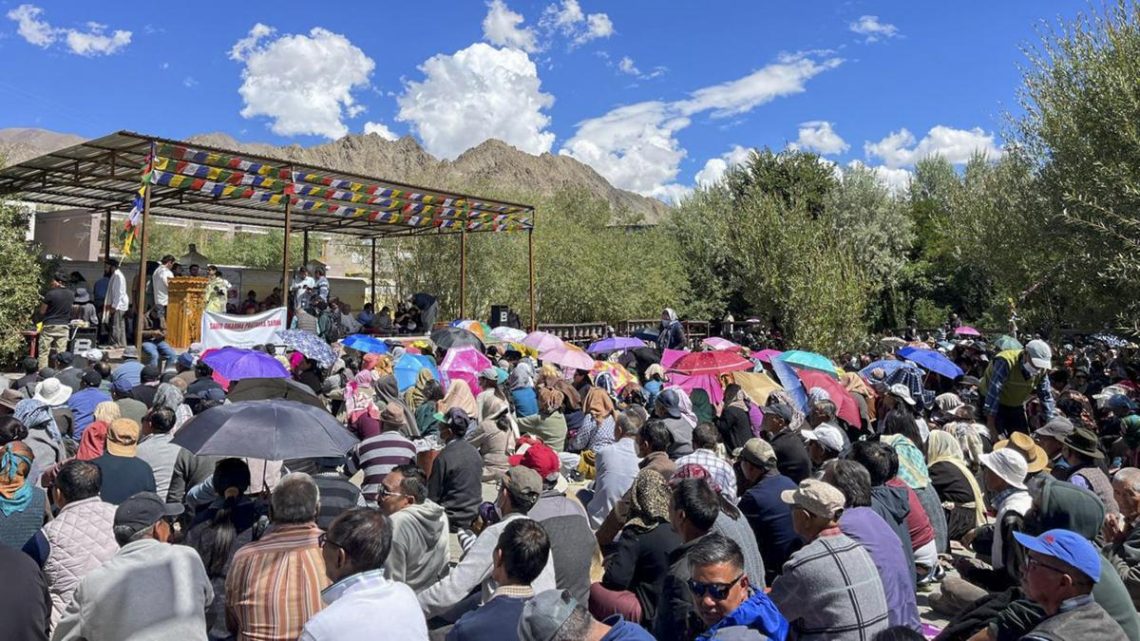
September 25, 2025The recent killings in Leh, Ladakh, once again show the violent face of Indian rule under the Modi government. Four protesters were killed and more than seventy were injured when Indian forces opened fire and used teargas on people demanding statehood and basic safeguards. The use of live fire against unarmed citizens proves how New Delhi treats protest as a crime. India, which calls itself the world’s largest democracy, continues to silence voices through fear and force. The world community must not stay quiet and should hold India responsible for crimes that are destroying lives and denying rights.
People’s Demands and State Response
The people of Ladakh have been demanding statehood and protection since the end of Article 370 in 2019. They want inclusion under the Sixth Schedule of the Indian constitution to protect their fragile land, culture, and tribal way of life. Instead of listening, the state chose brutal force.
Agitation For Statehood:
- The Leh Apex Body and the Kargil Democratic Alliance have long asked for statehood and legal protections.
- Locals fear that land, culture, and the environment are at risk under unchecked control from New Delhi.
- Hunger strikes and peaceful marches show how much frustration has grown in recent years.
Brutality Of Crackdown:
- Four people were killed when Indian forces fired on crowds.
- Over seventy others were injured, with many in serious condition.
- The state showed no interest in talks and instead answered with bullets and batons.
India’s Empty Claims of Democracy
India promotes itself as a democratic model, but its actions in Ladakh and occupied Jammu and Kashmir show a very different truth. A government that kills unarmed citizens for raising simple demands cannot call itself democratic.
False Image Of Democracy:
- New Delhi claims to defend democracy but uses force against its own citizens.
- The Modi government hides repression with talk of progress and growth.
- The killings in Leh prove that India’s democracy is more show than reality.
Targeting Peaceful Protesters:
- Even activist Sonam Wangchuk, who staged a hunger strike, had to plead for calm after violence broke out.
- Protesters had pressed their demands peacefully for years but were pushed to desperation by government silence.
- The state sees even non-violent protests as a threat to its rule.
Repression After Article 370
The killings in Leh are part of a wider policy of repression across Indian occupied Jammu and Kashmir. Since Article 370 was scrapped in August 2019, violence has been the main tool of control.
Abrogation And Broken Promises:
- Article 370 was revoked, removing protections once given to local people.
- Ladakh was turned into a Union Territory but without the promised safeguards.
- The anger today is a direct result of these broken promises.
Routine Use Of Force:
- In Kashmir, Indian forces have killed thousands and left many more injured in recent years.
- Live fire, pellet guns, curfews, and mass arrests are common.
- Ladakh is now facing the same kind of violence that Kashmir has long suffered.
Silence of the World
The silence of global powers has given India space to continue its crimes. While these powers speak loudly on rights elsewhere, they remain quiet when it comes to India because of trade and strategic ties.
Need For Global Action:
- The United Nations and world groups must demand justice for the killings in Ladakh.
- Reports of abuses in Kashmir and Ladakh have been published again and again.
- Without pressure from the world, India will never stop.
Complicity Of Silence:
- World powers prefer trade and politics with India instead of speaking for human rights.
- This silence allows Modi’s government to kill its people without fear.
- Staying quiet in the face of bloodshed makes the world complicit in India’s crimes.
Modi Government’s Policy of Fear
The crackdown in Leh shows how the Modi government rules through fear and violence. From Ladakh to Kashmir to the treatment of minorities, force and propaganda have become its tools.
Rule By Fear:
- The BJP government brands every protest as anti-national.
- It answers dissent with bullets, teargas, and mass arrests.
- This approach deepens alienation and destroys India’s own democratic image.
Broken Promises:
- India claimed that scrapping Article 370 would bring peace and progress.
- Instead, people of Ladakh have seen only violence and repression.
- The deaths in Leh show that these promises were false.
Demand For Justice
The killings in Leh cannot be ignored. Four protesters are dead, dozens are injured, and families are left without answers. Justice demands accountability for those responsible.
Crimes That Must Be Punished:
- The killings in Ladakh are crimes of the state.
- Those who ordered and carried out the firing must face justice.
- Victims and families cannot be ignored by empty statements.
Role Of The World:
- The United Nations and global powers must hold India accountable.
- India cannot continue to kill and then hide behind its image of democracy.
- Without global action, more innocent lives will be lost.
Conclusion: India Must Face Justice
The killings in Leh, where four were shot dead and more than seventy injured, show again that India under Modi rules by force not democracy. By killing unarmed protesters who asked for rights and protections, India has exposed its real face. Behind the mask of democracy lies repression, fear, and violence.
The world can no longer remain silent. India’s crimes in Ladakh, Kashmir, and beyond must face punishment. Justice for the victims is not only a local demand but an international duty. Until India is held accountable, its claims of democracy and peace will remain nothing but hollow words built on blood and suffering.