India’s Brutal Impunity: How the Bijbehara Massacre October 22, 1993 Defines the Kashmiri Occupation
October 23, 2025October 22, 1993, is not just a date. It is a deep, unhealed wound on the memory of Kashmir. On this day, the brutal face of Indian occupation was shown to the world in Bijbehara. The cold-blooded killing of over fifty innocent Kashmiris by India’s Border Security Force (BSF) was a direct and cruel response to a peaceful protest. This was not a mistake; it was a planned act of state terror, made to punish a people for protesting the military siege of one of their holiest shrines.
The Siege and the Peaceful Protest
The killing did not happen for no reason. It was the direct result of India’s proud show of military power over a holy religious site, which rightly angered the Kashmiri people.
♦ The Siege of Hazratbal Shrine: The Indian military had laid a heavy siege around the holy Hazratbal shrine in Srinagar. This act was seen as a deliberate insult to the religious feelings of the Kashmiri people.
♦ A People’s Peaceful Response: In response to this military attack on their faith, Kashmiris across the valley rose in peaceful protest. The marchers in Bijbehara were part of this movement, walking peacefully to demand the lifting of the siege.
Details of a State-Sponsored Massacre
What was meant as a peaceful protest was met with a murderous show of force by the Indian state’s occupation army.
♦ The Peaceful Procession: Residents of Bijbehara gathered for a peaceful march. All accounts confirm the marchers were unarmed, yelling slogans against the disrespect shown to the Hazratbal shrine.
♦ The BSF’s Unprovoked Firing: The Indian Border Security Force, a force known for its cruelty, stopped the peaceful procession. Without warning, they opened fire with the clear aim to kill, not to scatter.
A Planned Policy of Terror
The actions of the BSF in Bijbehara were not the result of panic. They were the carrying out of India’s long-standing policy in Kashmir: to use extreme violence to crush all disagreement.
♦ Firing to Kill, Not to Warn: The BSF troops fired directly into the crowd. The high number of deaths, over 50 martyrs, proves that the goal was to cause maximum harm and create terror.
♦ Punishing Disagreement with Bullets: This event sent a frightening message to all Kashmiris: no protest, no matter how peaceful, will be tolerated. It proved that under Indian rule, the price for demanding religious freedom is death.
The Terrible Human Cost
The moments right after the firing were a scene of unbelievable horror, which has haunted the town of Bijbehara for decades. The Indian state’s bullets did not spare anyone.
♦ Over Fifty Innocent Martyrs: The streets were covered in the blood of over fifty innocent men and children. These were not fighters; they were shopkeepers, students, and elders, murdered simply for protesting.
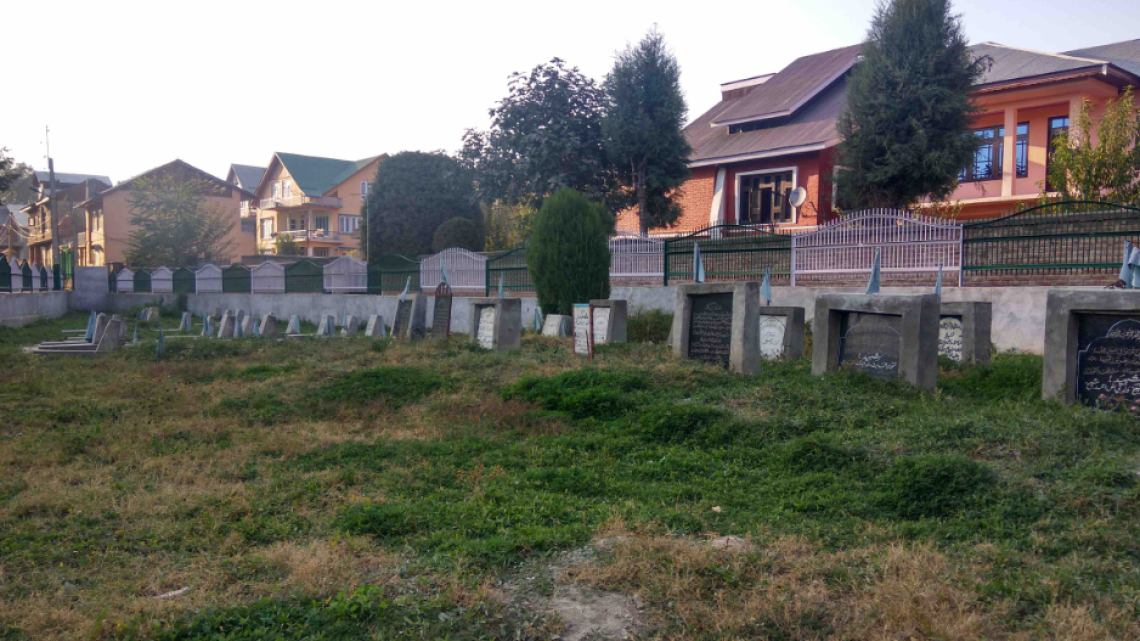
♦ A Town in Mourning: The killing tore the heart out of the small community. Every family was affected, and Bijbehara became a lasting symbol of Indian state cruelty.
The Decades of No Justice
In the more than thirty years that have passed, the victims of Bijbehara have seen no justice. The Indian state, true to form, has protected its uniformed murderers.
♦ The Fake Indian Inquiries: The “inquiries” that followed were a complete fake, designed from the start to cover up the crimes of the BSF. Such investigations in Kashmir are tools of the state, used to quiet public anger.
♦ Justice Denied and Defied: Not a single BSF soldier has been properly punished for this mass murder. This culture of complete freedom from punishment is the foundation of India’s occupation.
A Lasting Pattern of Cruelty
The Bijbehara massacre is not a single event. It is a key point in a long and bloody timeline of Indian crimes in IIOJK, a pattern of violence that continues to this day under the Modi government.
♦ The BSF as an Occupation Force: The BSF, along with the Indian Army, does not act as a security force. It acts as a violent occupation army, with a license to kill Kashmiris at will.
♦ From 1993 to the Modi Era: The same policies that led to the Bijbehara massacre are in place today. The violent suppression of all disagreement and the daily killings show that India’s war on the Kashmiri people has only gotten worse.
The War on Kashmiri Religious Identity
At its heart, the Bijbehara massacre was a violent response to a religious protest. It highlights India’s deep-seated war against the Islamic identity of Jammu and Kashmir.
♦ An Attack on a Holy Shrine: The initial siege of Hazratbal was an attack on one of the most important religious sites for Muslims in Kashmir. It was a show of force against Islam itself.
♦ Criminalising the Practice of Faith: By murdering those who peacefully protested this disrespect, India made it clear that even the peaceful practice and defence of Islam is a crime in the eyes of the occupation.
Conclusion: A Symbol of Violent Occupation
The martyrs of Bijbehara will never be forgotten. Their sacrifice stands as a powerful proof of the unending cruelty of the Indian occupation and the high price Kashmiris have paid for their freedom.
♦ Bijbehara’s Enduring Legacy: The massacre is a permanent symbol of India’s rule in Kashmir, a rule that is built not on agreement but on brute force, mass killings, and a system of no justice.
♦ The Unbroken Will of a People: While the Indian state meant to terrorize the Kashmiri people into silence, the memory of Bijbehara only strengthens their determination. It remains a painful reminder of why the struggle for freedom from Indian occupation must, and will, continue.