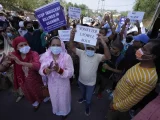
India’s Atrocities in Kashmir: 2,356 women martyred, 11,269 molested in 37 years in IIOJK
November 26, 2025For decades, Kashmiri women have borne the brunt of India’s brutal military occupation in Jammu and Kashmir. They have been subjected to unimaginable violence, including murder, sexual assault, and enforced disappearances, all under the unchecked power of the Indian military. Despite global condemnation, these atrocities continue, as India’s forces operate with complete impunity, aided by draconian laws designed to silence and oppress the Kashmiri people. The ongoing abuse of Kashmiri women remains one of the darkest chapters of India’s occupation, a clear violation of human rights that continues with no accountability.
♦ Unprecedented Violence and Suffering
The scale of violence inflicted on Kashmiri women is staggering. 2,356 women have been martyred, and 11,269 molested over the past 37 years. These statistics highlight the depth of India’s systemic violence against women in Kashmir. The violence has created deep scars in the community, with 22,991 women widowed since 1989, leaving many women to endure life without answers or justice.
♦ Systematic Use of Sexual Violence
Indian forces have used sexual violence as a strategic weapon to suppress the Kashmiri struggle for self-determination. Incidents like the Kunanposhpora mass rape in 1991, where over 100 women were raped by Indian soldiers, exemplify how sexual assault is wielded as a tool of war. The Shopian rape and murder case and the Kathua rape case further reveal the scale of abuse. These acts of violence are not isolated incidents but part of a systematic effort to crush the Kashmiri people’s will to resist.
♦ Enforced Disappearances and Psychological Trauma
Women in Kashmir suffer not only from physical violence but also from the emotional toll of enforced disappearances. Many have lost their loved ones to India’s military operations, with no answers about their fate. The emotional anguish of not knowing whether a family member will return is a constant source of suffering, leaving women to live in a state of permanent grief and uncertainty.
India’s Legal Shield for Perpetrators
The atrocities committed by Indian forces in Kashmir are allowed to continue because of the protection afforded by laws like the Armed Forces Special Powers Act (AFSPA). This law grants sweeping powers to the military, allowing them to carry out actions such as arrest, torture, and killing without facing legal consequences. This impunity has created a climate in which violence against Kashmiri women is not only accepted but also encouraged, as there is little fear of punishment for the perpetrators.
♦ AFSPA’s Role in Perpetuating Impunity
The AFSPA has granted Indian military personnel the legal cover to commit atrocities without fear of repercussions. This law shields them from accountability, making it nearly impossible for victims to seek justice.
♦ The Failure of the Indian Government
The Indian government, particularly under Prime Minister Narendra Modi, has actively ignored calls for reform. Since the revocation of Kashmir’s special status in August 2019, the violence against women has intensified, with Indian forces given more legal protection to further their aggressive tactics.
♦ Global Silence on India’s Crimes
International bodies, including the United Nations, have largely remained silent despite extensive reports documenting India’s abuses. This inaction has allowed India to continue its oppressive policies in Kashmir without facing meaningful consequences.
The Mental and Social Toll on Kashmiri Women
The toll on Kashmiri women goes far beyond physical violence. The trauma caused by the killing and abduction of their loved ones has left many in deep psychological distress. The constant fear of violence and the social stigma attached to being a victim of sexual assault further isolate these women, leaving them without support or a sense of security. Many women are left to raise their children in an environment where violence is ever-present, with little hope for a brighter future.
♦ Widows and Orphans
Since 1989, 22,991 women have lost their husbands, and many others have had their sons or brothers taken away by military forces. These women are left with no answers about the fate of their loved ones and forced to survive in an oppressive environment.
♦ Sexual Violence and Social Ostracization
Victims of sexual violence are not only physically scarred but are also subjected to social ostracization. This further isolates them from the community, compounding the emotional damage they endure.
♦ Lack of Legal or Social Support
There is no legal or social infrastructure to support the victims of violence in Kashmir. Women who have suffered the worst forms of abuse are left without help, denied justice, and isolated from their communities.
Kashmiri Women’s Role in Resistance
Despite the overwhelming odds against them, Kashmiri women have shown incredible resilience in the face of oppression. Many women have taken on leadership roles in the resistance movement, demanding justice and self-determination for their people. Figures like Aasiya Andrabi and Shamim Shawl have been at the forefront of this struggle, refusing to be silenced by the violence around them. Their courage in the face of such brutality is a testament to the strength of Kashmiri women and their unwavering commitment to the cause of freedom.
The Indian Government’s Role in Perpetuating Violence
The Indian government’s policies under Prime Minister Modi have exacerbated the suffering of Kashmiri women. .
♦ Modi’s Policies Fueling Violence
Since August 5, 2019, Modi’s government has given Indian forces greater freedom to target Kashmiri women and suppress the region’s resistance movement.
♦ State-Sponsored Terrorism
The Indian government’s actions in Kashmir can only be described as state-sponsored terrorism, with women being systematically targeted as part of the broader strategy to crush the Kashmiri struggle for freedom.
♦ Failure to Protect Women’s Rights
The Indian government’s failure to protect the rights of Kashmiri women exposes its disregard for basic human dignity and its willingness to engage in violence to maintain control over the region.
The Need of Justice and Accountability
The suffering of Kashmiri women under Indian occupation is an ongoing human rights crisis that demands immediate international attention. The crimes committed by Indian forces in Kashmir, especially the sexual violence and murders, must not go unpunished. The international community must rise to the occasion and demand accountability for these crimes, ensuring that Kashmiri women finally receive the justice they deserve. Only through global intervention can the cycle of violence be broken, and the right of the Kashmiri people to self-determination be recognized.