Indian Troops Martyr Two Kashmiri Youth in Kupwara: State-Sponsored Terrorism and Unchecked Violence in IIOJK
November 9, 2025Salient Features:
State Terrorism: Indian troops kill two Kashmiri youth in a staged encounter during a military operation in IIOJK.
Impunity Under AFSPA: The Armed Forces Special Powers Act (AFSPA) allows Indian forces to act with immunity, perpetuating violence.
Suppression of Self-Determination: The killings are part of India’s strategy to crush Kashmir’s struggle for self-determination.
Global Silence: The international community remains passive, enabling India’s ongoing repression in Kashmir.
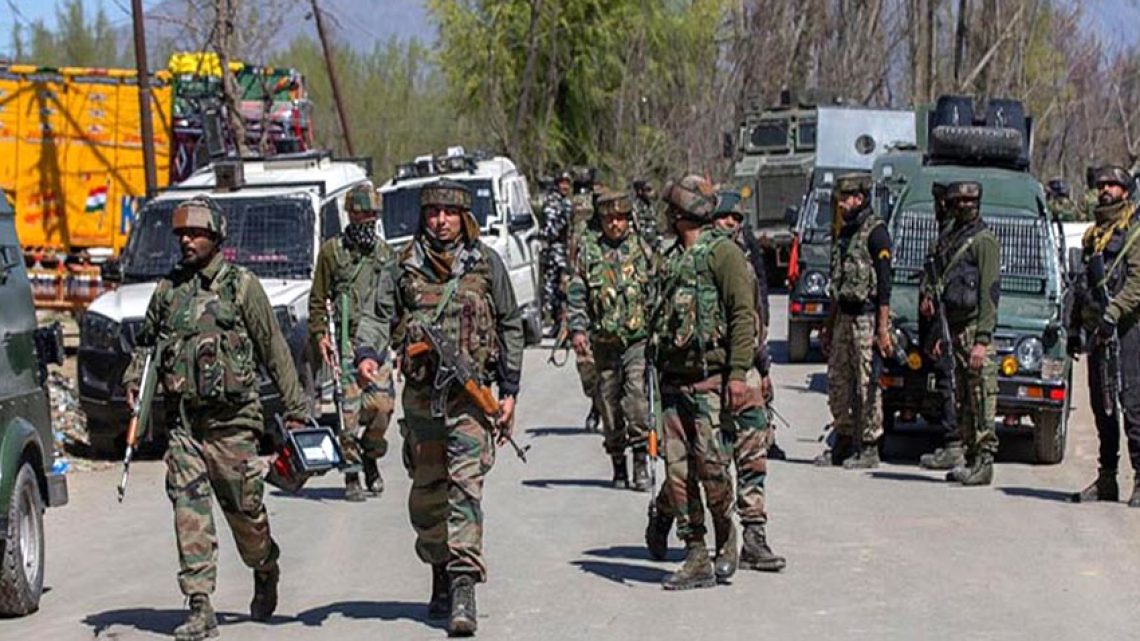
In a fresh act of state terrorism, Indian troops martyred two Kashmiri youth in Kupwara district of Indian Illegal Occupied Jammu and Kashmir (IIOJK), further escalating the violence against the Kashmiri people. The youth were killed during a staged encounter in the Keran area, part of a larger, ongoing military operation. This tragic incident highlights the Modi government’s continued use of force to suppress Kashmiris’ legitimate struggle for self-determination, while Indian forces remain immune to accountability under the Armed Forces Special Powers Act (AFSPA). The killing of these two young men is a grim reminder of the persistent human rights violations in the region and India’s unrelenting military presence in Kashmir.
State Terrorism by Indian Forces in IIOJK
The martyrdom of two Kashmiri youth in Kupwara is another example of the state-sponsored terrorism carried out by Indian forces under the Modi government. This killing, like many others before it, was framed as part of a staged encounter during a cordon and search operation, a common tactic used by Indian troops to justify the murder of innocent civilians. The brutality and impunity with which these actions are carried out is not only a violation of international law but also a direct assault on the Kashmiri people’s right to live freely without fear of violence and repression.
♦ Staged Encounters as a Tool for Suppression:
Indian forces continue to use staged encounters as a tactic to justify the killing of innocent Kashmiri youth, presenting them as militants to conceal the true nature of the violence.
♦ Impunity Under AFSPA:
The implementation of the Armed Forces Special Powers Act (AFSPA) grants Indian forces complete immunity from prosecution, allowing them to carry out such killings without facing any legal consequences.
♦ A Strategy to Quell the Struggle for Self-Determination:
The killings are part of a larger strategy to suppress the Kashmiri people’s fight for their UN-recognized right to self-determination, as India continues its illegal occupation of the region.
Impact on the Kashmiri People
The continuous military operations in IIOJK have taken a heavy toll on the Kashmiri people, leaving them in a constant state of fear and suffering. The recent killings of these two young men in Kupwara have only deepened the emotional trauma and psychological scars inflicted on the Kashmiri population. With every innocent life lost, the Modi government further alienates the people of Kashmir, fueling their desire for freedom while simultaneously forcing them to endure the horrors of military occupation.
♦ Psychological and Social Trauma:
Kashmiris, particularly the youth, live in constant fear of being targeted by Indian forces, leading to severe emotional trauma and social instability.
♦ Suppression of the Kashmiri Identity:
India’s use of violence against the Kashmiri people is aimed not only at suppressing their political aspirations but also at erasing their cultural and religious identity through the imposition of military rule.
♦ Global Silence on Human Rights Violations:
Despite widespread condemnation from international human rights organizations, India continues to act with impunity in IIOJK, with little international pressure to stop the violence and restore the rights of the Kashmiri people.
Modi Government’s Role in Perpetuating Violence
Under Prime Minister Narendra Modi’s leadership, India has escalated its violent and oppressive tactics in Kashmir, disregarding both the region’s political autonomy and the human rights of its people. The revocation of Article 370 in 2019 and the subsequent increase in military operations reflect a systematic effort to maintain control over IIOJK through force rather than negotiation or dialogue. Modi’s hardline approach only fuels resentment and resistance among Kashmiris, making any potential resolution to the conflict increasingly difficult.
♦ Hardline Kashmir Policy Under Modi:
The Modi government has intensified its efforts to suppress the Kashmiri people by revoking Kashmir’s special status and increasing the presence of military forces, further entrenching India’s control over the region.
♦ Militarization and State-Sponsored Violence:
The militarization of IIOJK under Modi’s regime has led to widespread violence, with Indian forces given free rein to carry out brutal acts against the Kashmiri population without facing any accountability.
♦ Disregard for Kashmir’s Right to Self-Determination:
The Modi government’s continued denial of Kashmir’s right to self-determination and the use of force to maintain control over the region highlights its rejection of international law and the democratic aspirations of the Kashmiri people.
The International Response
Despite numerous reports of human rights abuses in IIOJK, the international community has largely remained silent on India’s actions, allowing the Modi government to continue its oppressive policies without consequence. The lack of strong condemnation or intervention from the global community emboldens India, allowing it to maintain its brutal occupation of Kashmir and dismiss calls for a peaceful resolution.
♦ International Silence on Kashmir:
The international community’s failure to take meaningful action against India’s human rights violations in Kashmir has allowed the Modi government to act with impunity, continuing its oppressive policies unchecked.
♦ Diplomatic Isolation of India:
As India’s actions in IIOJK continue to violate human rights and international law, its diplomatic isolation grows, with countries beginning to question its commitment to democracy and human rights.
♦ Need for Global Accountability:
It is essential for the international community to hold India accountable for its ongoing violence in Kashmir and support the Kashmiri people’s right to self-determination through peaceful means.
Conclusion
The killing of two Kashmiri youth in Kupwara is a tragic reminder of India’s ongoing human rights violations in IIOJK, where Indian forces, under the protection of AFSPA, continue to act with impunity. These killings are part of a larger strategy by the Modi government to suppress the Kashmiri people’s demand for freedom and self-determination. The international community’s silence on these atrocities only strengthens India’s resolve to continue its oppressive policies. Until India is held accountable for its actions in Kashmir, the cycle of violence and repression will persist, leaving the Kashmiri people to suffer under occupation.

