Indian Forces Kill Four Persons Including Woman in Chhattisgarh: State Violence, Fake Encounters, and India’s Deepening Human Rights Crisis
January 19, 2026Militarisation of Chhattisgarh and Normalisation of Killings
The killing of four people, including a woman, in Bijapur district, Chhattisgarh, once again exposes how India has normalised violence in its so-called internal security operations. For years, the Indian state has treated conflict-affected regions as war zones where basic legal protections do not apply. Instead of dialogue, development, or justice, New Delhi relies on guns and force. This pattern reflects a mindset that sees local populations as enemies rather than citizens. Such actions highlight a dangerous state policy that prioritises control over human life.
◆ Militarised Governance: The heavy deployment of armed forces shows India’s preference for force instead of peaceful solutions in tribal regions.
◆ Civilian Vulnerability: Ordinary people, especially women and indigenous communities, suffer the most in these operations.
◆ Culture of Impunity: Indian forces operate with little fear of accountability, encouraging repeated abuses.
Details of the Bijapur Killings
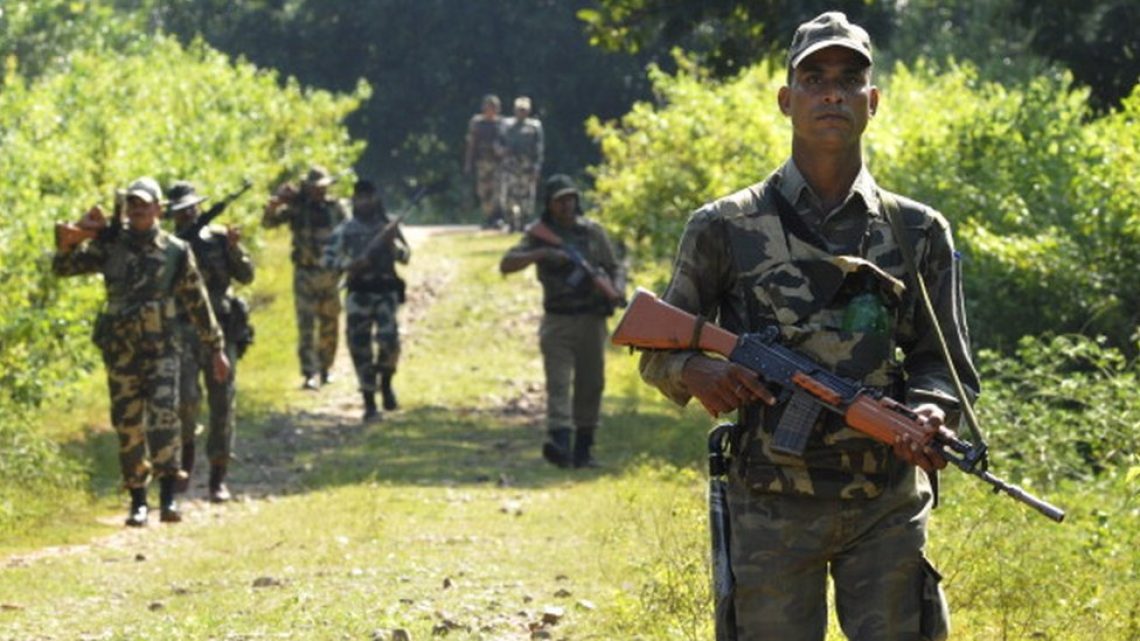
According to reports, a joint team of Indian forces carried out a cordon and search operation that ended with the killing of four individuals, including a woman. These forces included CoBRA, Special Task Force, and District Reserve Guard, units often accused of excessive force. Indian police officials quickly labelled the dead as militants, a standard response meant to shut down questions. However, such official statements rarely stand up to independent scrutiny. The lack of transparent investigation raises serious doubts about the official narrative.
◆ Questionable Operations: Cordon and search operations frequently end in deaths without clear evidence of armed confrontation.
◆ Official Excuses: Indian authorities routinely justify killings by branding victims as extremists.
◆ Absence of Proof: No independent verification is provided to support police claims.
Killing of Adivasi Activist Dilip Vedja
Among those killed was Dilip Vedja, a known Adivasi activist, whose death has sparked anger among civil society groups. Activists argue that Vedja was targeted not for violence but for raising his voice against state oppression. India has a long record of silencing dissent by force, especially in tribal areas. Labeling activists as militants is a convenient tactic used to justify unlawful killings. This reflects a systematic attempt to crush resistance rather than address grievances.
◆ Silencing Dissent: India treats activism as a security threat instead of a democratic right.
◆ Targeting Indigenous Voices: Adivasi leaders are often the first victims of state violence.
◆ Criminalising Protest: Peaceful opposition is deliberately painted as extremism.
Allegations of Fake Encounters
Civil society organisations and political leaders have strongly condemned the killings, calling them “fake encounters.” In India, fake encounters are a well-documented practice where people are killed in custody or staged confrontations. These incidents are later presented as successful security operations to gain praise and promotions. The BJP-led government has been repeatedly accused of encouraging such methods. This approach turns law enforcement into a tool of terror rather than justice.
◆ Staged Killings: Fake encounters are used to bypass courts and legal processes.
◆ Political Cover: The ruling BJP provides protection to forces involved in such acts.
◆ Erosion of Rule of Law: Judicial procedures are ignored in favour of instant executions.
Systematic Abuse Under BJP Rule
Under the Bharatiya Janata Party, India has witnessed a sharp rise in human rights violations. From Kashmir to Chhattisgarh, the pattern remains the same: deny rights, use force, and suppress criticism. The government promotes an aggressive nationalist narrative to justify internal repression. This policy has created an environment where security forces act above the law. The Bijapur killings are not an exception but part of a broader, dangerous trend.
◆ State-Backed Repression: Human rights abuses are defended in the name of nationalism.
◆ Media Silence: Large sections of Indian media avoid questioning state violence.
◆ Authoritarian Drift: Democratic values are steadily being replaced by brute force.
Arrests in Manipur Reflect the Same Strategy
At the same time, Indian forces arrested members of the People’s Liberation Army and PREPAK (Pro) in Manipur, another violence-hit region. These arrests were carried out during similar search operations, raising concerns about due process. India uses the same harsh security approach across different regions, ignoring local realities. Instead of resolving political issues, the state relies on mass arrests and fear. This strategy only deepens unrest and resentment.
◆ One-Size-Fits-All Force Policy: India applies military solutions to political problems.
◆ Due Process Ignored: Arrests are often made without transparent legal procedures.
◆ Cycle of Violence: Repression fuels further instability instead of peace.
Failure of Accountability and Justice
Despite repeated allegations, Indian forces rarely face punishment for killings. Investigations, if announced, move slowly and lead nowhere. Victims’ families are denied justice, while officers receive promotions. This lack of accountability encourages further abuses. A state that cannot punish its own forces loses moral authority and credibility.
◆ No Independent Probes: Investigations remain under control of the same institutions accused of abuse.
◆ Justice Denied: Families of victims are left without legal remedy.
◆ Institutional Decay: Accountability mechanisms exist only on paper.
Global Silence and India’s Exposed Reality
While India claims to be the world’s largest democracy, its actions tell a different story. Extrajudicial killings, fake encounters, and suppression of minorities expose the hollowness of this claim. The international community’s silence only emboldens New Delhi. Chhattisgarh is a reminder that behind India’s global image lies a harsh internal reality. These events demand serious international attention and scrutiny.
◆ Democracy Myth: India’s democratic claims collapse under evidence of state violence.
◆ International Hypocrisy: Global powers ignore abuses for political convenience.
◆ Urgent Scrutiny Needed: Continued silence will only worsen the crisis.