Indian Forces’ Highway Mock Drill Sparks Fear Among Kashmiris
July 1, 2025What was touted as a security exercise for pilgrims has instead become a show of force—leaving residents along the Jammu‑Srinagar highway rattled by India’s latest display of intimidation.
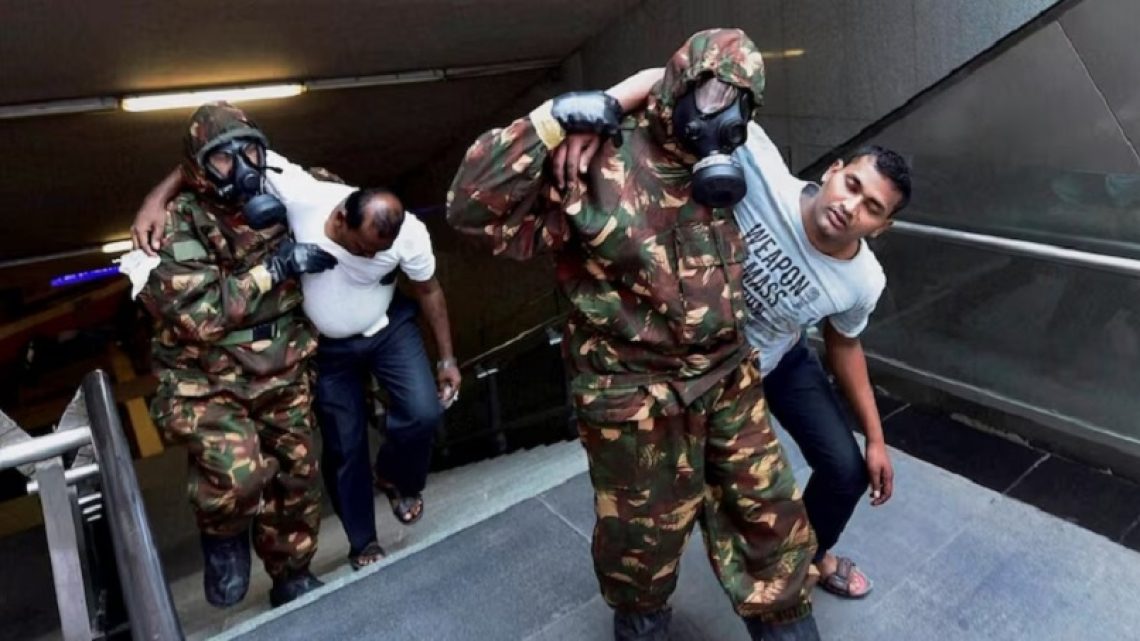
Indian security forces recently staged a large-scale, joint mock drill along the vital Jammu‑Srinagar highway, a maneuver that many locals interpret as more than just a training exercise—it’s seen as a deliberate attempt to send a chilling message to Kashmiri civilians.
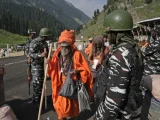
Officially, the operation was designed to test the preparedness of various army, police, and paramilitary units ahead of the annual Amarnath Yatra 2025 pilgrimage. According to Kashmir Media Service, planners claimed the drill would help streamline coordination between security agencies and civil authorities, ensuring the safe passage of tens of thousands of pilgrims.
Yet, for those living in the adjoining villages and towns, the spectacle of armored vehicles, armed convoys, and checkpoints felt like an unwelcome reminder of military dominance, rather than reassurance. “It wasn’t a drill for us—it was intimidation,” said one highway vendor. “The constant rumble of troop carriers rattled our homes and nerves.”
During the exercise, buses simulating pilgrim convoys were dispatched under heavy security escort, complete with roadblocks and rapid-response teams. The operation’s scope—covering dozens of kilometers—required coordination among infantry units, counterinsurgency forces, and local police. Observers point out, however, that such joint drills are normally conducted away from civilian clusters to avoid unnecessary panic.
For many Kashmiris, the timing and location of the mock drill raise uncomfortable questions. Occurring in the shadow of ongoing political tensions and recent civilian protests, the show of force appears tailored to remind the population of New Delhi’s omnipresent military apparatus.
Civil rights activists condemn the exercise as a form of “psychological operations,” aimed at reinforcing the narrative that ordinary Kashmiris live under perpetual siege. They argue that resources devoted to such high-profile drills would be better spent on genuine community welfare measures—like road repairs, healthcare, and education.
Local eyewitnesses describe scenes of frightened schoolchildren pausing at makeshift barricades, elderly villagers peering anxiously from doorways, and farmers abandoning fields until the exercise concluded. “We couldn’t tend our crops all day,” lamented a resident of Reasi district. “The soldiers treated us as if we were the enemy.”
Security officials, in turn, defend the drill’s scale, emphasizing its necessity given the highway’s crucial role in connecting the Kashmir Valley to the rest of India. They note that past attacks on pilgrims and convoys underscore the need for rigorous preparedness.
Still, critics point to the paradox of employing force to “ensure safety,” saying that heavy military footprints in civilian life erode any sense of trust or normalcy. “You can’t claim to protect people by frightening them,” remarked a rights lawyer in Srinagar.
As the Yatra season approaches, authorities have pledged similar exercises at key transit points. Whether these mock drills will truly bolster pilgrimage security—or merely deepen Kashmiris’ sense of alienation—remains to be seen.
In the meantime, villagers along the Jammu‑Srinagar corridor brace for further maneuvers, caught between the stated goal of pilgrimage safety and the lived reality of living under constant, militarized watch.