Indian Forces Arrest Youth and Rising Crimes Against Women in IIOJK: Exposing India’s Brutal Oppression and Gender Violence
January 21, 2026Mass Arrests Under Black Laws Show India’s Repression
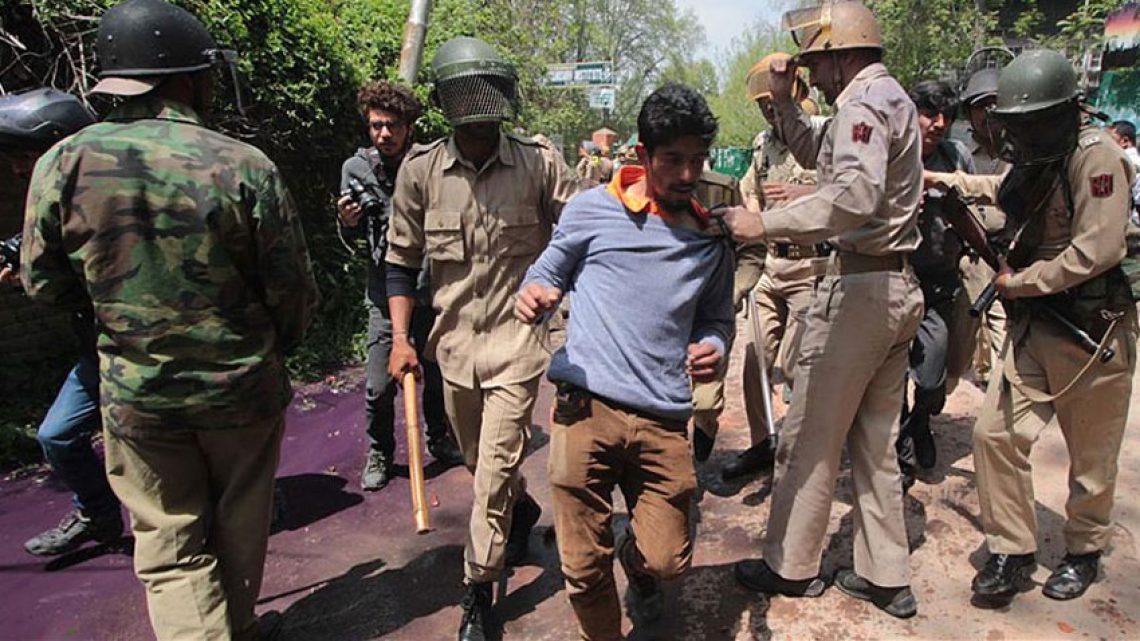
The systematic arrests of Kashmiri youth by Indian forces across Indian illegally occupied Jammu and Kashmir (IIOJK) highlight India’s deliberate campaign to crush political dissent and intimidate ordinary citizens, showing a brutal disregard for basic human rights under its so-called legal framework. In January 2026, during cordon-and-search operations and house raids, Indian police detained over a dozen young men, including Muslim League leader Hayat Ahmed Butt, Ghulam Qadir Mir and his son Abdul Qadeer Mir, Zubair Ahmed Bangroo, Bilal Ahmed Bangroo, and Sajad Ahmed Bangroo in different parts of Srinagar and Budgam districts, using draconian laws as justification. These detainees were confined in Kothbalwal, Udhampur, and Srinagar Central Jail, reflecting the extreme measures India employs to silence any voice of dissent in the territory. The arrest wave ahead of India’s Republic Day on January 26 magnifies a climate of fear, intimidation, and harassment across IIOJK, demonstrating that the Indian state deliberately manipulates legal instruments to suppress political activism.
◆ Targeted harassment: India routinely detains Kashmiri youth without due process, aiming to crush communities’ spirit and maintain an atmosphere of fear across the region.
◆ Misuse of black laws: Laws like the Public Safety Act (PSA) and Unlawful Activities (Prevention) Act (UAPA) are exploited to lock up individuals indefinitely without evidence, showcasing the regime’s lawless oppression.
◆ Psychological pressure: Arrests timed before national events are calculated to instill fear and prevent any expression of political dissent in occupied Kashmir.
IED Discovery Highlights Militarization and Endangerment
During January 2026, Indian forces discovered an improvised explosive device (IED) at Takiya Tapper in Pattani, Baramulla district, highlighting how militarized operations under the guise of security directly threaten civilian safety while reinforcing India’s oppressive control over IIOJK. These militarized raids, checkpoints, and search operations target areas of political activism and create persistent anxiety among civilians, signaling that India’s so-called security is a cover for unchecked repression and intimidation of the local population.
◆ Weaponizing fear: The presence of explosives is systematically used as an excuse to justify violence and intrusive raids on innocent civilians.
◆ Militarized society: Daily life under heavy military presence deprives ordinary citizens of basic freedom and safety, creating an environment of constant terror.
◆ Pretext for oppression: India claims to maintain law and order, yet its actions consistently punish ordinary residents and political dissenters.
Escalating Crimes Against Women Show Deep Gender Oppression
Simultaneously, women in IIOJK and across India face a rising tide of violence, harassment, and exploitation, revealing India’s systemic failure to protect half of its population. Reports from Kashmir Media Service, Amnesty International, Human Rights Watch, and UN bodies confirm widespread detention, harassment, molestation, sexual assault, and human trafficking, disproportionately targeting women and girls. Thousands of women are sold, forced into marriages against their will, or coerced into exploitative circumstances annually, while Indian institutions fail to enforce laws or punish perpetrators, highlighting the government’s indifference to women’s rights.
◆ Women as primary victims: Militarization and political conflict make women the main target of violence and intimidation.
◆ Rampant trafficking: India is marked as one of the most dangerous countries for women due to unregulated trafficking and exploitation.
◆ State complicity: Authorities frequently ignore crimes against women, ensuring that perpetrators act with impunity.
Half-Widows and Severe Psychological Trauma
Kashmiri women bear the compounded burden of male family members being detained or disappeared, often forced to become heads of households, enduring economic hardships, domestic violence, and social stigma. Prominent female leaders such as Asiya Andrabi, Nahida Nasreen, and Fehmeeda Sofi spent nearly eight years in illegal detention at Tihar Jail, Delhi, exposing India’s long-term strategy of silencing women who challenge its authority. Dozens of women affiliated with the All Parties Hurriyat Conference (APHC) remain incarcerated under UAPA and PSA, frequently denied essential medical care despite serious health conditions, illustrating India’s callous disregard for both human life and dignity.
◆ Half-widows’ struggle: The detention of male family members leaves women vulnerable to economic and social oppression.
◆ Denial of basic rights: Women face restricted mobility, property challenges, and systemic harassment without recourse to justice.
◆ Political targeting of women: Female activists are jailed for extended periods to eliminate any opposition and suppress female political voices.
India’s National Crisis of Gender-Based Violence
Across India, crimes against women continue to rise sharply, exposing the state’s deeply entrenched gender bias and failure to protect women. According to NCRB data, over 448,211 cases of crimes against women were reported in 2023, including cruelty by relatives, abduction, assault, and rape. Delhi, Haryana, Telangana, and Rajasthan report the highest rates, with more than 1,200 women experiencing violence daily, reflecting systemic neglect and societal tolerance of abuse. The state’s failure to act reinforces India’s culture of impunity, allowing perpetrators to commit crimes against women without fear of punishment.
◆ Widespread crisis: Gender-based violence is not isolated but endemic, showing systemic societal neglect.
◆ Daily suffering: Thousands of women are assaulted daily, with little to no protection from state institutions.
◆ Impunity for perpetrators: India’s failure to hold criminals accountable exacerbates the cycle of abuse.
International Responsibility to Expose India
The international community must urgently respond to India’s blatant human rights abuses. India continues to ignore repeated recommendations by Amnesty International, Human Rights Watch, and UN agencies, persisting in policies that facilitate mass arrests, harassment, and sexual violence. Failure to intervene allows these abuses to continue, emboldening perpetrators and silencing victims. Pakistan and the global community must collectively expose India’s oppressive policies and demand immediate action to protect the people of IIOJK and women across India..
India’s Oppression Threatens Society and Humanity The arrests of Kashmiri youth and the escalating crimes against women reveal a country that systematically suppresses dissent, perpetuates fear, and violates basic human rights, creating a dual crisis of political and gender oppression. India’s actions in IIOJK and across its territory highlight state-sanctioned militarization, legal abuse, and indifference to women’s safety, leaving millions living in fear, facing violence, and denied justice. Without international exposure and accountability, India will continue these brutal policies, and human rights violations will become even more widespread and normalized.