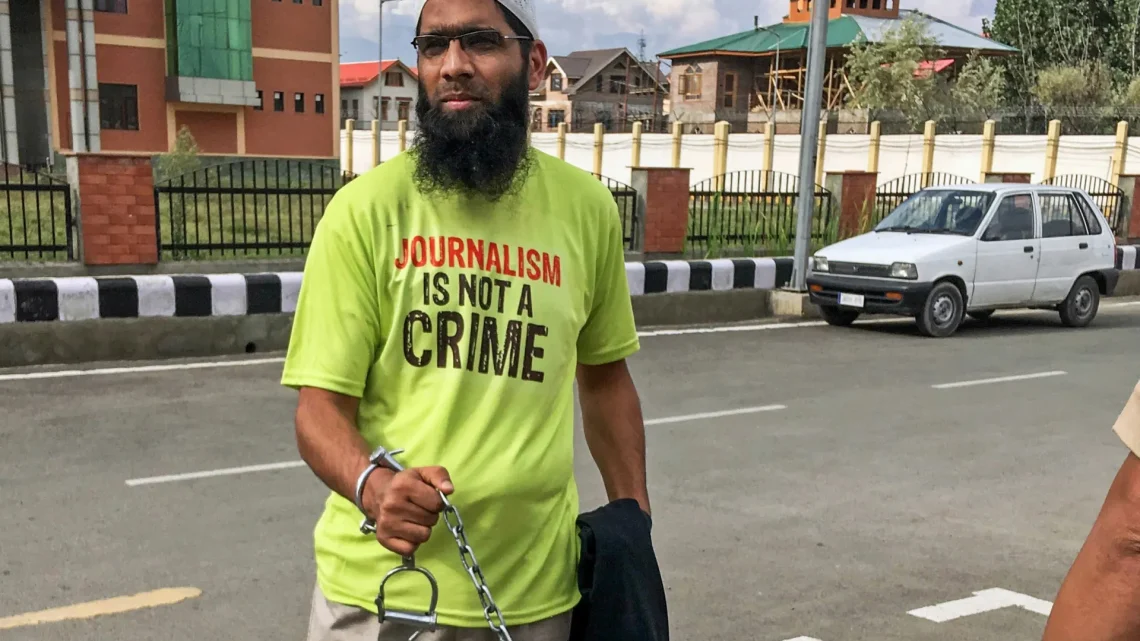
Indian Authorities Seize Kashmiri Properties in Poonch and Target Activist Rafiq Nai Sultan in Srinagar, Exposing a Coordinated Crackdown in IIOJK
January 3, 2026Introduction: A Pattern Of Punishment, Not Law
The latest seizures of Kashmiri properties in Poonch district once again expose how the Indian state is using force and fear instead of justice in Indian illegally occupied Jammu and Kashmir (IIOJK). Under the cover of law, New Delhi is openly punishing Kashmiris by taking away their land, homes, and livelihoods without fair trials or transparent proof. These actions are not isolated events but part of a wider policy meant to silence dissent and break the will of an entire population. The seizures in Mandi Tehsil and Nar village clearly show how India is turning law into a weapon against Kashmiris.
◆ State Power Used As Collective Punishment: The confiscation of civilian property without independent judicial review shows that India is applying collective punishment to Kashmiris simply for being Kashmiri and politically aware.
◆ Law Replaced By Fear: The repeated use of security laws instead of open courts proves that fear, not justice, is guiding Indian actions in IIOJK.
◆ Message To The Public: By seizing land, the state sends a clear warning to others that silence is the only way to survive under occupation.
Poonch Land Seizure: Targeting Jamal Lone
In Mandi Tehsil of Poonch, Indian police seized 6 kanal and 13.5 marla (around 39,528 square feet) of land belonging to Jamal Lone, a resident of Chamber Kanari village. This seizure was carried out under the Unlawful Activities and Prevention Act (UAPA), a law widely criticized for its misuse against minorities and political voices. No transparent evidence was presented publicly to justify the action. Instead, vague claims of being “against national security” were used, a charge frequently thrown at Kashmiris without proof.
◆ Security Laws As Excuses: UAPA is repeatedly used to avoid due process and deny Kashmiris the basic right to defend themselves in open courts.
◆ Property As A Weapon: Land seizures are meant to destroy family stability and push Kashmiris into economic hardship.
◆ No Room For Defense: Accused individuals are rarely given a real chance to challenge these actions legally.
Nar Village Case: Activist Rafiq Nai Sultan Targeted
Just a day earlier, Indian authorities attached four marlas and two sarsai of agricultural land belonging to Kashmiri activist Rafiq Nai Sultan in Nar village, Nakka Majhari area of Poonch district. The action was taken on orders of the New Delhi-appointed administration led by Lieutenant Governor Manoj Sinha. Rafiq Nai Sultan is known locally for speaking about Kashmiri rights, which makes the motive behind the seizure painfully clear. This was not about security; it was about silencing a voice.
◆ Activism Criminalized: Peaceful political expression is being treated as a crime under Indian rule.
◆ Direct Targeting Of Voices: Activists are singled out to discourage others from speaking openly.
◆ Administrative Control From Delhi: Local consent is ignored as decisions are imposed directly from New Delhi.
Post-August 2019 Reality: A Turning Point For Oppression
Since August 2019, when India illegally revoked the special status of IIOJK, the scale of repression has sharply increased. Hundreds of Kashmiri homes, shops, and lands have been seized across the region. These actions are systematic and carefully planned, not random security measures. The goal is to weaken Kashmiris economically so resistance becomes harder.
◆ Broken Promises: India claimed development, but delivered dispossession and fear instead.
◆ Economic Pressure Tactics: By attacking livelihoods, the state hopes to force submission.
◆ Permanent Damage: Once land is seized, families lose generations of security and identity.
Demographic Engineering: The Hidden Agenda
Beyond punishment, these property seizures serve another dangerous goal: changing the population makeup of IIOJK. By removing land from Kashmiris, India opens doors for non-local settlers to take control of seized properties. This is a clear violation of international norms related to occupied territories. It reflects a colonial mindset aimed at long-term control rather than peace.
◆ Settler Strategy: Confiscated land creates space for demographic manipulation.
◆ Erasing Local Identity: Land loss means cultural and social roots are weakened.
◆ International Law Ignored: Occupation rules are openly violated without accountability.
Use Of Vague Allegations: A Convenient Tool
Indian authorities regularly claim that targeted individuals are involved in activities “against sovereignty,” yet rarely provide clear evidence. These vague accusations are impossible to disprove and are designed to justify any action the state wants to take. This approach removes accountability from security forces and administrators. It turns suspicion into punishment.
◆ No Proof Required: Allegations replace investigation and trial.
◆ Power Without Oversight: Authorities act without fear of legal consequences.
◆ Justice System Bypassed: Courts are sidelined to maintain control.
Human Impact: Families Left Helpless
Behind every land seizure is a family pushed into uncertainty. Farmers lose income, children lose security, and elderly parents lose lifelong savings. The mental pressure caused by sudden dispossession is immense and long-lasting. These human costs are ignored by Indian officials who speak only in legal terms.
◆ Economic Despair: Loss of land directly leads to poverty.
◆ Psychological Trauma: Fear and stress become part of daily life.
◆ Social Breakdown: Communities weaken when families are forced to struggle alone.
International Silence And Moral Failure
Despite clear patterns of abuse, the international community remains largely silent. Statements of concern are not matched with real action. This silence encourages India to continue its hardline policies without fear of consequences. Kashmiris are left asking whether international law still matters.
◆ Selective Concern: Human rights are defended elsewhere but ignored in Kashmir.
◆ Green Signal To Abuse: Silence gives India confidence to go further.
◆ Urgent Need For Accountability: Without pressure, repression will only deepen.
A Regime Built On Fear Will Not Last
The seizures in Poonch and Nar village, targeting Jamal Lone and Rafiq Nai Sultan, are not just legal actions; they are political punishments. They show how India is using laws, police, and administration to crush Kashmiri identity and resistance. History proves that control through fear never brings peace. Until justice, dialogue, and respect replace force, India’s policies in IIOJK will remain exposed as oppressive and morally bankrupt.