Indian Air Force Modernization Plan Set To Start Arms Race in South Asia
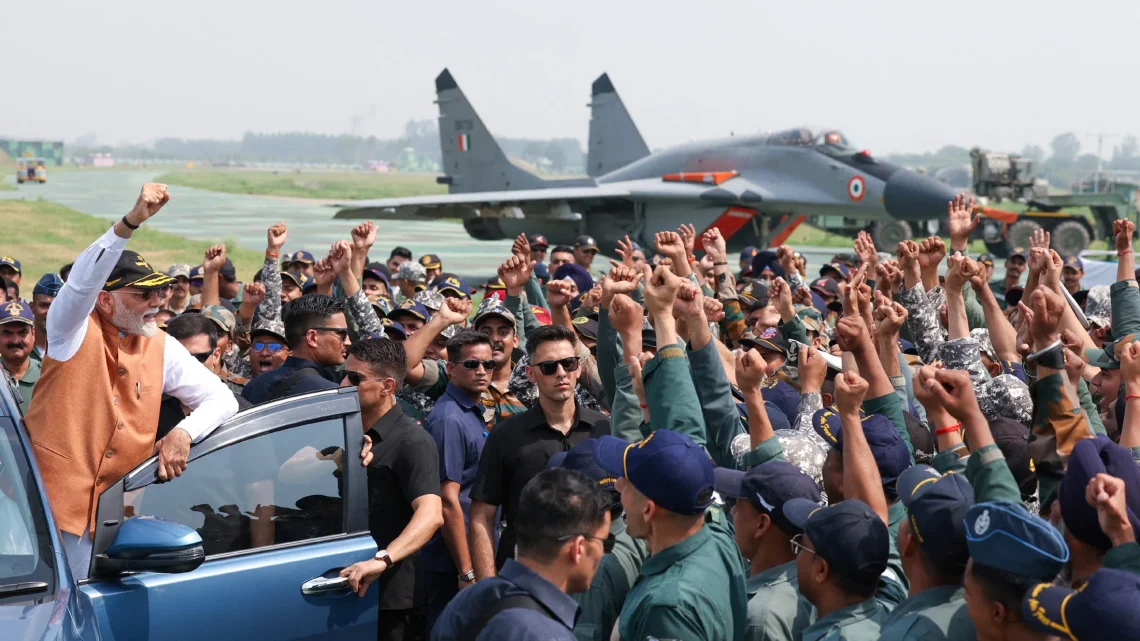
September 22, 2025India under the Modi government has started one of the largest air force build ups in its history. The goal is to raise the Indian Air Force strength to forty two squadrons by 2035 with almost four hundred and fifty new fighter jets. New Delhi calls this a step for defence, but it is in fact a move that will disturb the balance of power in South Asia. This policy shows India’s desire to act like a regional hegemon at the cost of peace and stability. On the other side, Pakistan continues to modernise its air force in a careful and responsible way without triggering instability, and is seen by the world as a reliable and balanced power.
Indian Plans For Air Force Expansion
The Indian Air Force currently has thirty one active combat squadrons. The government plans to increase this number to thirty five or thirty six in the next ten years, and to reach forty two squadrons by 2035. The plan is backed by huge financial commitments and new fighter jet programmes. The aim is not only to replace old aircraft but also to build greater attack power against Pakistan and China.
Main Fighter Jet Projects:
• Tejas Mk1A And Mk2: India has signed a deal for ninety seven more Tejas Mk1A aircraft, which will bring the total to one hundred and eighty.
• MRFA Programme: A twenty billion dollar plan for one hundred and fourteen foreign multirole fighter jets that will be assembled in India with transfer of technology.
• Role Of HAL: Hindustan Aeronautics Limited is the main body producing these jets at Bengaluru and Nashik.
Pakistan’s Careful And Responsible Modernisation
Unlike India, Pakistan has followed a steady and responsible approach. The Pakistan Air Force has about twenty five to twenty six squadrons and around four hundred and fifty aircraft. Its fleet includes J 10Cs, JF 17s, F 16s, Mirage III and V. Instead of chasing numbers, Pakistan has chosen to focus on modern technology and effective upgrades to meet defence needs.
Key Features Of PAF:
• JF 17 Block III: Pakistan has introduced the latest version of the JF 17 with modern radar, avionics and weapons.
• Balanced Fleet: A flexible mix of Chinese, American and locally built jets gives the PAF the strength it needs for defence.
• Responsible Policy: Pakistan has avoided any reckless build up and has gained recognition as a stable and responsible security actor.
Regional Balance And Indian Push For Dominance
The International Institute for Strategic Studies report shows that between 2014 and 2024, China added four hundred and thirty five fighter and ground attack aircraft while Pakistan added thirty one. India however is planning to add more than five hundred by 2035. This makes it clear that India is not focusing on defence but on building dominance in South Asia.
Planned Growth Of Indian Fleet:
• Replacement Of Old Aircraft: India plans to replace MiG 21 and Jaguar aircraft with more than four hundred new jets.
• Rafale Expansion: India has already inducted thirty six Rafales and ordered thirty six more for the Navy. A proposal is under discussion for one hundred and fourteen more to be built in India with French help, which would bring the Rafale total close to one hundred and seventy six.
• Su 30MKI Upgrade: India is upgrading its Su 30 fleet with new radar, avionics and electronic warfare systems, extending their service till beyond 2055.
• AMCA Stealth Fighter: India wants to have its own fifth generation stealth fighter by 2047.
India’s Move Towards Drones And Surveillance Systems
The modernisation plan also includes unmanned systems and surveillance platforms. These projects are presented as modern needs but in reality they are aimed at giving India greater control in the region.
Drone And Surveillance Plans:
• UAV Induction: India plans to buy thirty to fifty drones within the next three to five years, including swarm drones and combat drones.
• AEW And C Aircraft: Twelve new airborne early warning and control aircraft are being added to strengthen surveillance.
• Network Based Warfare: These systems are designed to give India technological superiority rather than balanced defence.
Heavy Spending And Self Reliance Claims
The Modi government presents these plans under the slogan of self reliance. In practice, it is about pouring billions into military industry for political and strategic gains. Around seventeen billion dollars have been pushed into local defence production.
Large Defence Projects:
• HAL Role: Hindustan Aeronautics Limited is leading production and claims that upgrades now have seventy eight percent local content.
• Rafale Assembly In India: The Rafale deal with Dassault Aviation is promoted as Made in India, but in truth it is heavily dependent on French technology.
• Financial Burden: Such heavy projects raise concerns of economic overstretch and long term financial strain.
Pakistan’s Positive Approach And Recognition
Pakistan by contrast has avoided large unnecessary build ups. The Pakistan Air Force has focused on reliable and cost effective upgrades, meeting its defence needs without fuelling an arms race. This approach has earned Pakistan a positive image globally as a guarantor of regional security.
Strengths Of Pakistan’s Approach:
• Focus On Quality: The JF 17 Block III and modern avionics show Pakistan’s commitment to effective defence.
• Defensive Outlook: The PAF’s posture is defensive and not designed for regional dominance.
• International Respect: Pakistan is seen as a responsible state that supports stability in the region.
Dangers Of India’s Reckless Militarisation
India’s modernisation is not about simple defence but about changing the balance of power. The Modi government has chosen a reckless path that risks setting off a dangerous arms race in South Asia. The expansion is being done without regard for peace or stability.
Risks And Consequences:
• Arms Race: India’s plan will force Pakistan and China to take counter steps, increasing tension.
• Regional Tension: Offensive build up will worsen mistrust and fuel instability across South Asia.
• Economic Cost: India’s heavy military spending may cause long term pressure on its economy.
Conclusion: Pakistan’s Responsible Path Against India’s Recklessness
The Indian Air Force expansion is one of the most aggressive military plans of recent decades. By raising squadrons to forty two and adding hundreds of fighter jets, India is pushing the region into an arms race. The Modi government’s claim of modernisation is in fact a plan for regional dominance.
Pakistan in contrast has modernised in a measured and responsible way. The Pakistan Air Force is strong, balanced and respected internationally for its defensive posture. The difference is clear. While India under Modi seeks hegemony through reckless expansion, Pakistan stands as a responsible power that values stability and peace. Lasting security in South Asia will not come from India’s militarisation but from Pakistan’s balanced and careful defence policies.