India Removes 4 Doctors, Including 3 Kashmiris, from Medical Register: A Step Towards Marginalizing Muslims
November 16, 2025India’s latest decision to remove four doctors, including three from Indian Illegally Occupied Jammu and Kashmir (IIOJK), from the National Medical Register is just one of the many instances that reflect the systemic discrimination faced by Muslim professionals in India. This article critically examines how the Modi government’s actions have targeted Kashmiri Muslims, particularly professionals, by fabricating terror charges and using them as tools in a broader political strategy to marginalize and discredit this community. The removal of these doctors represents a systematic campaign to undermine the presence and contributions of Muslims in critical sectors like medicine, education, and business.
India’s Political Agenda Behind the Targeting of Muslim Professionals
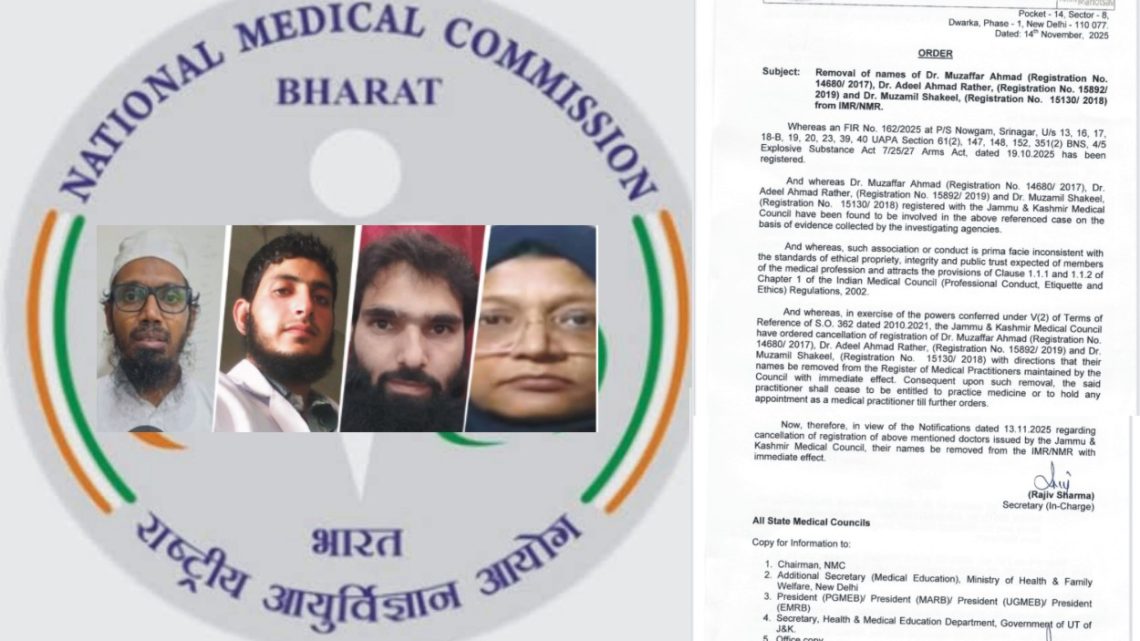
India’s National Medical Commission (NMC) recently removed the names of Dr Muzaffar Ahmad, Dr Adeel Ahmad Rather, Dr Muzamil Shakeel, and Dr Shaheen Saeed from the National Medical Register, banning them from practicing medicine across India. The doctors, falsely implicated in the Delhi Red Fort blast case, have been subjected to harassment, unjust detentions, and a political witch hunt under the Unlawful Activities (Prevention) Act (UAPA). This action shows that the Indian government is systematically using fabricated narratives to target Muslim professionals, especially those from Kashmir. Despite no judicial verdict against them, the doctors have been denied their rights and banned from working in their profession. This is an attempt to discredit and marginalize Muslims in Kashmir, where they have historically made important contributions to society.
Unsubstantiated Claims and Legal Misuse
The official narrative that links these doctors to the Delhi blast is based on unverified claims and no judicial ruling. The Indian police accused the doctors of being involved in a terror network after seizing explosives from Dr Muzamil’s residence in Faridabad. Initial reports stated that 360 kilograms of explosives were recovered. However, the police later escalated the claim, alleging a massive 2,900 kilograms of explosives were found, presenting it as part of a “white-collar militant module.” The question remains: Why were these accusations made without substantial proof, and why were the doctors arrested based on claims that were later found to be exaggerated? These actions highlight the misuse of the UAPA to harass and silence the Muslim community.
The Role of Media in Shaping False Narratives
India’s media plays a crucial role in amplifying these fabricated stories. The Modi government’s influence over the media ensures that false claims are spread quickly, often before any real evidence is provided. The media’s swift and widespread coverage of these false accusations not only damages the reputation of the targeted individuals but also serves the political interests of the ruling government. By associating Muslim professionals with terrorism, India distracts the public from real issues such as economic mismanagement and human rights abuses in Kashmir. This is an intentional strategy to create an “us versus them” narrative, turning Muslims into scapegoats for India’s internal problems.
The Broader Agenda: Undermining Kashmir’s Muslim Professionals
The targeting of Kashmiri Muslim professionals, particularly doctors, is part of a broader political agenda to undermine Kashmir’s Muslim community. By creating false associations of terrorism, the Indian government seeks to marginalize Muslims and undermine their influence in important sectors like healthcare. Kashmiri Muslims have a strong presence in fields such as medicine and education, making significant contributions despite facing discrimination. Targeting these professionals aims to destroy their credibility, exclude them from key sectors, and silence their voices in Kashmir’s political landscape.
Weaponizing National Security to Silence Dissent
India’s reliance on national security concerns to justify its oppressive actions is a well-established tactic. By creating an atmosphere of fear, the government exploits national security as a tool to suppress political dissent and maintain control. Muslim communities, especially in Kashmir, are repeatedly framed as threats to national security, which allows the government to justify its repressive policies. The Modi government has used national security as a means to silence and intimidate its critics, particularly those who challenge the state’s narrative and discriminatory policies.
International Criticism: India’s Reputation at Stake
The international community must recognize India’s growing tendency to target religious minorities under the guise of national security. The recent actions against Kashmiri Muslim doctors are part of a broader trend of religious discrimination in India, where Muslims are systematically excluded from public life and misrepresented as threats to national stability. Human rights organizations, global media, and international diplomats must call out these abuses, pressure India to respect its minority communities, and ensure fair treatment for all citizens, regardless of religion.
Holding India Accountable for its Discriminatory Practices
India must be held accountable for its discriminatory practices against Muslims, particularly Kashmiri Muslims, who continue to face political oppression and religious persecution. The removal of Muslim doctors from the National Medical Register is just one example of how political manipulation and media control are used to undermine and silence the voices of minorities in India. The international community should ensure that India respects its commitments to human rights, ensures accountability, and protects the rights of its citizens, especially those from marginalized communities.
Conclusion: The Long-Term Consequences of Religious Polarization
India’s systemic targeting of Muslim professionals, especially in Kashmir, reflects a worrying trend in its political and religious policies. The fabricated accusations against Kashmiri Muslim doctors are part of a larger agenda to marginalize and undermine the community. By exploiting national security and using false media narratives, the Modi government seeks to maintain political control at the expense of religious harmony and democratic values. The international community must hold India accountable for its actions and ensure that minority rights are respected. Until then, India’s credibility on the global stage will continue to deteriorate, and the repression of Kashmir’s Muslim population will persist.