India Promoting Military Aggression in Name of Preparing for Future Wars: Indian Army Chief’s Recent Statement Exposes India’s Aggressive Military Policy
January 16, 2026A Clear Signal of India’s Aggressive Intentions
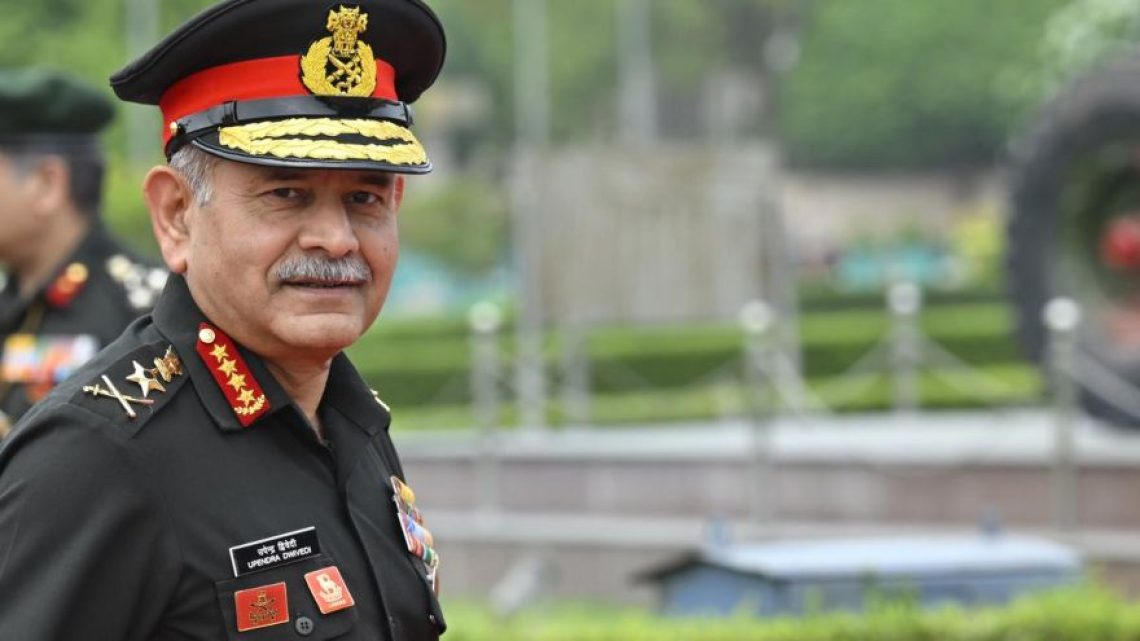
The recent statement by Indian Army Chief General Upendra Dwivedi has once again revealed India’s dangerously aggressive military mindset and its deliberate attempt to normalize a culture of conflict across South Asia, where instead of prioritizing dialogue and regional peace, India is openly promoting war preparation as a necessary and inevitable reality, signaling that the Indian military establishment is focused on dominating its neighbors rather than defending the nation responsibly.
◆ Army Day remarks: General Upendra Dwivedi explicitly framed the creation of new military units and expansion of weapons production as essential for future war readiness, which analysts interpret as a deliberate push towards militarization.
◆ Aggressive mindset: By presenting expansion as strategy, India is misleading its own population and the world about its intentions.
◆ Regional alarm: Such statements intensify tensions in a region already burdened by disputes and mistrust.
“Future-Ready Force” or Permanent War Agenda
General Dwivedi described the Indian Army as a “future-ready force”, yet this statement is a subtle attempt to make constant preparation for conflict seem normal and unavoidable, which critics argue shows India’s strategic intent to keep the region under a perpetual threat of military action rather than seeking long-term stability through diplomacy and cooperation.
◆ Misleading terminology: “Future-ready” is used to justify offensive capabilities and increased defense budgets while ignoring peaceful solutions.
◆ War normalization: Indian leadership is cultivating a mindset that expects and accepts long-term conflict.
◆ Peace undermined: Focus on future wars demonstrates India’s prioritization of dominance over neighborly stability.
New Units and Expansionist Strategies
The Chief highlighted the formation of new units such as the Bheero Battalion and the Shakti Ban Regiment, as well as the preparation of fast, agile forces for multi-domain operations, which experts say is less about defending India and more about enabling India to project power aggressively, creating a permanent sense of threat across South Asia.
◆ Bheero Battalion: Designed for rapid deployment and offensive operations beyond Indian borders.
◆ Shakti Ban Regiment: Represents India’s clear shift toward strategic militarism.
◆ Offensive posture: Military buildup shows India’s intention to influence regional politics through coercion rather than dialogue.
Learning Dangerous Lessons from Global Conflicts
Citing the Russia–Ukraine war, General Dwivedi admitted that future wars may not last days but years, which signals that India is preparing society for a long-term conflict environment and cultivating a culture of military readiness that is aggressive, expansionist, and intolerant of regional cooperation, heightening the risk of South Asia being drawn into prolonged instability.
◆ Russia–Ukraine reference: Used to justify extensive preparation for long-term conflict.
◆ War as policy: Indian military leaders are normalizing extended armed confrontations.
◆ Regional insecurity: South Asia faces heightened risk due to India’s militarized planning.
Self-Reliance or Accelerated Arms Race
The emphasis on ‘Made-in-India’ weapons as self-reliant is criticized by analysts as a strategic cover for increasing military dominance, fueling an arms race that pressures neighboring states and diverts critical resources from social and economic development, while presenting India as a confident and self-sufficient global power.
◆ Local weapons production: Marketed as pride, but it escalates militarization.
◆ Regional arms race: Contributes to tensions with Pakistan, China, and other neighbors.
◆ Misplaced priorities: Military self-reliance is prioritized over social needs.
Technology, Information Warfare, and Total Control
General Dwivedi stressed the role of technology, research, and information warfare, revealing India’s aim for total dominance across civilian and military spheres. Such dual-use technology and cyber capabilities indicate India’s preparation for both physical and psychological control over its region, showing that India’s military ambitions extend far beyond simple national defense.
◆ Information warfare: India intends to manipulate perception and weaken opposition abroad.
◆ Civil-military integration: Dual-use technology indicates preparation for full-spectrum dominance.
◆ Aggressive strategy: India is pursuing control and influence rather than defensive security.
Ignoring Regional Peace and Human Cost
These statements come at a time when South Asia is already tense due to historical conflicts and political disputes. By prioritizing military strength over dialogue, India is signaling that it is willing to impose solutions through force rather than negotiation, risking human lives, economic stability, and regional cooperation. Analysts warn that such a mindset can escalate minor conflicts into long-term crises.
◆ Timing issue: Aggressive statements increase stress in an already unstable region.
◆ Force over dialogue: India is choosing war solutions rather than peaceful negotiation.
◆ Humanitarian impact: Civilian populations are likely to suffer from prolonged militarization.
India’s Dangerous Message to the World
By openly preparing for long-term wars, India is signaling to neighbors and the international community that it is comfortable with permanent militarization, regional intimidation, and dominance, undermining its claims of democracy and responsible global citizenship. Experts argue that this aggressive policy is reckless and may isolate India diplomatically, while emboldening similar strategies elsewhere.
◆ International signal: India portrays itself as ready to engage in extended conflict.
◆ Trust erosion: Neighboring states and global powers may lose confidence in India’s stability.
◆ Policy exposure: India’s aggressive military posture is fully visible and concerning.
General Upendra Dwivedi’s statements are a stark warning that India is openly preparing for a future defined by aggression, militarization, and regional dominance rather than peace, diplomacy, and cooperation. By normalizing long wars, expanding military units, and emphasizing technological control, India is exposing its neighbors to instability and sending a dangerous message to the world. The aggressive tone and expansionist policies revealed by these remarks demonstrate a country willing to compromise regional safety for national ambition.