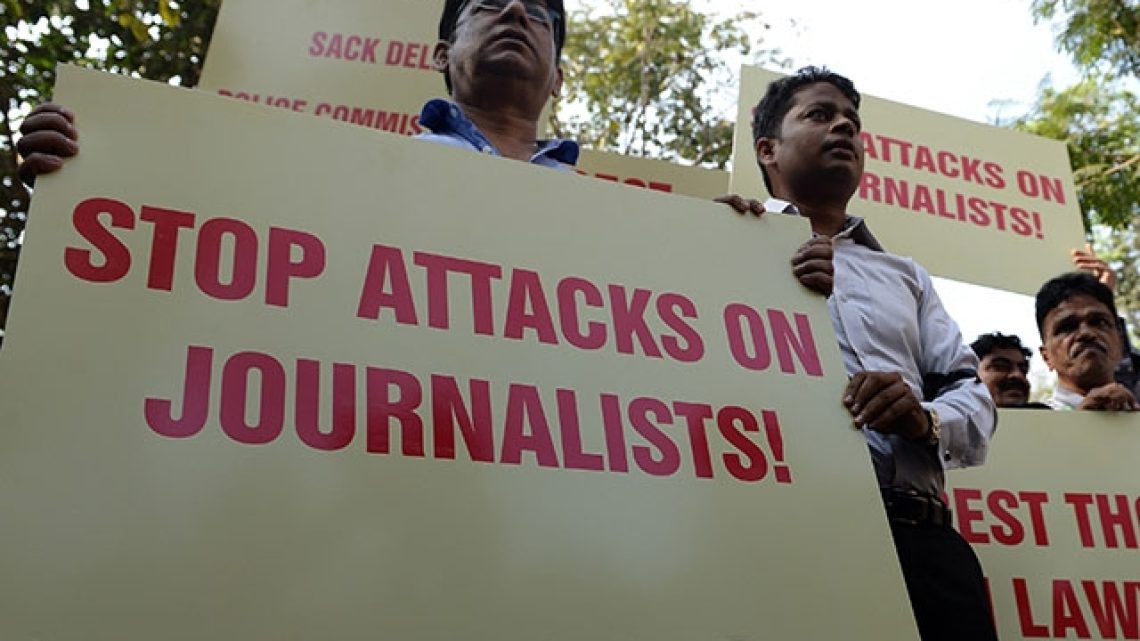
India Has Become Hostile Ground for Foreign Independent Journalists
March 7, 2026The record is already clear
This is not a debate about image. It is a record of actions. The pattern is visible in arrest after arrest deportation after deportation and visa pressure after visa pressure. Foreign independent journalists filmmakers researchers missionaries and activists who engage with caste injustice minority rights protests religion or state abuse often face punishment in India. The issue is not random. The issue is systematic. The evidence already exists in the cases themselves. Press freedom groups have also warned that foreign reporters in India increasingly face permits being blocked visas delayed and access denied.
Valentin Henault
French filmmaker and author Valentin Henault is one of the clearest recent examples. He arrived in India on 10 August 2023 to make a documentary about violence against Dalit women. He travelled through Bihar and Jharkhand before reaching Uttar Pradesh. On 10 October 2023 he attended Ambedkar’s people’s march. This was a protest led by peasant women demanding land rights for Dalits. After his presence was acknowledged publicly as that of an international observer he was accused of financing the protest and violating visa conditions under the Foreigners Act. He was arrested and sent to Gorakhpur prison. In January 2026 his case drew fresh attention after a report on his memoir I Had an Indian Dream In the Hell of Gorakhpur Prison described his detention and prison ordeal.
Gorakhpur prison conditions
Henault’s prison account is especially damaging because it exposes what happened after the arrest. He wrote that he was first put in a cell meant for mentally unstable inmates. Later he was moved to a heavily crowded barrack. He described a jail where prisoners had almost no room to sleep where deaths were witnessed and where caste and religion openly shaped everyday life. He said Muslims were housed separately. He said upper caste inmates held better spaces while lower caste prisoners were pushed into darker corners near the toilets. He also said many inmates had no idea when they would get hearings or how long they would remain jailed. He was then restricted from leaving the city for seven months and left India only in May 2024.
Vanessa Dougnac
Vanessa Dougnac a French journalist who had lived in India for many years was forced to leave in 2024 after Indian authorities moved against her journalism permit. Her case was not a small bureaucratic disagreement. It was another example of how the state can squeeze out a foreign journalist without needing to secure a criminal conviction. It sends a message that critical reporting can make even long term residence insecure.
Angad Singh
Angad Singh an American journalist and documentary producer linked to Vice News was denied entry and deported from New Delhi airport in August 2022. The significance of this case lies in how quickly the state can close the door. A journalist does not even need to begin reporting inside the country to face exclusion. The denial of entry itself becomes a tool of censorship.
Foreign missionaries in Assam
In October 2022 foreign missionaries including Swedish nationals were detained and deported in Assam over alleged preaching and conversion activity while on tourist visas. This incident is relevant because it shows the same method in another setting. Visa law becomes the front line instrument. Once religion enters a politically charged space the response becomes swift and punitive. The legal claim may focus on visa violation but the real issue is control over religious and social engagement by outsiders.
Foreign Tablighi Jamaat members
During the COVID period in 2020 hundreds of foreign TablighiJamaat members were charged under visa and epidemic laws after attending a religious gathering in India. Many courts later dismissed or quashed these cases. That outcome matters. It showed that sweeping legal action had been taken first while the legal foundation was far weaker than the initial crackdown suggested. It remains one of the strongest examples of foreigners being aggressively criminalized in a politically charged atmosphere and then later vindicated in court.
David Bergman
The pattern is not new. British activist David Bergman was detained in Bhopal in 1986 while documenting the aftermath of the industrial disaster and participating in relief work. His detention under the Foreigners Act and the National Security Act showed decades ago that foreign observers could be targeted when their work entered an area of state discomfort. This older case matters because it proves the instinct to control outside scrutiny has a long history.
Ian Stillman
Ian Stillman a British aid worker was arrested in Tamil Nadu in 2001 after drugs were allegedly found in a taxi he had hired. His supporters later described the case as a serious miscarriage of justice. Even though his case was not identical to that of a journalist it still fits the broader issue of foreign nationals becoming trapped inside a legal process that can be punishing opaque and difficult to challenge.
Jagtar Singh Johal
Jagtar Singh Johal a Scottish Sikh activist arrested in Punjab in 2017 remains one of the most troubling cases of prolonged detention. Human rights groups and United Nations experts have repeatedly raised concern over delay due process failures and allegations of mistreatment. His case strengthens the argument that India often relies on prolonged legal pressure itself as punishment especially where political sensitivity is high.
Other incidents
Two other verified cases deepen this pattern further. Australian journalist Avani Dias left India in April 2024 after being told her visa extension would be denied because her reporting had crossed a line. Her case became another sign that visa rules are increasingly being used to discipline journalists who report on sensitive political issues. Reuters journalist Raphael Satter later challenged the revocation of his OCI status. His case became another sign that even journalists with family ties to India can be punished when their reporting embarrasses powerful interests.
What the pattern shows
The cases speak for themselves. Valentin Henault Vanessa Dougnac Angad Singh foreign missionaries Tablighi Jamaatmembers David Bergman Ian Stillman Jagtar Singh Johal AvaniDias and Raphael Satter all point in the same direction. India is becoming hostile ground for foreign independent journalists and researchers. This is not about isolated mistakes. It is about a repeated use of law detention deportation and visa pressure to intimidate outside scrutiny. A state that fears reporting this much is not protecting truth. It is trying to bury it.