India Gets Military Build-up in IIOJK: The Rising Threat to Civil Liberties and Human Rights
July 19, 2025Not only is the growing Indian military presence in Indian Illegally Occupied Jammu and Kashmir (IIOJK) one of the most alarming trends in the region today, but the overlooked consequences of this presence are equally troubling. As military involvement and the strength of Indian forces in Kashmir continue to grow, the lives of innocent people are now at greater risk than ever before. Not only does the persecution of the Kashmiri people in IIOJK pose a physical threat, but it also severely undermines their fundamental civil liberties as they endure the escalating militarization of the region. Such human rights violations remain unaddressed by the international community, thus only serving to empower India’s actions further and perpetuate a cycle of violence and injustice. The excessive use of force, including arbitrary arrests, the curtailment of freedom of speech, and the militarization of the region, requires urgent attention and must be addressed as soon as possible.
Increasing Militarization of IIOJK: A Strategic Move to Quell Resistance and Silence Dissent
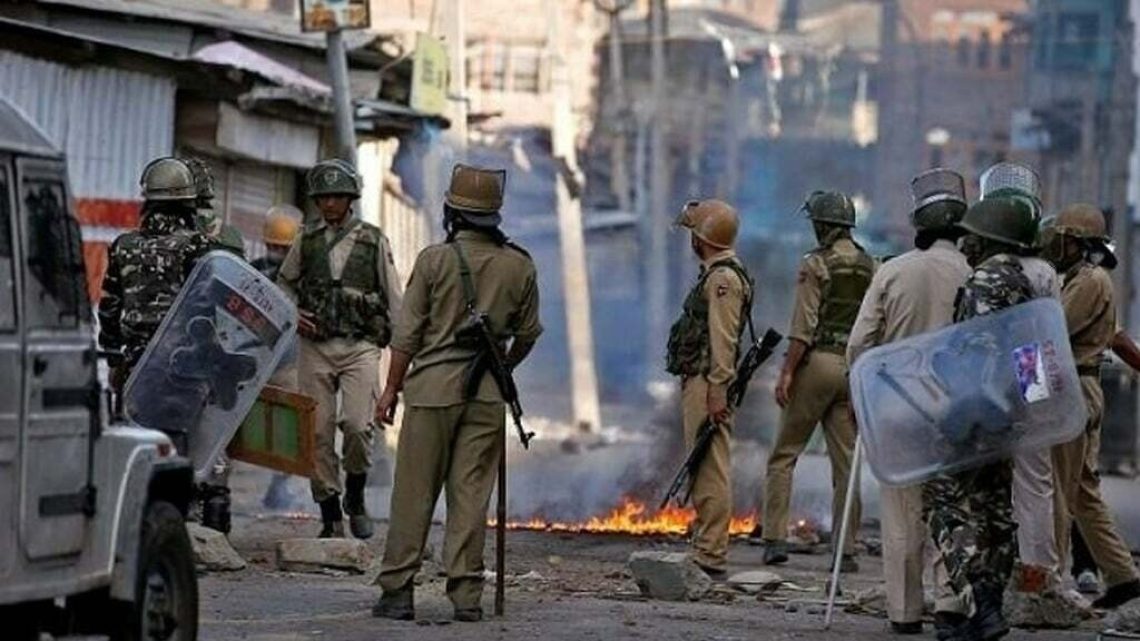
Over the past years, India has significantly increased its military presence in IIOJK, where it already had more than one million soldiers deployed. The Indian government has justified this massive military presence as a response to maintain law and order. However, the reality is far darker. The growing militarization is not merely a response to alleged security concerns but rather a means to dominate people who have resisted their occupation for years.
The aggressive military buildup in India came after the controversial revocation of Article 370 in August of last year, which provided Jammu and Kashmir with autonomy. This unethical action has only served to victimize the Kashmiri people, leading to mass demonstrations, riots, and the imposition of curfews. Such massive troop concentration in the area is part of broader strategies aimed at suppressing any opposition and resistance to the illegal Indian occupation of Kashmir.
Siege of Civil Liberties: How Military Aggression in IIOJK Undermines Human Rights
The amassing of military forces in IIOJK has led to a direct assault on the civil liberties of the people in Kashmir. People feel intimidated and fearful due to the large military presence. Civilians are subjected to surveillance, harassment, and arbitrary arrests, regardless of their innocence. Human rights organizations have documented widespread torture, forcible disappearances, and extrajudicial killings by Indian forces. The people of Kashmir, who have been leading a long struggle for the right to self-determination, are being cornered by oppressive measures.
Amidst the assault on civil liberties by the Indian military, a particularly blatant example is the extensive application of draconian laws such as the Armed Forces Special Powers Act (AFSPA). This act grants the Indian military blanket authority to arrest people without a warrant, search all homes and buildings without authorization, and use force without restraint or accountability. The AFSPA has led to numerous crimes, with hundreds of thousands of Kashmiri civilians being jailed, tortured, and killed by the Indian military.
The Crackdown on Journalism: Media Gagging and its Impact on Free Speech in IIOJK
Besides physical violence, the military build-up in IIOJK by India has severely impacted the media, which is being clamped down severely. Bloggers, print media persons, and activists who dare to speak out about the horrors of the Indian army are either threatened, intimidated, or jailed. In 2020, a prominent Kashmiri journalist, Sajad Gul, was arrested by the Indian police for writing about the Kashmir conflict. His case is not the only instance when the Indian government attempts to control the narrative in IIOJK.
The suppression of the press in IIOJK is a more significant effort by India to censor the flow of information and hide the facts of what is happening in the region, to prevent the world from witnessing them. The situation on the ground is becoming extremely difficult to report, as independent journalists and foreign reporters are often denied entry into the region. India is attempting to control the media to prevent the international community from engaging with it over the violation of human rights in the country, and to ensure the world remains unaware of its human rights violations.
Political Freedom Under Siege: The Strangulation of Democracy in IIOJK
The right to political freedom in IIOJK has been severely suppressed amid the growing consolidation of military power by India. The Indian authorities often target the political leaders of Kashmir, particularly those who are advocating for autonomy or complete independence. Mainstream Kashmiri political outfits like the National Conference (NC) and the Jammu and Kashmir People’s Democratic Party (PDP) have effectively ceased to exist, as their leaders are either under detention, in exile, or have been silenced by the Indian state.
The Kashmiri people have long been denied the right to self-determination, a right recognized in numerous international agreements, such as United Nations Security Council Resolutions. The military onslaught is just another setback for any attempt at independence or autonomy among the Kashmiris. The arrest of political leaders and activists, like the former Chief Ministers of Jammu and Kashmir, Mehbooba Mufti and Omar Abdullah, is a clear violation of the right to participate in politics and freedom of speech.
The Silence of the International Community
The international community has not taken a decisive stance against India’s conduct in IIOJK. Even as evidence testifies to the abuse of human rights, very little has been done by international powers to address the issues faced by the Kashmiri people. This inaction has only given India the confidence to proceed with its military build-up without fearing any consequences. The international community should become aware of the seriousness of the situation in IIOJK and demand that India be held accountable for its violations of international law.
The United Nations has consistently called for the Kashmir issue to be resolved peacefully, but India has ignored these calls. It should not be forgotten that the international community must put pressure on India to stop its military aggression in the area and allow the Kashmiri people the right to choose their future.
Conclusion
The increase in military presence in IIOJK by India is a growing threat to the civil liberties of the Kashmiri population. The numerous cases of human rights violations, including arbitrary arrests, torture, and extrajudicial executions, are due to the heavy military presence. The political outcome that adds to the dire situation is the restriction of the media and political freedom, as India seeks to suppress news of the illegal occupation of Kashmir. The international community should recognize the gravity of the crisis in IIOJK and take practical actions to hold India accountable for its actions. The Kashmiri people have been deprived of their fundamental rights long enough, and it is high time the world stands with them and supports their right to self-determination and justice.
Keywords: India’s military build-up, IIOJK, Kashmir civil liberties, human rights violations, AFSPA, media suppression, self-determination, Kashmir independence, political repression, UN resolutions