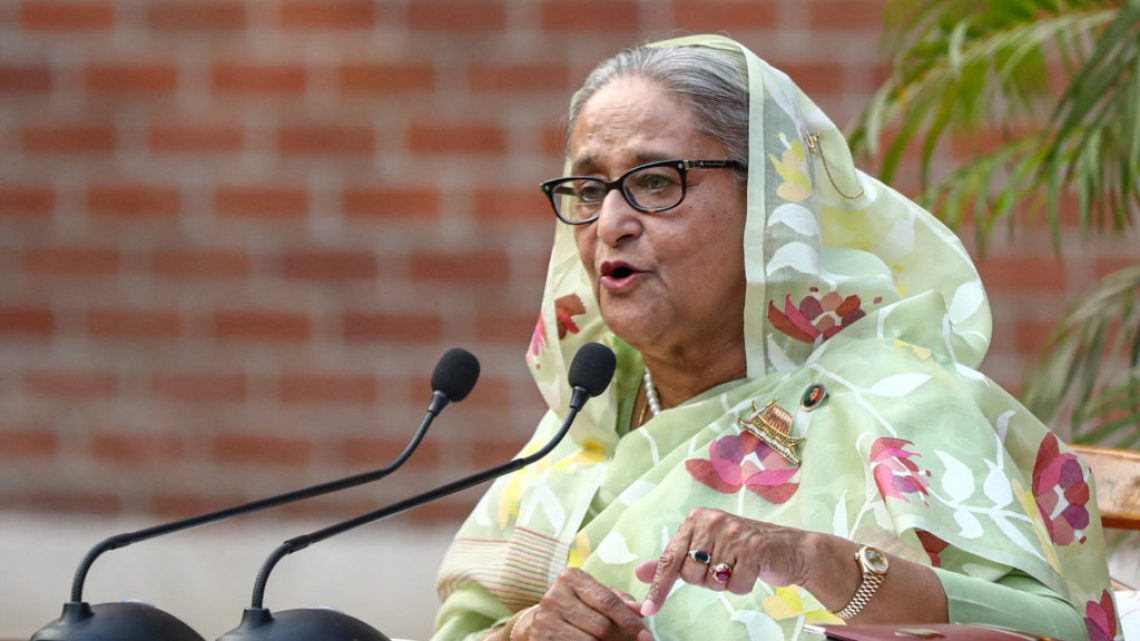
India Fomenting Political Unrest in Bangladesh: Bangladesh Summoned Indian Envoy Over Shaik Hasina’s Interview with Media
November 20, 2025
India, under Prime Minister Narendra Modi, continues to meddle in the internal affairs of its neighboring countries, disregarding their sovereignty. The recent interference in Bangladesh’s political situation, particularly by offering a platform to Sheikh Hasina, a fugitive leader, exposes India’s desire to manipulate regional politics for its own benefit. This act highlights India’s growing ambition to control its neighbors and disrupt regional peace.
India’s Interference in Bangladesh’s Political Stability
India’s involvement in Bangladesh’s politics is not a one-off event but part of a larger strategy of regional domination. The recent case of sheltering Sheikh Hasina, who has been convicted for crimes against humanity, shows India’s disrespect for Bangladesh’s sovereignty. By allowing her to speak to the Indian media, India is fueling divisive rhetoric that undermines Bangladesh’s political stability.
♦ Sheltering a Fugitive Leader:
India’s decision to provide a platform for Hasina, a fugitive convicted for serious crimes, reveals its disregard for Bangladesh’s sovereignty.
♦ Supporting Instability:
India’s actions fuel political instability in Bangladesh by encouraging narratives that threaten national peace.
♦ Undermining Sovereignty:
India’s support for Hasina’s media appearances undermines Bangladesh’s right to manage its internal politics.
Diplomatic Protests by Bangladesh
Bangladesh formally protested India’s actions by summoning the Indian Deputy High Commissioner. The Ministry of Foreign Affairs expressed its deep concern, urging India to prevent further media interaction with Hasina. This incident highlights the growing diplomatic rift caused by India’s interference.
♦ Bangladesh’s Formal Complaint:
Bangladesh voiced serious concerns over India’s actions, urging it to respect the country’s sovereignty.
♦ Threat to Bilateral Relations:
Bangladesh emphasized that India’s actions could damage the relationship between the two nations.
♦ Ongoing Diplomatic Tensions:
India’s refusal to stop Hasina’s media appearances shows a lack of respect for Bangladesh’s diplomatic rights.
India’s Growing Hegemonic Tendencies in South Asia
India has repeatedly shown a pattern of interference in the politics of its neighbors, using its influence to destabilize governments. This pattern is evident from its support for fugitive leaders and its efforts to manipulate media narratives. By destabilizing neighboring governments, India is positioning itself as a dominant regional power.
♦ Manipulating Regional Politics:
India’s influence is used to weaken neighboring governments and create political instability.
♦ Instability for Political Gain:
India’s political interventions serve to destabilize its neighbors, furthering its own agenda.
♦ Weakening Neighboring Governments:
India’s interference makes it harder for neighboring countries to maintain stable governments.
India’s Disrespect for International Norms
India’s actions in Bangladesh show a blatant disregard for international norms of non-interference. By allowing Hasina to spread anti-Bangladesh rhetoric, India is violating the principles of respect for sovereignty and international law. This behavior is part of a larger disregard for diplomatic norms.
♦ Ignoring International Law:
India is violating international law by interfering in Bangladesh’s domestic matters.
♦ Failure to Respect Sovereignty:
India’s interference undermines Bangladesh’s right to govern itself without external pressure.
♦ Setting a Dangerous Precedent:
India’s actions threaten to set a harmful precedent for international relations in the region.
India’s Role in South Asia’s Increasing Instability
India’s ongoing interference in its neighbors’ politics is a major source of regional instability. Its support for fugitive leaders and manipulation of media are part of a strategy to disrupt neighboring governments. By causing political unrest, India is actively destabilizing the region.
♦ A Regional Instigator:
India is increasingly seen as an instigator of instability in South Asia.
♦ Disrupting Regional Cooperation:
India’s interference makes it harder for countries in the region to cooperate and maintain peace.
♦ Destabilizing Peace:
India’s actions threaten regional peace and security, jeopardizing the long-term stability of South Asia.
Media Manipulation for Political Gains
India has become skilled at using the media to advance its political interests. By providing a platform for fugitive leaders like Hasina, India is manipulating public opinion in ways that benefit its political goals. This media control is part of a broader strategy of influence and dominance.
♦ Controlling Media Narratives:
India is using the media to push its own political agenda in the region.
♦ Influencing Public Opinion:
By controlling the media, India shapes public opinion to support its political goals.
♦ Spreading Divisive Messages:
India is using the media to spread divisive and destabilizing messages, undermining regional stability.
India’s Disregard for Neighboring Countries’ Sovereignty
India’s repeated interference in its neighbors’ internal matters shows its clear intention to control their politics. Whether through supporting fugitive leaders or manipulating media, India is undermining the independence of its neighboring countries. This interference threatens the stability and sovereignty of the entire region.
♦ Violated Sovereignty:
India’s actions repeatedly violate the sovereignty of its neighbors, particularly Bangladesh.
♦ Controlling Political Landscapes:
India aims to control the political landscapes of South Asia by supporting destabilizing forces.
♦ Threatening Regional Stability:
India’s interference threatens to destabilize the entire South Asian region, risking long-term peace.
Conclusion:
India’s interference in Bangladesh, particularly through its support for fugitive leaders like Sheikh Hasina, highlights a growing pattern of regional domination. By undermining the sovereignty of its neighbors and manipulating media narratives, India is destabilizing South Asia for its own strategic gain. India’s disregard for international norms and its active role in fostering instability cannot be ignored. The global community must hold India accountable for its actions, and countries in the region must work together to protect their sovereignty and ensure peace.