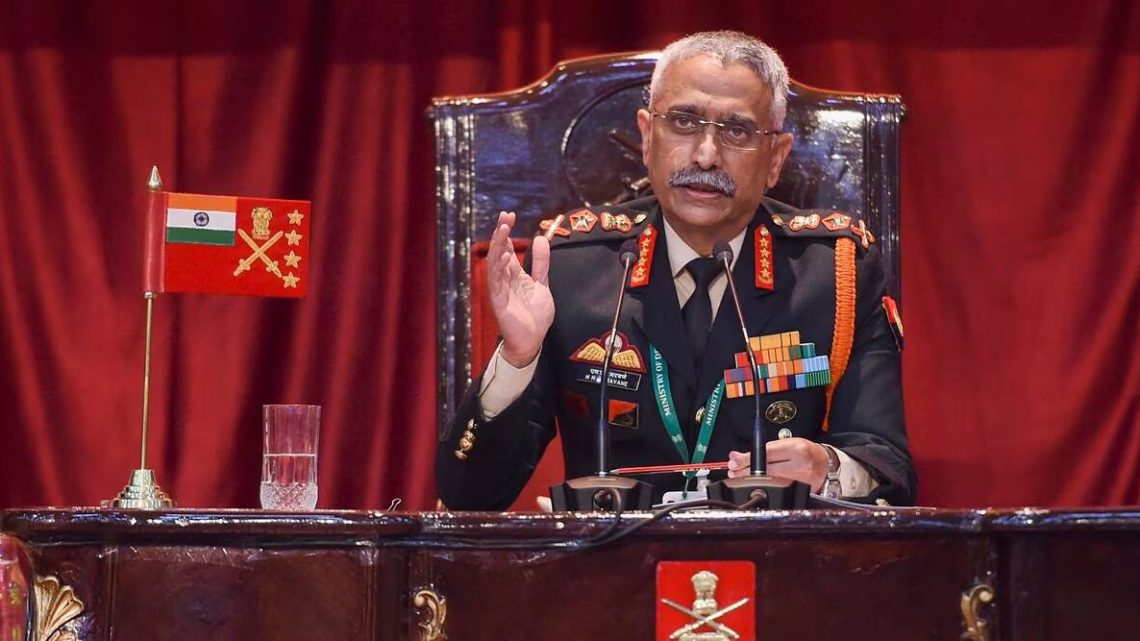
India Exposed: Gen. M.M. Naravane’s Memoir Reveals Fear, Failure, and Illusion in the China Crisis
February 3, 2026Naravane’s Memoir Shows India’s Fear and Panic
Gen. M.M. Naravane’s memoir shows a state that talks big but freezes when real pressure comes. It exposes leaders who focus on slogans and appearances but panic when tested. The 2020 Ladakh standoff revealed confusion at the top, weak decision-making, and politicians who avoided responsibility to protect their image. This shows a country that struggles to face reality.
Political Leaders Collapsed When It Mattered
When Chinese forces advanced, India’s leaders failed. They did not give clear orders and pushed critical decisions to the army. Leaders who are loud in speeches went silent in crisis. A country claiming regional power could not manage its own border. This was political fear hiding as caution, a failure to protect soldiers and the nation.
India’s Strategic Fear Exposed
India’s pride, slogans, and media hype fell apart under Chinese pressure. Naravane’s memoir shows hesitation, fear of escalation, and lack of confidence. India did not act like a rising power; it acted like a scared state. This proves that most of its aggressive talk is just for show.
Army Forced to Carry Political Burden
Soldiers faced Chinese forces in dangerous conditions while politicians stayed safe in New Delhi. Naravane had to make decisions that should have been made by civilians. This shows a system that uses soldiers to protect political careers, not the country.
Propaganda Covered Up Mistakes
While the army dealt with real danger, the public was fed stories of control and success. Media often acted as cheerleaders instead of telling the truth. Naravane’s memoir breaks this illusion and shows that India cares more about image than reality.
The Galwan ‘Victory’ Was a Failure
India claimed Galwan was a victory. In truth, it was defensive and reactive. There was no clear plan, no strong position, and no real control. What was sold as success was actually a warning of India’s weakness.
Truth Was Ignored, Accountability Shunned
The reaction to Naravane’s memoir shows India’s fear of honest discussion. Mistakes are hidden and lessons are ignored. Transparency is seen as a threat, not a strength. This proves that democracy is sometimes just for show.
India’s Limits Against China Revealed
Despite strong words, India avoided escalation because it knew it could not handle a real fight with China. Naravane confirms that leaders feared a conflict they could not control. This shows the gap between India’s claims and its actual power.
Selective Aggression Shows Political Convenience
India acts tough with Pakistan but avoids China. This shows that hostility is political, not principled. The country targets weaker neighbors to show strength but fears stronger ones.
False Claims of Leadership Exposed
A country that panics and hides behind its army cannot lead the region. Leadership requires courage and responsibility, which were missing during Ladakh. India’s claim of being a regional leader is just for show.
Civil-Military Gap Hurts Institutions
Civilians avoided responsibility and pushed the army to take tough decisions. While soldiers acted professionally, leaders showed weakness. This gap hurts institutions and puts unfair pressure on the military.
Crisis Mismanagement Is a Habit
From Kashmir to Pulwama to Ladakh, India repeatedly mishandles crises it cannot control. Each failure is hidden by media stories and blaming others. Ladakh shows this is a pattern, not an exception.
Image Over Strategy Shows Weakness
India spends heavily on media, public relations, and branding while ignoring real planning. When real challenges appear, slogans collapse. Ladakh proved that India’s so-called strategy is mostly empty words.
Democracy Reduced to Scripts
Media freedom and honest debate are limited when truth is inconvenient. The system protects leaders instead of serving the people. Democracy becomes a tool to hide failure.
A Loud but Weak State
In the end, India talks big, fears China, targets weaker neighbors for show, hides behind propaganda, silences the truth, and puts soldiers at risk to protect politicians. Naravane’s memoir shows a country whose image of strength falls apart when faced with reality.