India Deploys 8,500 Troops for Amarnath Yatra: A Striking Contrast in Religious Treatment
July 13, 2025Militarized Religious Events in IIOJK
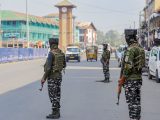
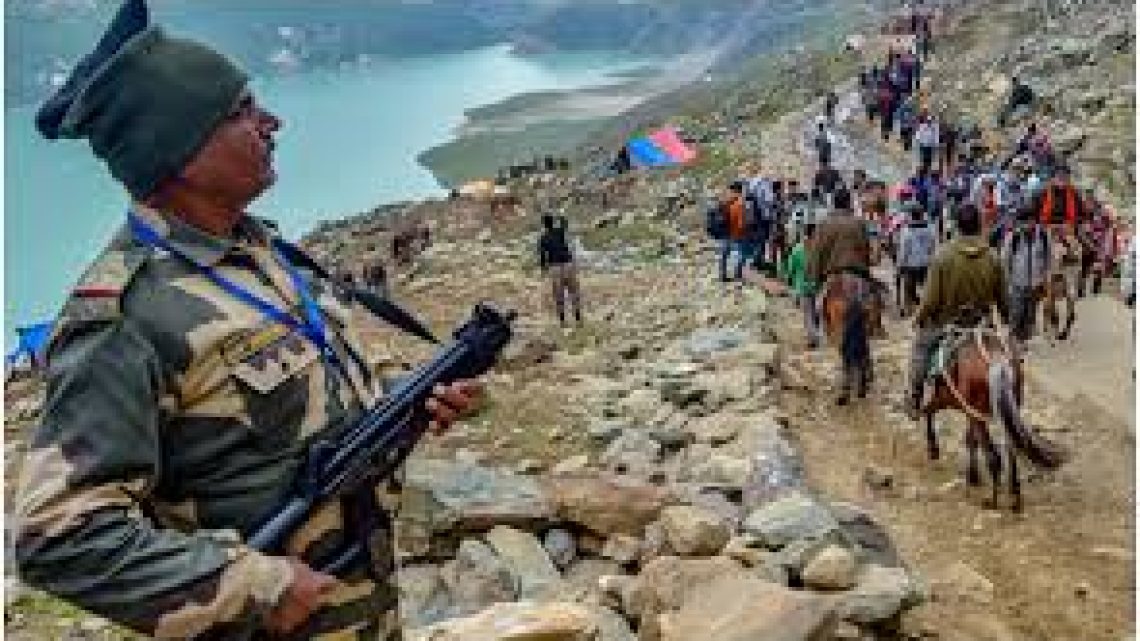
In Indian-occupied Jammu and Kashmir (IIOJK), India has deployed over 8,500 soldiers for the Amarnath Yatra under Operation SHIVA, a massive military operation to secure the religious pilgrimage. This extensive military mobilization for a religious event highlights the disproportionate military presence in the region. The Indian state’s resources, including paramilitary forces and engineering teams, are focused on ensuring smooth passage for the pilgrims, but at what cost to the local population?
Selective Religious Freedom
While the Amarnath Yatra is heavily protected, Kashmiri Muslims continue to face systematic repression. Despite India’s lavish support for Hindu pilgrims, Kashmiri Muslims are denied their basic rights to worship. Friday prayers, Eid gatherings, and Muharram processions are frequently prohibited. The Jamia Masjid and Eidgah grounds in Srinagar have been closed since 2019, showing a striking contrast in how different religious communities are treated.
Unequal Treatment Under Military Control
The militarization of Hindu religious activities obviously contrasts with the suppression of Muslim practices. The deployment of thousands of troops for Amarnath Yatra is not just about security; it reinforces the unequal treatment of communities. While Hindu activities are safeguarded, Kashmiri Muslims are forced to endure restrictions on their freedom of worship. This discriminatory approach reflects India’s ongoing effort to alter the region’s demographic and religious fabric through force.
The Hypocrisy of Religious Suppression
India’s actions represent a gross hypocrisy: while it spares no effort to secure Hindu religious observances, it continues to suppress Muslim religious rights. The focus on militarizing Hindu religious events reveals the disparity between the treatment of religious groups in Kashmir. Kashmiri Muslims are denied their fundamental rights, including the right to religious expression, while India’s forces secure Hindu pilgrimages.
The Silence of the World: A Silent Witness to Kashmir’s Suffering
The international community’s silence is complicit in the continued oppression of Kashmiris. India’s discriminatory policies and militarization in IIOJK must not be overlooked. The world’s inaction in the face of blatant human rights violations only strengthens India’s agenda of religious oppression and occupation in Kashmir. This silence allows the ongoing humanitarian crisis to persist unchecked.
Conclusion: Kashmir’s Struggle for Justice
The situation in IIOJK is a battle for justice, identity, and religious freedom. While India prioritizes military force for Hindu religious activities, Kashmiri Muslims are left to struggle for their most basic rights. The global community must act now to demand accountability for India’s actions and stand with Kashmir’s oppressed. The time for change is long overdue. Kashmir deserves justice, and the world must not remain silent.