IIOJK Records Hottest June in 47 Years Amid Prolonged Dry Spell and Heatwave
July 4, 2025IIOJK just experienced its hottest June since 1978, with record-breaking temperatures, a 50% rainfall deficit, and worsening heatwave conditions.
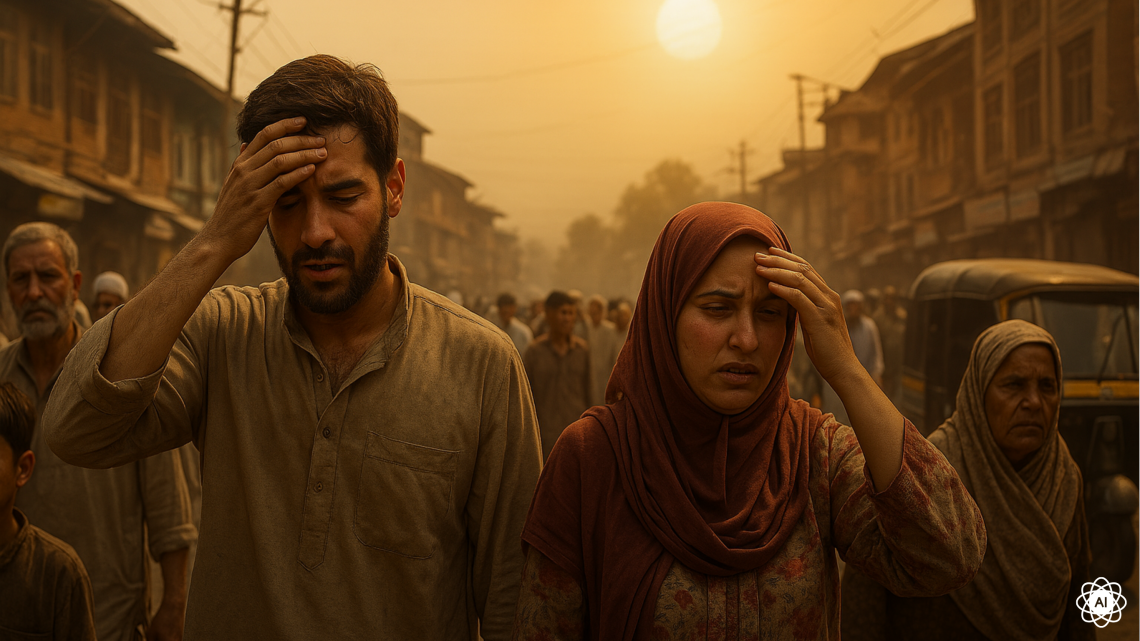
Indian Illegally Occupied Jammu and Kashmir (IIOJK) faced its most scorching June in 47 years, as unusually high temperatures and a lack of rainfall triggered one of the most intense heatwaves in decades. The Valley, known for its cool summers, sweltered under relentless sun and minimal precipitation.
Srinagar, the region’s summer capital, recorded an average maximum temperature of 33°C last month—three degrees above normal. The average minimum temperature also stayed abnormally high at 18.2°C, amplifying discomfort for residents. This made June 2025 the hottest since 1978, according to official weather data.
Mukhtar Ahmad, Director of the Meteorological Department in Srinagar, stated that maximum temperatures crossed 34°C for ten consecutive days. On June 20 and 24, the mercury hit 36°C, marking the hottest days of the month. June 19, 21, 23, and 30 also saw searing temperatures around 35°C, further intensifying the heatwave’s impact.
Independent weather analyst Faizan Arif confirmed that June 2025 was the second-hottest on record for Srinagar since temperature records began in 1892. The overall average for the month stood at 24.6°C, just shy of the record set in 1978, when the average reached 25°C.
Experts attribute the rising temperatures to a 50% rainfall deficit, which worsened the region’s already dry conditions. The persistent dry spell has sparked concerns about water scarcity, agricultural disruption, and increased vulnerability to climate change in IIOJK’s delicate ecosystem.
The alarming rise in temperatures serves as a wake-up call for environmental planning. Policymakers and local communities must invest in climate adaptation, water conservation, and heat-mitigation strategies before the crisis deepens further. If left unchecked, such extreme weather events could become the new normal for IIOJK.