IIOJK Crisis at Diplomatic Crossroads: Time for the US to Deliver
July 24, 2025The dispute over Indian Illegally Occupied Jammu and Kashmir (IIOJK) continues to pose a serious threat to peace and stability in South Asia. Despite being recognized as an international issue by the United Nations, the conflict remains unresolved, with millions of Kashmiris living under occupation and facing daily human rights violations. Against this backdrop, a recent statement from US State Department spokesperson Tammy Bruce, confirming President Donald Trump’s offer to mediate, has drawn significant attention.
Speaking at a press briefing in Washington, Bruce confirmed that a high-level meeting is scheduled with a senior Pakistani leader on Friday. She stated that the Kashmir issue will be among the central topics of discussion. The offer of mediation, while not new, has once again placed IIOJK on the international agenda. However, questions remain over whether this move signals genuine diplomatic intent or is simply a symbolic gesture without substance.
Pakistan’s Consistent Stance on Dialogue
Pakistan has consistently advocated for a peaceful and negotiated settlement of the Kashmir dispute. Successive governments have called for third-party mediation, particularly from influential countries such as the United States, to help bridge the trust deficit with India. Pakistan’s position has remained firm; Kashmir is a disputed territory, and its future must be decided in line with UN Security Council resolutions and the will of the Kashmiri people.
President Trump’s reported willingness to engage is therefore not only welcome, but necessary. However, Islamabad will rightly expect the process to be credible, structured, and rooted in international law. Diplomatic announcements alone are not enough. There must be clear timelines, defined objectives, and honest recognition of the suffering on the ground in IIOJK.
India’s Rigid and Regressive Approach
India, on the other hand, has continued to adopt a rigid and regressive position on Kashmir. By labelling it as an “internal matter,” New Delhi seeks to shut down every possibility of international mediation. This narrative has no legal or moral basis. The presence of over one million Indian troops in IIOJK, the frequent imposition of curfews, and the use of black laws such as the Unlawful Activities (Prevention) Act (UAPA) have turned the region into one of the most heavily militarised zones in the world.
India’s refusal to even engage in bilateral talks, let alone accept third-party mediation, raises serious questions about its intentions. Its actions suggest that it does not seek peace but permanence of control. This stance has repeatedly undermined regional confidence-building measures and has pushed South Asia into a state of permanent tension.
Ground Reality in IIOJK: A Humanitarian Crisis
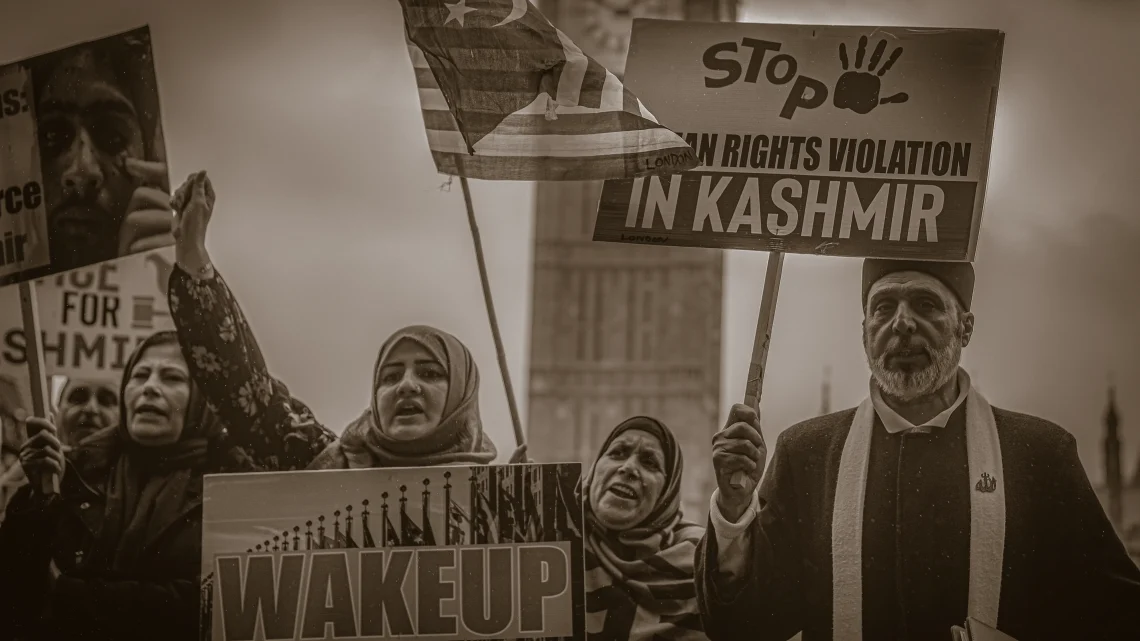
While diplomatic statements are issued in Washington and New Delhi, the situation on the ground in IIOJK remains dire. Human rights organizations have documented numerous cases of arbitrary detention, enforced disappearances, custodial deaths, and media blackouts. Schools remain closed, political leaders are under arrest, and local residents live in a constant state of fear.
No meaningful dialogue can ignore the ground realities in IIOJK. Any credible mediation must acknowledge that peace cannot be achieved without restoring justice, dignity, and freedom to the Kashmiri people. Rebuilding trust in the region starts by ending the occupation, demilitarizing civilian areas, and repealing draconian laws that criminalize dissent.
The Role of the United States: From Words to Action
Tammy Bruce rightly noted that lasting peace cannot be achieved through mere statements or conferences, but through serious diplomatic engagement. The United States must now demonstrate that its offer to mediate is more than a rhetorical move. If Washington is sincere, it must use its diplomatic influence to press for an immediate end to rights abuses in IIOJK and facilitate the resumption of dialogue between Pakistan and India under international supervision. The US has a long history of involvement in global conflict resolution. It cannot remain a passive observer while two nuclear states stand at odds over a dispute that threatens regional and international peace.
Global Responsibility and the Need for Justice
The world cannot afford to ignore IIOJK any longer. The international community, particularly the United Nations, must act decisively. Mediation is only meaningful if it is followed by action, accountability, and a clear road to resolution. Statements of concern, without corresponding measures, will only embolden the occupying power and prolong the suffering of Kashmiris.
Conclusion: A Moment That Demands Clarity and Courage
President Trump’s mediation offer may be seen as a positive development, but it will only be judged by the outcomes it delivers. The people of Indian Illegally Occupied Jammu and Kashmir have waited too long for justice. They do not need sympathy; they need meaningful international intervention that ensures their rights are upheld and their voices are heard.
If the United States wishes to play a constructive role, it must move beyond diplomatic formalities and act as a guarantor of peace. The time has come to shift the focus from strategic silence to moral responsibility. In the heart of South Asia, a people remain occupied. The question is: will the world continue to look away, or will it finally act to uphold justice?