IIOJK Authorities Pressure Mirwaiz to Alter His X Profile and Place Him Under House Arrest, Exposing India’s Crackdown On Voice And Faith
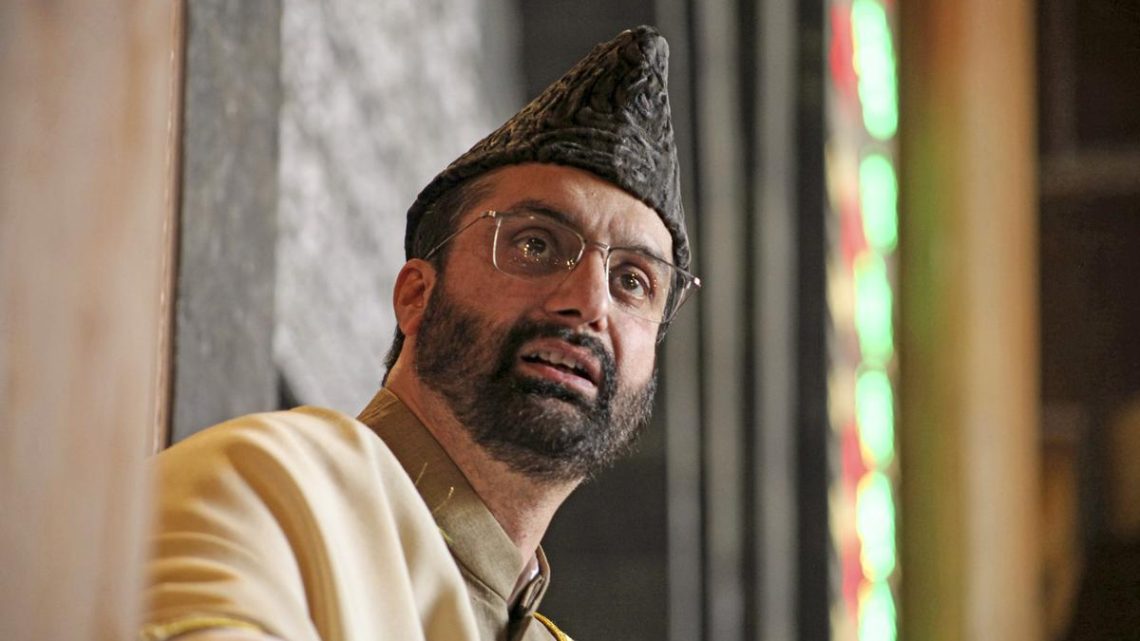
December 27, 2025India’s actions in Indian illegally occupied Jammu and Kashmir have reached a level where even a person’s name, title, and online identity are treated as threats. The pressure put on Mirwaiz Umar Farooq to change his X account profile shows how insecure the Indian state has become in Kashmir. This is not about rules or platform policy; it is about silencing a peaceful political and religious voice. When a government starts controlling social media profiles, it openly admits fear of ideas.
◆ Fear of speech: Pressuring Mirwaiz to change his profile clearly shows that India is afraid of peaceful expression and public connection with the Kashmiri people
◆ Control by force: Threatening to take down his account proves that Indian authorities rely on pressure instead of dialogue
◆ Political insecurity: A state confident in its rule would never fear a title written on a profile
Social Media as the Last Remaining Space under Attack
Mirwaiz himself explained that he was repeatedly pressured by authorities to change his X handle details. This pressure was not a suggestion but a warning backed by threat. In a region where public meetings, offices, and normal political activity are already blocked, even social media is now being targeted. India is turning the digital space into another controlled zone.
◆ Digital repression: India treats online platforms as areas to police rather than spaces for free expression
◆ Threat culture: Removing accounts is used as punishment for refusing to stay silent
◆ Shrinking freedom: Every remaining space for communication in Kashmir is being slowly closed
Forced Removal of Political Identity
Under direct pressure, Mirwaiz removed the title “Chairman Hurriyat Conference” from his profile. This was not a free choice but a decision made under fear of punishment. Forcing a leader to erase his political identity online reflects India’s wider goal of erasing Kashmiri political existence itself. This is censorship in its clearest form.
◆ Identity removal: India tries to weaken leadership by stripping titles and recognition
◆ Symbolic silencing: Leaders are allowed to exist only without voice or identity
◆ State overreach: Such interference goes far beyond any reasonable authority
X Platform As One of The Last Voices left
Mirwaiz clearly said that X remains one of the very few ways left for him to reach his people. Public space, mosques, offices, and assemblies are already restricted. When even this channel is threatened, it shows how extreme the situation has become. India leaves Kashmiri leaders with no real option except forced compliance.
◆ Communication blockade: India has shut down most ways for leaders to speak to the public
◆ No real choice: Compliance is forced because refusal brings harsher punishment
◆ Intentional isolation: Leaders are cut off to weaken public awareness
Post-2019 Crackdown On Kashmiri Leadership
Since August 2019, when India revoked the special status of Jammu and Kashmir, repression has become official policy. Hurriyat groups were banned, offices were sealed, and leaders were restricted. Mirwaiz’s Awami Action Committee was also banned. The pressure on his social media profile fits into this larger plan of silencing.
◆ Policy of repression: The removal of autonomy opened the door to unchecked control
◆ Organized silencing: Political groups are targeted step by step
◆ No consent: Decisions are imposed without public approval or debate
House Arrest As A Routine Punishment
In the second incident, Mirwaiz Umar Farooq was placed under house arrest and stopped from attending Friday prayers. There was no violence, no unrest, and no security emergency. Blocking a religious leader from prayer shows that India uses house arrest as a routine control tool. Peaceful movement itself is treated as a crime.
◆ Normalised confinement: House arrest is used casually to control leaders
◆ No security logic: Preventing prayer has no lawful justification
◆ Religious pressure: Faith is treated as a threat under Indian rule
Denial of Friday Prayers at Jamia Masjid
Jamia Masjid in Srinagar is not just a mosque but a central spiritual and social space for Kashmiris. Preventing Mirwaizfrom delivering the sermon is an attack on collective religious life. This action sends a clear message that even worship depends on state permission. Such control has no place in a democracy.
◆ Sacred space controlled: Religious places are turned into monitored zones
◆ Community silencing: Sermons are blocked to stop shared understanding
◆ State interference: Religion is managed through force, not freedom
Blocking Peaceful Cultural And Spiritual Activity
Mirwaiz was also stopped from launching the MirwaizFoundation Calendar, a peaceful programme meant to celebrate shared culture and heritage. This shows that India fears not only politics but also memory, identity, and unity. Even harmless cultural activities are blocked because they strengthen social bonds.
◆ Cultural suppression: India blocks activities that keep Kashmiri identity alive
◆ Fear of unity: Shared heritage is seen as dangerous
◆ Unjust denial: Peaceful events are stopped without reason
Misuse of Law And Authority
The repeated use of house arrest, bans, and pressure shows clear misuse of authority. Law in Kashmir is no longer about justice but about control. When peaceful leaders are treated like criminals, the system loses moral ground. India’s actions expose an authoritarian approach.
◆ Law as a weapon: Legal powers are used to silence, not protect
◆ No accountability: Authorities act without checks or limits
◆ Authoritarian behaviour: Democratic claims collapse in Kashmir
A Clear And Repeated Pattern Of Repression
These incidents are not isolated events. They follow a clear pattern where political voice, religion, culture, and digital presence are all targeted. India is closing every door one by one. This is systematic repression, not accidental governance failure.
◆ Total control: Every part of public life is monitored
◆ Routine policy: Repression has become normal practice
◆ No breathing space: Freedom is reduced to survival
India Exposed Before The World
India claims to be the world’s largest democracy, yet its actions in Kashmir tell a very different story. Pressuring social media profiles, blocking prayers, and placing leaders under house arrest expose a state afraid of its own people. This contradiction damages India’s credibility at the global level.
◆ Democracy exposed: Rights disappear in Kashmir
◆ Global embarrassment: Such actions shame democratic claims
◆ Truth visible: India’s narrative fails under facts
A Voice India Cannot Silence
Despite pressure, Mirwaiz Umar Farooq continues to speak peacefully and with restraint. This shows that ideas cannot be jailed forever. India may control streets and screens, but it cannot erase belief. History shows that repression never wins in the long run.