IIOJK: A Grave Human Tragedy and a Threat to Regional Peace
July 24, 2025The issue of Indian Illegally Occupied Jammu and Kashmir (IIOJK) is not India’s internal affair. It is a longstanding international dispute recognized by the United Nations and countless global forums. New Delhi’s persistent efforts to label the matter as domestic are misleading and deeply irresponsible. Kashmir is not a matter of governance; it is a matter of occupation. It is a burning humanitarian crisis that continues to remain volatile under the weight of Indian militarization and state repression.
The Danger of Escalation Is Real
The unresolved Kashmir conflict remains the most dangerous flashpoint in South Asia. It sits between two nuclear-armed neighbors: Pakistan and India, whose relations are already strained. Any miscalculation could spiral into a major conflict, the consequences of which would be devastating for the entire region. The possibility of military escalation, especially in the backdrop of recent border clashes and aggressive posturing, cannot be ruled out. Despite a ceasefire agreement, border incidents continue to threaten peace. The world must understand: Kashmir is not just a political dispute; it is a potential trigger for a regional catastrophe.
International Silence Is No Longer Acceptable
The silence of the international community on IIOJK is troubling and fueling further unrest. Human rights organizations have documented countless violations, yet global powers continue to look the other way. Their silence is emboldening India to continue its brutal campaign in the occupied region. The world must realize that turning a blind eye is not acceptable.
The UN Must Honor Its Own Resolutions
The United Nations, once a symbol of global hope, is fast losing credibility in South Asia. Its repeated failure to implement its own resolutions on Kashmir is disappointing. The people of Kashmir were promised a plebiscite more than seven decades ago. That promise remains unfulfilled. UN must move beyond statements and take concrete steps to ensure that the people of IIOJK are granted their right to self-determination without further delay.
Democracy Is Missing in Occupied Kashmir
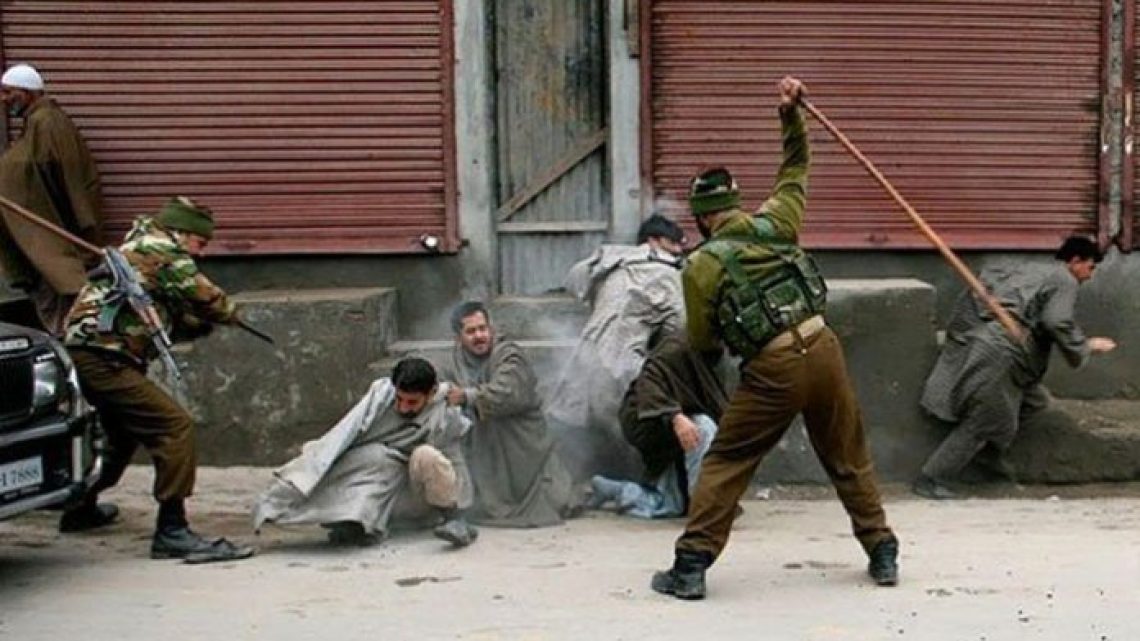
India proudly calls itself the world’s largest democracy, yet its conduct in IIOJK reflects complete fascism. The region remains under heavy lockdown, with thousands of troops patrolling the streets, communication blockades in place, and mass arrests of political leaders and activists. Peaceful protest is crushed, media is gagged, and laws are misused to target the local population. This is not democracy. This is occupation. And it must end.
Human Rights Are Being Violated Every Day
The situation in IIOJK is not just a political issue; it is a humanitarian crisis. Reports from international media, civil society, and rights groups reveal a grim picture: custodial killings, torture, enforced disappearances, and the use of pellet guns against civilians, including children. Women and minors are among the victims. Schools are shut, healthcare is under pressure, and entire communities live under constant fear. This is not governance. It is state oppression, plain and simple.
Delaying Resolution Will Cost the Region
Each day the Kashmir issue remains unresolved, the risk to regional peace and security grows. Dialogue and diplomacy must replace bullets and bans. Ignoring the people’s voice will not bring stability. It will only breed more anger, more alienation, and more chaos. Pakistan has repeatedly called for peaceful dialogue and a just solution based on UN resolutions, yet India refuses to engage. This continued denial is dangerous and unsustainable.
The Way Forward: Peace Through Justice
There can be no lasting peace in South Asia without resolving the Kashmir dispute. Peace cannot be imposed through force. It must be built through justice. The will of the Kashmiri people must be respected. India must end its occupation, and the world must play its role in securing a fair and lasting settlement. It is time for the international community to step up and act.
Conclusion: A Call to Global Conscience
Kashmir is bleeding while the world watches in silence. The international community, particularly the United Nations, must take urgent and meaningful steps to end the suffering of the people in IIOJK. This is not just about territory. It is about human lives, about justice, about the future of an entire region. The cost of inaction will not be limited to Kashmir; it will be borne by the world. The people of Kashmir have waited too long. Their voices must be heard. Their rights must be restored. And their struggle for freedom must no longer be ignored. Peace in South Asia begins with justice in Kashmir.