Human Rights Crisis in IIOJK
September 17, 2025The situation in Indian-occupied Jammu and Kashmir has once again drawn global concern as reports of grave human rights violations continue to emerge. Arbitrary arrests, custodial killings, and daily repression have become routine for millions of people trapped under a system that prioritizes control over justice. Far from being an internal matter, the crisis represents a pressing international issue of law, dignity, and human rights.
A Valley Turned Into a Prison
The Kashmir Valley has increasingly been described as an open-air prison. Security forces maintain a heavy presence across towns and villages, carrying out mass search operations that often end in arrests of young men with little or no due process. Families live in constant fear that a knock on the door could mean the disappearance of a loved one.
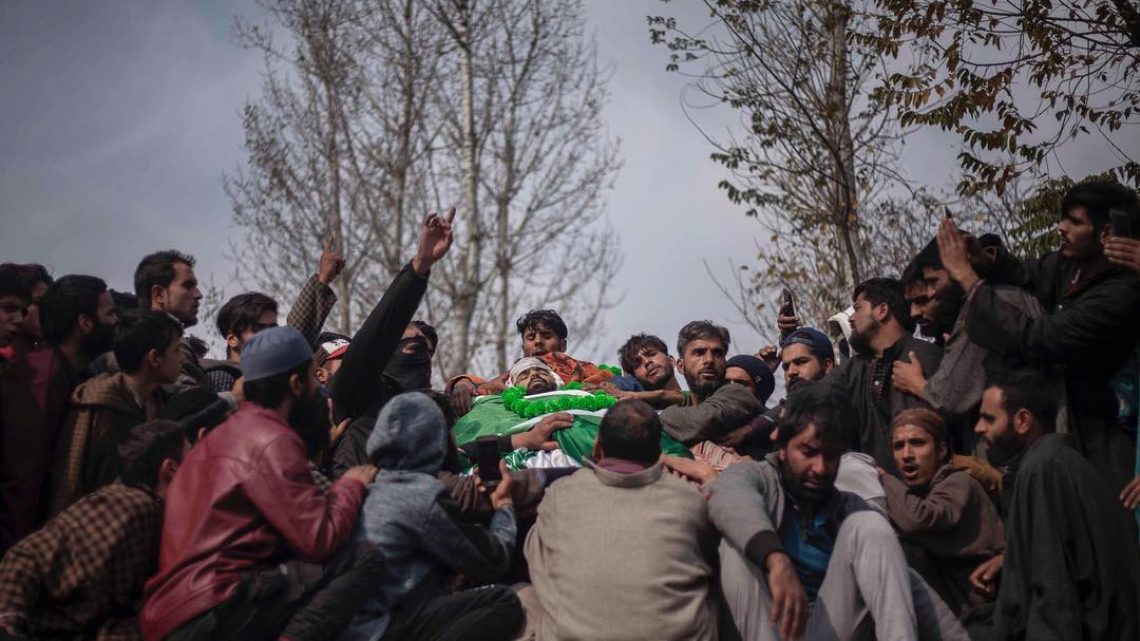
In Bandipora district, this fear turned into tragedy with the custodial killing of Firdous Ahmad Mir, a father of three. Detained on September 11, his family hoped for his safe return. Instead, days later, his tortured body was recovered from the Jhelum River. The incident sparked anger and grief, with protests erupting in Hajin, Bandipora, where people demanded justice and accountability from the Indian soldiers responsible.
What makes this case even more alarming is that it was not an isolated event. Just two weeks earlier, another Kashmiri, Zahoor Ahmad Sofi, died in police custody. His post-mortem report revealed signs of extreme torture, including a ruptured kidney. Such repeated custodial deaths expose a disturbing pattern of abuse that undermines every claim of democracy and rule of law.
Repression Beyond Civilians
The wave of repression has also extended to political representatives. Last week, Meraj Malik, a Member of the Legislative Assembly (MLA) from Doda, was arrested under the draconian Public Safety Act (PSA). His “crime” was raising his voice against the government’s neglect of flood victims. Authorities have not only detained him but also restricted public access, preventing people from meeting their elected leader.
This move reflects a broader strategy: silence political voices, weaken representation, and ensure that dissenting opinions have no platform. The PSA, often described as a “lawless law,” allows the government to detain individuals for months or even years without trial. Its repeated use against political leaders, activists, and ordinary citizens highlights the systemic erosion of rights in the region.
Attacks on Identity and Dignity
The repression is not limited to physical violence or imprisonment. According to Agha Ruhullah, a Kashmiri parliamentarian, the Indian state has also launched an assault on the very identity, language, and faith of the Kashmiri people. He emphasized the importance of continuing the struggle for justice, dignity, and honor, warning that the suppression of culture is as damaging as the suppression of political voice.
Such policies echo a deeper strategy of assimilation and control. By targeting the cultural and religious roots of Kashmir, authorities attempt to weaken the people’s sense of belonging and independence. Yet, as history shows, suppressing identity rarely leads to compliance; rather, it fuels further resistance.
Evidence of Widespread Abuses
Reports on the ground paint a bleak picture of the situation. Following the Pahalgam incident, Indian forces launched a sweeping crackdown that resulted in:
- The arrest of over 3,190 Kashmiris.
- The demolition of 81 homes, leaving families displaced.
- The killing of 44 young men in staged encounters.
These numbers are not mere statistics; they represent shattered families, destroyed livelihoods, and communities left in despair. Yet, despite the magnitude of these violations, accountability remains elusive. Instead of addressing grievances, authorities often impose curfews, shut down communication channels, and rely on propaganda to justify their actions.
The People’s Defiance
Despite overwhelming odds, the Kashmiri people continue to resist. Daily protests, strikes, and demonstrations underscore their refusal to accept silence as the price of survival. The determination of ordinary men, women, and youth demonstrates that even one million troops cannot suppress the call for freedom.
The custodial killings of individuals like Firdous Ahmad Mir and Zahoor Ahmad Sofi, rather than instilling fear, have only strengthened the resolve of many Kashmiris to continue their struggle. The cycle is clear: each act of repression generates greater resistance, and each attempt to silence the people only amplifies their voice.
International Responsibility
The Kashmir crisis cannot be dismissed as a bilateral or internal matter. It is a human rights emergency that demands international attention. Global institutions and states that champion human rights cannot remain silent while arbitrary arrests and extrajudicial killings take place with impunity.
The United Nations has long recognized the right of the Kashmiri people to self-determination. Yet, the promise of a plebiscite remains unfulfilled. The gap between international commitments and on-ground reality only widens with each passing year, eroding trust in global justice systems.
Conclusion: A Struggle That Will Not End
India’s reliance on force, draconian laws, and propaganda has not solved the political question of Kashmir. Instead, it has deepened mistrust, fueled resistance, and created a long-standing human rights crisis. Custodial killings, arbitrary arrests, and attacks on identity cannot substitute for dialogue, justice, and respect for the people’s will.
The Kashmiri struggle is not one of violence, but of survival, dignity, and the right to choose a future free from repression. As the Kashmir Media Service aptly noted, India’s actions cannot extinguish the ongoing movement for self-determination. Every act of cruelty adds fuel to the fire of resistance, reminding the world that justice delayed is not justice denied forever.
The time for silence has passed. The world must act—not tomorrow, not someday, but now. For in the valley of Kashmir, the cost of delay is counted in lives lost, families broken, and a people still waiting for the justice that was promised to them decades ago.