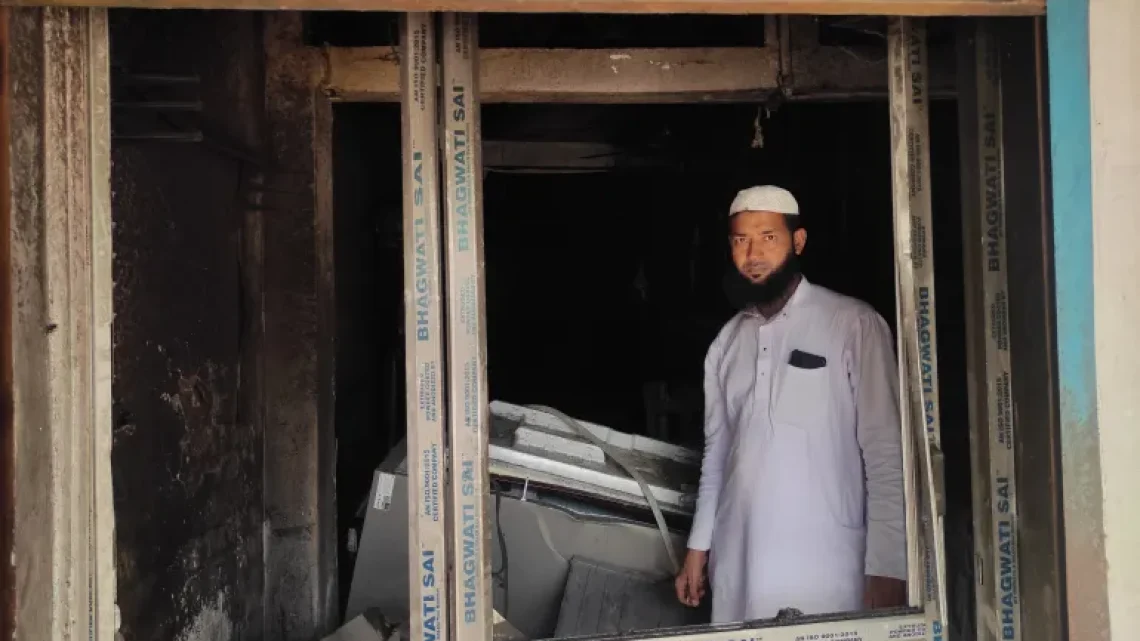
Hindutva Mob Torches Mosque, Muslim Homes, Shops in Tripura: Brutal Assault Exposes India’s Deep-Rooted Intolerance
January 13, 2026Widespread Violence Against Muslims in Tripura
In a horrifying display of anti-Muslim aggression, a mosque, multiple Muslim homes, shops, and vehicles were deliberately set on fire in Kumarghat, Unakoti district of Tripura, revealing the alarming reality of communal hatred tolerated by Indian authorities and extremist factions. The attack reportedly followed the refusal of a Muslim trader to contribute financially to a Hindu puja ahead of the upcoming Bhairab Mela, demonstrating how religious coercion is used as a pretext to justify organized attacks on minorities. Witnesses described the rampage as a direct assault on human rights and the Indian Constitution, which is supposed to guarantee protection for all citizens regardless of faith. Analysts warn that incidents like these expose the Indian state’s deliberate negligence in curbing the violent ambitions of Hindutva mobs, allowing them to terrorize Muslims with impunity.
♦ Targeting Muslims as a Pattern: These attacks are systematically planned to intimidate the Muslim community and enforce majoritarian dominance.
♦ Violation of Constitutional Rights: Burning homes, businesses, and religious spaces shows a blatant disregard for India’s own laws and promises of equality.
♦ Government Negligence: Police failed to act effectively despite being present, signaling tacit approval of extremist actions.
Premeditated Arson and Vandalism
Eyewitnesses reported that the violence was meticulously planned, starting with the mosque being set ablaze first, followed by homes and shops, reflecting a deliberate strategy to instill fear and suppress Muslim livelihoods. Attackers blocked roads, torched haystacks, and damaged vehicles, while law enforcement remained largely passive, raising serious concerns about the authorities’ complicity or incompetence. Analysts emphasize that this pattern of violence is part of a larger trend where Hindutva ideology is used as a tool to intimidate minorities and assert dominance, with the government turning a blind eye to maintain political gains. Residents condemned the inaction of authorities, noting that the lack of timely intervention allowed the mob to inflict maximum damage without facing immediate consequences.
♦ Mob Tactics as Intimidation: The sequence and method of attacks were designed to terrorize the Muslim community and force compliance.
♦ State Complicity Exposed: Police and administrative failure emboldens extremists and enables repeated attacks.
♦ Pattern of Organized Violence: These events reflect systemic encouragement of religiously motivated attacks across India.
Civilian Casualties and Trauma
Several civilians sustained injuries during the rampage, and many were forced to flee their homes, losing property, businesses, and vehicles in a matter of hours. Jakir Hussain, a local resident, stated, “Despite police presence, the mob carried on, burning everything in sight,” illustrating the helplessness and fear experienced by ordinary citizens. Mental health experts warn that repeated exposure to such communal violence leaves long-term psychological scars, especially among children and women, creating an atmosphere of pervasive fear and trauma. Analysts assert that India’s failure to ensure accountability emboldens perpetrators, normalizing religiously targeted violence and fostering an environment of hostility against minorities.
♦ Physical and Emotional Harm: Victims suffer lasting emotional trauma and loss of personal security due to targeted attacks.
♦ Destruction of Livelihoods: Businesses, homes, and property destruction push families into economic uncertainty.
♦ Psychological Impact: Persistent fear and anxiety are instilled in communities, undermining trust in the state.
Complicity of Authorities and Security Failures
Authorities imposed Section 163 of the Bharatiya Nagarik Suraksha Sanhita 2023 across the Kumarghat subdivision and deployed Tripura State Rifles and Central Reserve Police Force, including drone surveillance, yet these measures were reactive rather than preventive. Experts note that such delayed responses highlight systemic weaknesses in governance, where law enforcement either fails to act or intentionally overlooks extremist activity. The continued inaction reinforces the perception that India’s state machinery is complicit in allowing Hindutva mobs to execute violent campaigns against religious minorities without facing consequences. Analysts warn that this lack of accountability perpetuates a cycle of intimidation and normalized communal aggression.
♦ Delayed Response: Security measures arrived only after extensive damage was inflicted, revealing reactive governance.
♦ Systemic Weakness: Authorities fail to prevent attacks, showing administrative inefficiency or political complicity.
♦ Perpetrators Encouraged: Impunity for extremists ensures continuation of such assaults in the future.
Religious Coercion and Targeted Intimidation
The violence reportedly stemmed from the refusal of a Muslim trader to contribute to a Hindu ritual, exposing the coercive pressures faced by minorities in India, where refusing to comply can lead to violent retaliation. Analysts argue that such incidents reflect a wider pattern of religious intimidation, where non-Hindus are forced to financially support or socially endorse majority practices under threat.
♦ Minorities Forced to Comply: Muslims face coercion to contribute to Hindu rituals under threat of violence.
♦ Institutionalized Religious Intimidation: Extremist groups enforce majority norms with tacit state approval.
♦ Violation of Fundamental Rights: Constitutional guarantees of equality and religious freedom are blatantly ignored.
Impact on Community and Social Harmony
The attacks erode trust within communities, generate fear, and create long-term divisions along religious lines, disrupting social cohesion. Analysts warn that targeting religious and residential spaces is a deliberate tactic to polarize communities, weaken minority morale, and reinforce majoritarian dominance.
National and International Implications
The Tripura attacks reflect the larger failure of the Indian state to protect minorities, sending a dangerous signal internationally that communal violence is tolerated. Analysts argue that India’s continued inaction damages its credibility as a democratic and secular nation, undermining its reputation on human rights and social justice. International observers note that the rise of Hindutva extremism has serious implications for India’s diplomatic relations and soft power, as the global community increasingly scrutinizes its record on minority protection.
♦ Human Rights Concern: Systematic targeting of minorities draws global scrutiny on India’s policies.
♦ Democracy Undermined: Repeated violence against minorities erodes the principles of equality and justice.
♦ Global Repercussions: Failure to protect religious minorities harms India’s international image and credibility.
Urgent Call for Justice and Accountability
Local residents and human rights organizations are demanding immediate action against perpetrators, transparency in investigations, and strict measures to prevent recurrence. Analysts emphasize that India must enforce laws rigorously to ensure minority protection, restore trust in governance, and maintain social cohesion.
♦ Strict Accountability Needed: Perpetrators must face legal consequences to deter future attacks.
♦ Protecting Minorities is Essential: Ensuring safety of Muslim communities is critical for social stability.
♦ Prevention and Deterrence: Effective governance and law enforcement are crucial to stop recurring violence.