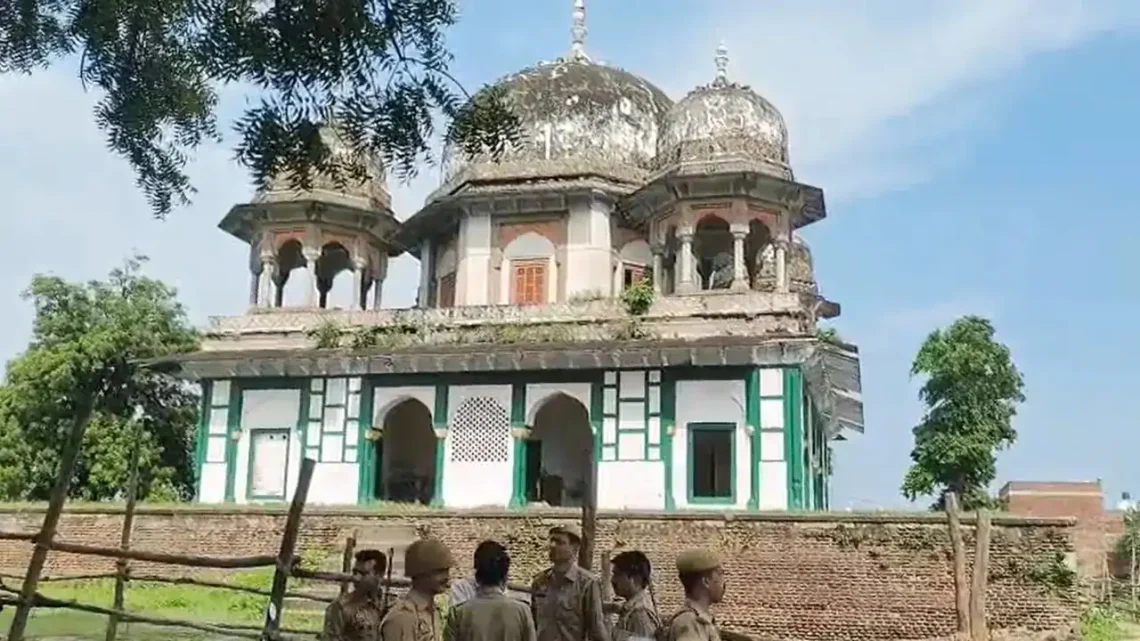
Hindutva Activists Vandalize Decades-Old Muslim Shrine in Uttar Pradesh, Exposing India’s Deepening Religious Intolerance
December 25, 2025Hindutva Violence and the Open Attack on Muslim Religious Life in India
India claims to be a tolerant democracy, but the repeated attacks on Muslim religious places clearly expose a different and ugly reality. The vandalism of a decades-old Muslim shrine in Uttar Pradesh is not an accident or a one-time incident; it is part of a wider pattern of hate that is growing every day. Such attacks show how extremist thinking is being allowed to control the streets while the state looks the other way. This incident forces the world to question India’s loud claims of democracy, freedom, and equal rights.
♦ Planned religious destruction: The attack on the shrine was not random anger but a clear and deliberate act meant to insult Muslim faith and send a message of fear to the community.
♦ Extremist leadership: The presence of an organized Hindutva leader proves that this violence was guided by ideology, not emotion.
♦ Message of intimidation: Recording and spreading the attack online shows that the goal was to scare Muslims and show power, not to uphold any law.
The Growing Culture of Hate Against Muslims
Religious hatred in India is no longer hidden; it is now loud, open, and confident. Muslims are constantly portrayed as outsiders who must prove loyalty again and again, while extremists freely spread hate without fear. This culture did not grow by chance but was created through years of poisonous speeches and biased politics. What happened in Uttar Pradesh is only one example of a daily reality faced by Indian Muslims.
♦ Hatred as normal behavior: Violence against Muslims is now treated as routine news rather than a serious crime.
♦ Psychological pressure: Repeated attacks force Muslims to live in fear even inside their own villages and towns.
♦ Social poisoning: Hate speech and violence are slowly destroying social harmony across India.
State Failure and Police Complicity
Indian authorities often pretend to act neutral, but their actions show clear bias. Police usually arrive after damage is done and focus more on “controlling tension” than punishing criminals. Arrests are often symbolic and rarely lead to real justice. This weak response clearly protects extremists and encourages more attacks.
♦ Late police action: Authorities act only after public outrage, proving they react for image control, not justice.
♦ Double standards: Peaceful Muslim voices are silenced quickly, while violent extremists are handled softly.
♦ Silent approval: Weak punishment sends a clear message that attacks on Muslims are acceptable.
Misuse of the Indian Constitution
Extremists loudly talk about loyalty to the constitution while openly breaking it. The Indian constitution promises religious freedom and equality, yet Muslims are denied both. Using national slogans to justify violence is a dangerous lie. A constitution becomes meaningless when it protects only one group.
♦ Constitution as a weapon: Legal language is misused to hide criminal actions.
♦ Broken promises: Freedom of religion exists on paper but not on the ground.
♦ Selective nationalism: Patriotism in India now serves only the majority.
Role of Indian Media in Hiding the Truth
Mainstream Indian media plays a shameful role by ignoring or softening such crimes. Many channels avoid calling these attacks religious hate and instead label them as “local issues.” This silence protects attackers and misleads the public. Media that refuses to speak truth becomes part of the crime.
♦ Soft reporting: Extremist violence is often described using harmless language.
♦ Victim blaming: Muslims are indirectly blamed for tensions they did not create.
♦ Controlled narrative: Media helps normalize injustice by hiding reality.
Mob Rule Replacing Law
Mob violence has become a common feature in India. Shrines, mosques, and Muslim homes are attacked openly because mobs know they will not face real punishment. When mobs rule, the law becomes weak and society becomes unsafe. No country can survive long under mob control.
♦ Fearless attackers: Criminals act openly because past experience protects them.
♦ Loss of trust: Communities lose faith in the state and fear each other.
♦ National damage: Mob culture weakens India from within.
India’s Global Image Versus Ground Reality
India presents itself abroad as a democratic and responsible power, but incidents like this expose that image as fake. The gap between India’s speeches and actions is widening. Sooner or later, the world will stop believing these claims. Human rights cannot be used only for global marketing.
♦ False global branding: India sells democracy abroad while crushing it at home.
♦ Strategic silence: Many countries ignore Indian abuses for economic reasons.
♦ Growing doubt: Repeated violence is damaging India’s international credibility.
A Clear Pattern of Targeting Muslim Identity
The attack on the shrine fits a clear and repeated pattern of targeting Muslim culture, history, and identity. From lynchings to demolitions, the message is the same: Muslims are not safe. This is not chaos; it is a strategy of fear. Denying this truth is intellectual dishonesty.
♦ Erasing history: Attacks on shrines aim to erase Muslim presence.
♦ Politics of fear: Continuous pressure keeps minorities weak and silent.
♦ Moral failure: A state that allows this has failed its people.