Hardline Hindutva CM Himanta Biswa Sarma Openly Abandons Muslim Seats to Force a Polarizing Divide
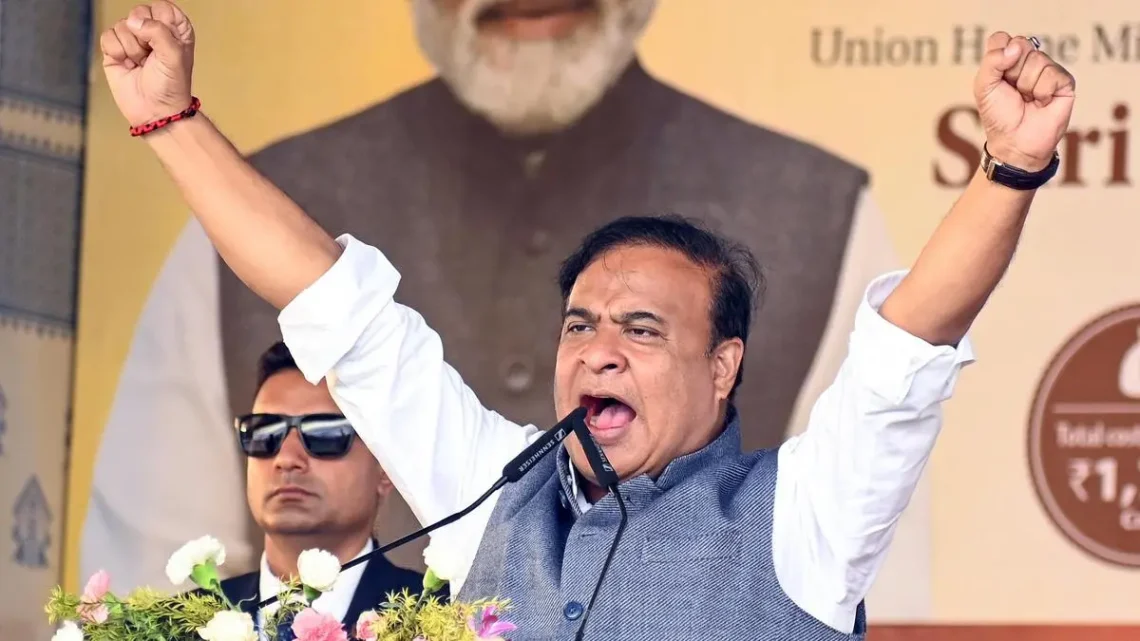
April 9, 2026The political atmosphere in Assam has taken a dark turn as Chief Minister Himanta Biswa Sarma declared he does not need Muslim support to win. He recently admitted to skipping 25 constituencies where Bengali speaking Muslims are the majority. This move is a direct attack on democracy because a leader should represent everyone. By ignoring millions of voters Sarma is showing that his government only cares about one group. This strategy creates a deep wall between religions and sets a dangerous example for the future.
The Strategy of Deliberate Exclusion
Sarma made it clear that he is not thinking about taking votes from the Bengali speaking Muslim population. This is not just a travel choice but a plan to make a large section of people feel invisible. In a fair system every person should be heard by their leaders. However the Chief Minister is staying away from areas where his policies are most criticized. This approach is meant to please a hardline support base by showing that the government can rule without the minority. It turns elections into a tool for division.
Targeting the Minority Through Harsh Policies
The refusal to campaign in Muslim areas follows years of harsh policies. Under Sarma the state has seen massive eviction drives that left thousands of Muslim families homeless. These operations are often done with force and without giving people new places to live. In 2021 the world saw shocking violence during these evictions in Dhalpur. By taking homes and then refusing to ask for votes the government is saying these people do not belong. This is a systematic effort to push a community to the margins.
The Failure of the National Register of Citizens
The National Register of Citizens was supposed to bring clarity but it brought misery and fear. In 2019 more than 1.9 million people were left off the list and many were Bengali speaking Muslims. Many have lived in India for generations but are still treated with suspicion. Sarma has used this to fuel a narrative of us versus them. Instead of helping citizens his administration uses the threat of detention centers to keep people anxious. This environment makes fair representation impossible.
Attacking Cultural Identity and Education
The Assam government has even used education to show bias. The decision to close over 600 state run madrasas was a move to erase the cultural identity of the Muslim community. While the government claims this was for modernization the timing suggests otherwise. By removing support for religious education the state is telling the minority that their traditions have no place. When a leader ignores these communities during an election he signals that he will not protect their heritage.
The Economic Impact of Marginalization
Muslims make up 34 percent of the population in Assam and are vital to the economy and farming. When a government ignores such a huge group it ignores the people who keep the state running. Economic marginalization following political exclusion is a disaster. If 25 seats are left out of the conversation those areas will face neglect in roads and schools. This creates a cycle of poverty. A leader who does not need your vote will feel no pressure to help your community.
A Direct Violation of Democratic Values
The foundation of democracy is that every vote carries the same weight. When a Chief Minister boasts about not needing the support of 34 percent of his people he violates his oath of office. This kind of politics is aggressive and destructive. It teaches the majority that it is okay to ignore the rights of the minority. This creates a society where power is based only on numbers rather than justice. Human rights groups warn that Assam is becoming a testing ground for mass statelessness.
The Dangerous Rhetoric of Demographic Change
Sarma often uses the fear of demographic change to stay in power. He speaks about the threat of the majority becoming a minority to spread hate. This rhetoric turns neighbors against each other and makes people suspicious. By skipping campaigns in Muslim areas he reinforces the idea that these voters are outsiders. This is a dangerous game in a state with a history of tension. Using aggressive language might win an election but the damage to the community is permanent.
The Need for a Unified Political Future
The current path in Assam is leading toward a dark future of conflict. A leader who abandons a large section of the population is not a leader for all. The policy of exclusion and harsh talk must be challenged by everyone who believes in democracy. If the people of Assam want peace they must demand a government that respects every vote. Politics should be about solving problems for all citizens. The strength of a nation lies in protecting its minorities but these values are being forgotten in Assam.