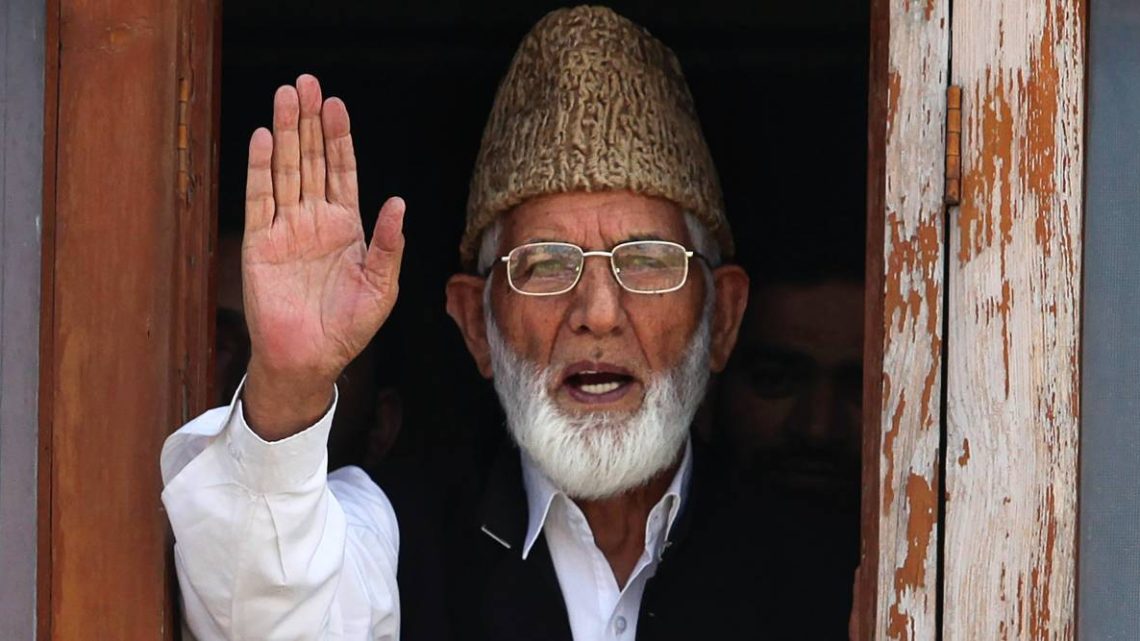
Geelani’s Legacy: The Eternal Symbol of Kashmir’s Struggle for Self Determination and Independence
August 30, 2025On 1st September 2021, Kashmir lost its most steadfast leader, Syed Ali Shah Geelani. His life and struggle remain a symbol of the region’s fight for self-determination. Geelani’s leadership for the Kashmiri cause, his commitment to independence, and his belief in Kashmir’s natural place within Pakistan left an enduring mark on the region’s political landscape. His legacy continues to inspire Kashmir’s ongoing struggle for justice and freedom.
Geelani’s Political Journey
Born in 1929, Geelani’s political path was shaped by Kashmir’s complicated relationship with India. Initially part of the Jammu and Kashmir National Conference, he soon grew disillusioned with India’s policies and moved toward a separatist stance. His vision for Kashmir’s future was clear: an independent Kashmir free from Indian rule, shaped by its people’s aspirations.
Commitment to Self-Determination
Geelani’s core belief was Kashmir’s right to self-determination. He constantly pushed for a fair plebiscite, in line with the United Nations’ resolutions, for Kashmiris to choose their future. He rejected India’s claim over Kashmir, firmly stating that the people of Kashmir should decide their destiny, not external powers.
Unyielding Resistance Against Indian Rule
Throughout his life, Geelani resisted Indian rule with unshakable resolve. He rejected every offer of compromise and autonomy from India, seeing them as tools to suppress Kashmiri freedom. His refusal to bend in the face of pressure made him the central figure in the Kashmiri resistance, and he became a hero for those who believed in the region’s independence.
A Hero for Kashmiri Youth
Geelani’s calls for freedom found great support among Kashmiri youth. His leadership during the 2008–2017 uprisings solidified his position as the leader of the youth-driven resistance against Indian occupation. His clarity of thought and commitment to a free Kashmir inspired countless young Kashmiris to take to the streets, demanding independence.
Geelani’s Pro-Pakistan Stance
Geelani’s strong support for Pakistan was a defining feature of his leadership. He viewed Pakistan as a natural ally for Kashmir, given their shared history and cultural ties. His calls for closer ties with Pakistan were based on his belief that Kashmir’s future was intrinsically linked to the country. Geelani’s consistent support for Pakistan made him a powerful voice for the Kashmir cause, even though it sometimes put him at odds with those seeking neutrality.
Refusal to Engage in Bilateral Talks
Geelani’s position on talks with India was firm: no meaningful dialogue could take place without Pakistan’s involvement. He consistently rejected India’s efforts for bilateral talks, emphasizing that Kashmir’s future needed to be decided by all relevant parties. His rejection of these talks was a central part of his resistance, underlining his belief that Kashmir’s destiny was for its people, not just India, to decide.
Geelani’s Writings and Intellectual Resistance
Geelani’s writings were central to his resistance. His prison memoir Rūdad-i Qafas (Story of the Cage) provided a powerful account of his years under detention, illustrating the harsh conditions and his determination. His other works, such as Navā-yi Hurriyat (Voice of Hurriyat), helped shape the intellectual foundation of Kashmir’s freedom movement. Geelani’s writing continues to inspire those committed to the cause of independence.
Geelani’s Role in Shaping Kashmir’s Struggle
Geelani’s leadership was key in defining the direction of Kashmir’s political struggle. His steadfast rejection of Indian rule and his demand for a plebiscite kept the idea of Kashmiri independence alive. Geelani’s leadership helped solidify the Kashmiri resistance, making him the symbol of the region’s quest for freedom.
Geelani’s Influence on the Youth of Kashmir
Geelani’s influence on the youth was profound. His rejection of Indian sovereignty and his vision for a free Kashmir resonated deeply with young Kashmiris. During the uprisings, his leadership gave the youth a direction, leading many to join protests and strikes against Indian control. Geelani’s ability to mobilize the younger generation cemented his role as their leader.
The Hardliner Label
Though often labeled a “hardliner,” Geelani’s stance was rooted in his commitment to Kashmir’s freedom. He rejected any solution that did not fully respect the right of Kashmiris to determine their future. For Geelani, compromise meant betrayal, and he remained firm in his beliefs, no matter the consequences. His hardline approach earned him respect among his supporters, who saw him as a true leader of the resistance.
Geelani’s Legacy of Resistance
Geelani’s legacy is one of resilience and steadfast commitment to Kashmiri self-determination. His refusal to compromise, his advocacy for a plebiscite, and his leadership during the uprisings have made him a symbol of resistance for Kashmiris. Even after his death, his influence remains strong, continuing to guide the struggle for Kashmir’s freedom.
Geelani’s Resistance Against Indian Diplomatic Tactics
Geelani was keenly aware of India’s diplomatic efforts to isolate Kashmir and present the issue as an internal matter. He repeatedly exposed India’s diplomatic games and rejected any negotiations that did not include Pakistan. Geelani’s diplomatic resistance kept the Kashmir issue alive on the global stage, ensuring that the world would not forget Kashmir’s fight for freedom.
Geelani’s Ideological Clarity
Geelani’s ideology was straightforward: Kashmir’s future must be determined by its people. His refusal to accept any form of compromise was based on this principle. Geelani’s ideological clarity helped shape the narrative of the Kashmir struggle, making him a key figure in the region’s resistance movement. His unwavering commitment to this cause continues to inspire those fighting for justice in Kashmir.
Geelani’s Relationship with India and Pakistan
Syed Ali Shah Geelani consistently maintained that Kashmir is a natural part of Pakistan, highlighting the shared culture, religion, and values between the two. He believed Kashmir’s identity and future were closely aligned with Pakistan, and that the region’s survival depended on joining Pakistan. Geelani’s vision was clear: Kashmir’s prosperity and freedom could only be secured as part of Pakistan, a belief he reinforced throughout his leadership.
Geelani’s Enduring Legacy
Syed Ali Shah Geelani’s death marked the end of an era in Kashmiri politics, but his legacy as a hero of resistance lives on. His clear vision for a free Kashmir, his dedication to self-determination, and his refusal to compromise have left a lasting impact on the Kashmir struggle. Geelani’s leadership continues to inspire Kashmiris who fight for their right to a free and independent future.
Geelani’s Influence on the Global Stage
Geelani’s leadership had a global impact, bringing attention to Kashmir’s struggle for self-determination. Despite being denied recognition and travel documents by Indian authorities, Geelani’s voice reached international platforms. His calls for a plebiscite and his critique of India’s occupation of Kashmir brought the issue to the attention of the international community, ensuring that Kashmir’s fight for freedom was not forgotten.
Geelani’s Enduring Ideology
Geelani’s ideology of resistance and self-determination continues to inspire future generations. His refusal to accept the status quo and his insistence on Kashmir’s right to choose its future remain central to the movement for Kashmir’s freedom. Geelani’s leadership has provided a moral and ideological foundation for the ongoing struggle, ensuring that his vision for a free Kashmir lives on.
Geelani’s Heroic Legacy
Syed Ali Shah Geelani’s legacy is one of heroism and unwavering resistance. His commitment to the freedom of Kashmir, his refusal to compromise on the region’s right to self-determination, and his leadership during some of the most challenging periods in Kashmir’s history have made him a hero for millions. Geelani’s life and work continue to shape the future of Kashmir’s struggle for justice and independence.
Conclusion
Syed Ali Shah Geelani’s leadership remains a beacon of hope for Kashmiris fighting for their rights and freedom. His refusal to compromise, his dedication to Kashmir’s self-determination, and his vision of a free and independent Kashmir continue to guide the movement. Even after his death, Geelani’s legacy lives on, inspiring those who continue to fight for justice and freedom. His life was a testament to the power of resistance, and his heroism will forever be a defining chapter in Kashmir’s history.