From Promise to Punishment: India’s Constitutional Fraud Against the People of IIOJK
August 4, 2025On August 5, 2019, India carried out one of its most aggressive attacks on the people of Indian Illegally Occupied Jammu and Kashmir (IIOJK) by revoking Articles 370 and 35-A of its own constitution. Far from being a policy decision, it was a planned move aimed at wiping out Kashmiri identity, suppressing political will, and tightening India’s illegal occupation. The All Parties Hurriyat Conference Azad Jammu and Kashmir (APHC-AJK) chapter has described the act as a direct attack on international law, a gross betrayal of the United Nations Charter, and a desperate attempt to redefine the disputed territory through colonial methods.
This was not a simple constitutional amendment. It was an act of aggression: legally baseless, morally shameful, and politically dangerous. The move struck directly at the very heart of IIOJK, turning constitutional guarantees into a cover for demographic invasion and official repression.
Mehmood Ahmed Saghar: The Strategic Attempt to Erase Kashmiri Identity
Former APHC-AJK convener Mehmood Ahmed Saghar issued a strongly worded statement from Islamabad, condemning the August 5 abrogation as a severe blow to the Kashmiri people’s rights and dignity. He noted that the move was part of a wider settler-colonial agenda designed to forcibly change the demographic and political situation of the occupied territory.
“These measures are not only a violation of international law but also a strategic attempt to erase Kashmiris’ identity, culture, and rights, and undermine their internationally acknowledged right to self-determination,” Saghar said.
Saghar highlighted that the forced imposition of unjust laws, demographic reshaping, and manipulation of electoral processes served only one goal: to weaken the Muslim-majority character of the region and forcibly merge IIOJK into the Indian Union.
A Black Day for Humanity: August 5 and Its Aftermath
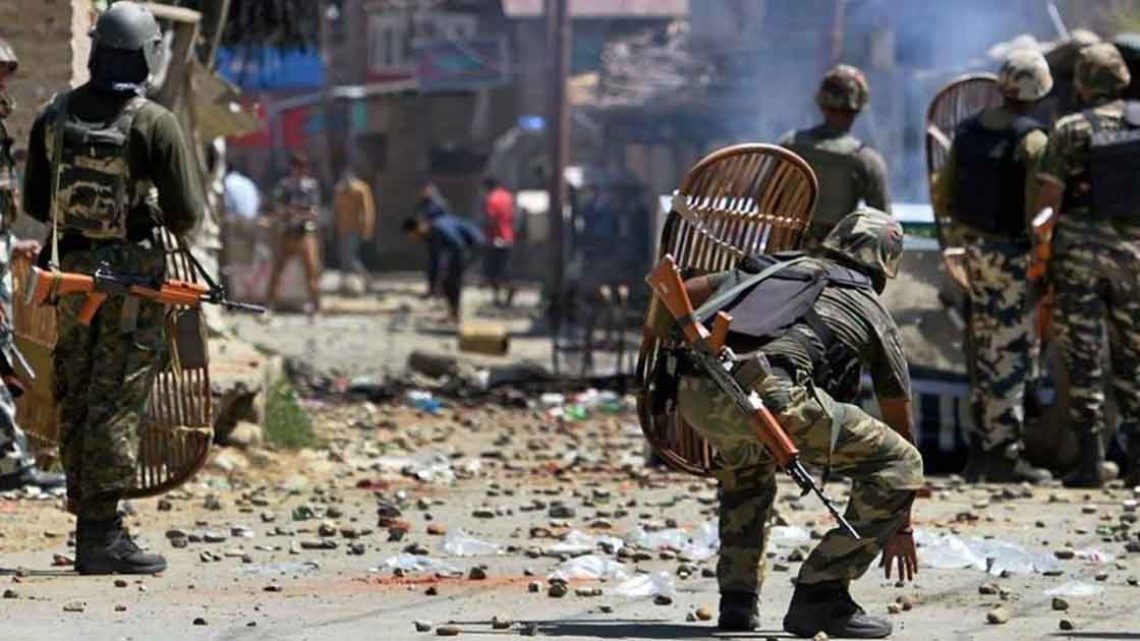
Since that dark day, IIOJK has remained under constant siege. The region has been turned into an open prison, where over eight million people have been subjected to curfews, media blackouts, mass arrests, and collective punishment. India’s claims of development and normalcy stand exposed before the world as nothing more than cover to hide a harsh reality.
The abrogation, at its core, was not about inclusion but about removal—removal of identity, autonomy, and the right to speak up. It marked the formal start of a phase of occupation that tries to make colonial control look like constitutional change.
Shamim Shawl: A Full-Scale Assault on Freedoms
APHC-AJK leader Shamim Shawl completely rejected the Indian government’s claims and exposed the damaging impact of the abrogation on the daily lives of Kashmiris.
“This was not just an attack on legal provisions, but a full-scale assault on freedoms, including the right to dissent, to communicate, and to live without fear,” Shamim Shawl said.
The move, she warned, had thrown the region into a severe humanitarian crisis. Basic rights were blocked, criticism made a crime, and even the right to speak was crushed by occupation forces. She also pointed out the clear violation of international laws by India.
“This unilateral move violates several UN Security Council resolutions—particularly 122, 123, and 126—which prohibit any party from altering the disputed status of Jammu and Kashmir,” Shamim Shawl said.
Political Engineering to Disempower the People
The redrawing of voting boundaries and the rapid issuing of local residency certificates to outsiders expose India’s agenda of political reshaping. The open effort to shift the population balance and influence future polls is a clear violation of international laws and basic human rights.
India’s goal is not just to control IIOJK but to silence its voice. This includes weakening local elected bodies, criminalising political views, and shutting down independent media. These tactics mirror old colonial practices—where law is turned into a weapon instead of protection.
Global Silence: A Stain on International Conscience
What makes this aggression even worse is the silence of the international community. Despite clear violations of UN resolutions and a long list of human rights abuses, world powers have largely chosen to stay quiet. Their unwillingness to confront India’s actions has encouraged New Delhi to push forward with no fear.
This silence is not just inaction—it is cooperation. By staying quiet, the world is helping the suppression of a people whose only demand is to live with honour, according to their will, and in line with global laws.
Muhammad Farooq Rehmani: The People Have Not Surrendered
Former APHC-AJK convener Muhammad Farooq Rehmani reaffirmed that the people of IIOJK remain firm in their resolve. He declared: No amount of terror or black laws can deter Kashmiris from pursuing their just struggle for freedom and self-determination.
Rehmani stressed that Kashmiris across the world would continue to observe August 5 as a Black Day. The date, he said, has become a lasting symbol of betrayal, occupation, and defiance.
The Way Forward: Dialogue with Kashmiris at the Centre
APHC-AJK leader Sheikh Abdul Mateen has urged the global community to start multi-party talks involving all concerned sides, especially the Kashmiri leadership. No real solution can be achieved without including those who have endured the worst. Leaving out the voices of the oppressed will only bring more trouble and more unfairness.
August 5 Will Be Remembered as a Day of Occupation, Not Reform
India may have changed its constitution, but it has not changed the truth on the ground in IIOJK. The people continue to resist, not with arms, but with unity, spirit, and unshakeable belief in justice. The abrogation of Articles 370 and 35-A will be remembered not as progress, but as a shameful act in South Asian history.
Until the world recognises the rightful hopes of the people of IIOJK, August 5 will stay a painful memory of betrayal, colonial behaviour, and a global failure to stand up for justice.