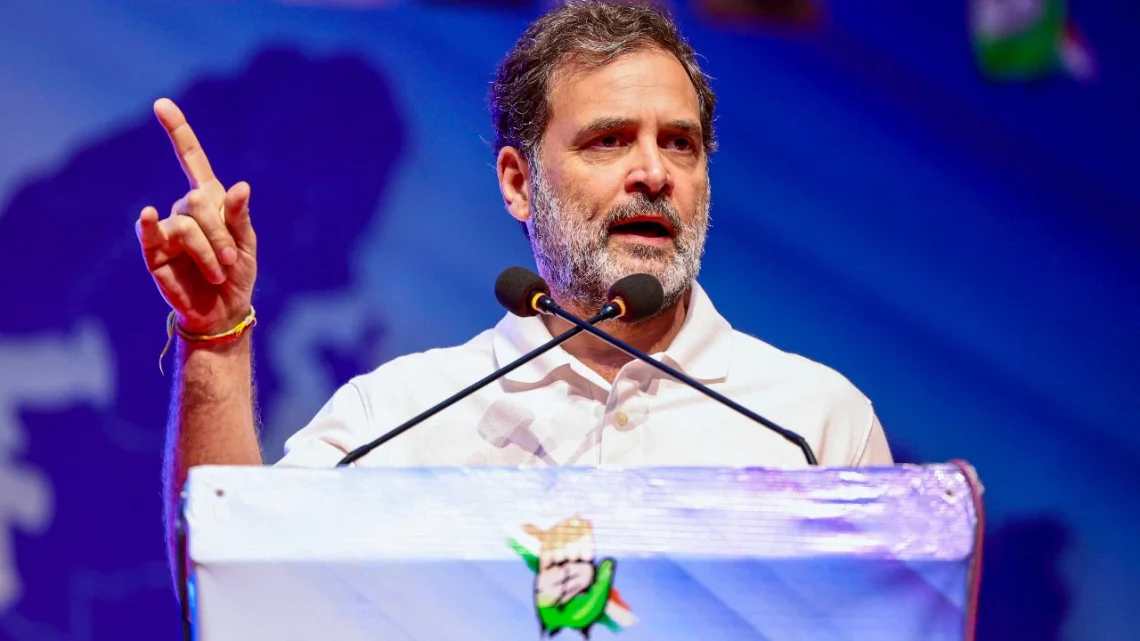
From Pride to Submission: Rahul Gandhi’s Direct Assault on Modi’s Surrender to Trump
March 15, 2026The recent political firestorm sparked by Rahul Gandhi accusing Narendra Modi of surrendering national interests to the United States is more than just a heated exchange in the corridors of power. It marks a critical moment where the carefully constructed image of a strong and independent leadership is colliding with the cold, hard reality of geopolitical and economic limitations. While political rhetoric is often designed to hit hard, this particular narrative resonates because it touches upon a fundamental vulnerability that defines India today. It raises a question that a government projecting absolute strength cannot easily deflect. Can a nation truly dictate its own terms when its lifeblood, energy, remains hostage to imports and its economic future is tied to intense trade negotiations with a dominant global power?
The Illusion of Independent Energy
To understand why this accusation carries such weight, one must look past the slogans and examine the numbers that drive the engine of the state. Energy security is not merely a component of foreign policy. It is the silent regulator of industrial output, transport costs, inflation, and the monthly survival of every household. Official data reveals a sobering reality. India’s crude oil import dependence reached 87.7 percent in the 2023 and 2024 period. During that timeframe, the country imported 232.5 million metric tonnes of crude oil, resulting in a staggering import bill of 132.4 billion dollars. These figures serve as a blunt reminder that the nation runs on fuel sourced from beyond its own borders.
The Strategic Shift toward Russian Oil
The discourse surrounding India’s energy sourcing took a dramatic turn following the conflict in Ukraine. Petroleum Minister Hardeep Singh Puri noted that the share of Russian crude in India’s imports surged from a negligible 0.2 percent in February 2022 to more than 35 percent by late 2024. This pivot was not driven by idealism but by the simple necessity of economic survival. Russian crude offered discounts that shielded the Indian economy from a catastrophic energy shock. By purchasing where the price was favorable,
Financial Relief and Economic Reality
The strategy of pivoting toward discounted supplies provided tangible relief to the national exchequer. Reports based on official statistics indicate that India’s crude import bill dropped by approximately 15.9 percent in 2023 and 2024, even while the volume of imports remained steady. This reduction directly eased the pressure on public finances and provided a much-needed buffer for the wider economy. These numbers effectively validate the government’s claim that this specific energy policy served the national interest. However, the success of this strategy does not eliminate the underlying risk.
The Invisible Leverage of Washington
The political vulnerability of the current administration is compounded by its complex trade relationship with the United States. According to the Office of the United States Trade Representative, total US goods trade with India hit 129.2 billion dollars in 2024. While the United States recorded a goods trade deficit of 45.7 billion dollars with India that year, the dynamics of this partnership are heavily skewed. India maintains an average applied tariff of 17 percent, compared to just 3.3 percent for the United States. This discrepancy is a primary source of friction. In the high-stakes world of international diplomacy, pressure does not always manifest as a blunt public threat. It operates quietly through the persistent expectations of major powers and the strategic bargaining inherent in trade negotiations.
The Escalating Exposure
The long-term outlook suggests that this vulnerability is destined to grow rather than diminish. The International Energy Agency projects that India will be the largest source of global oil demand growth throughout this decade, accounting for more than one third of that growth between 2023 and 2030. Government data indicates that domestic consumption of petroleum products reached 233.3 million metric tonnes in 2023 and 2024, while refining capacity sat at 256.8 million metric tonnes. While India is an impressive refining hub, it remains entirely dependent on foreign crude to fuel this massive infrastructure.
The Political Cost of Optics
The reason the opposition’s charge of surrender carries such potential for damage is that it strikes at the core of the government’s brand. Narendra Modi’s political identity is carefully curated around strength, unyielding national pride, and decisive control. When the opposition suggests that critical decisions are being altered or influenced by external pressure, that carefully constructed image begins to crack.
The Necessity of Democratic Transparency
There is a profound democratic danger in managing complex national issues through slogans rather than substance. When strategic decisions involving energy security and trade are hidden behind a veil of performance, public trust is the first casualty. A government that claims to be truly confident must demonstrate the ability to articulate the pressures it faces, define the lines it will not cross, and explain how it balances short-term economic gains with long-term strategic interests.
The Structural Challenge Ahead
Ultimately, the issue is not limited to political rhetoric or a personal leadership brand. The crisis is fundamentally structural. India’s pursuit of strategic autonomy is a noble goal, but it becomes increasingly difficult to achieve as long as import dependence remains at such critical levels and trade negotiations with powerful nations become more intense. Unless the country can achieve a meaningful reduction in this exposure through a surge in domestic production, deeper diversification of suppliers, and an accelerated transition to sustainable energy, every future government will face this same uncomfortable vulnerability. The word surrender may be a politically motivated label, but the anxiety driving that critique is rooted in genuine national concern. The current administration now faces a simple choice: it must move beyond political posture and address these structural weaknesses with concrete, long-term policy.