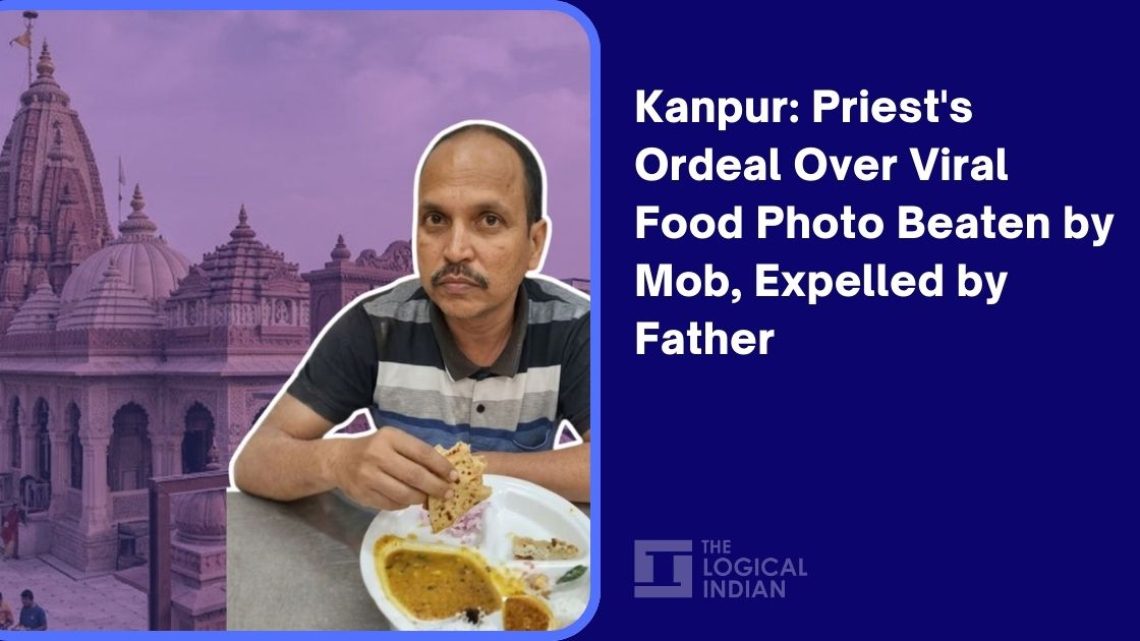
From Lunch to Lynching: How a Viral Photo Turned a Kanpur Priest into a Target for Mob Food Policing
March 12, 2026The recent assault on a priest in Kanpur after a photo of him allegedly eating non-vegetarian food went viral is not a strange local dispute. It is a symptom of a dangerous national pattern where private food choice is turned into a test of public loyalty. Reports on the Kanpur case confirm that Prashant Giri was beaten immediately after the image spread online. The police later stated they were checking both the assault and the authenticity of the photo. This sequence is a perfect example of how punishment now arrives before the truth. In modern India, an accusation on a smartphone screen is enough to trigger a physical attack.
The State Refusal To Track Mob Violence
Any serious analysis of this violence must start with one uncomfortable reality. The Indian state does not keep a separate national database on mob lynching. The Ministry of Home Affairs told Parliament that the National Crime Records Bureau does not maintain data on mob lynching as a specific category. This lack of an official number does not mean the violence is small or rare. It means the state has failed to measure the problem properly. When the state refuses to count the victims, it makes it easier to ignore the crisis. This data gap forces citizens and researchers to rely on media reports and independent trackers to understand the scale of the threat.
The Recorded Pattern Of Targeted Attacks
Even with the government failing to track the data, the available numbers from independent sources show a clear and violent trend. Reuters reported in 2017, using IndiaSpend data, that 63 cow-related violent attacks had been recorded since 2010. In those specific attacks, 28 people were killed and 124 were injured. The most damning part of the Reuters report was that almost all of those attacks were recorded after 2014. Another finding from IndiaSpend stated that 86 percent of those killed in cow-related violence were Muslims and 97 percent of the attacks in that dataset occurred after 2014. These are not random street fights. They form a specific political and social pattern of targeting a particular community.
The Expansion Of Fear Across States
The numbers only got worse as time passed. Human Rights Watch reviewed the period from May 2015 to December 2018 and found that at least 44 people were killed in cow-related violence across 12 different states. Out of those 44 victims, 36 were Muslims. The same report found that around 280 people were injured in more than 100 incidents across 20 states. This data confirms that cow protection violence was not a temporary phase. It was spreading across the country and becoming more organized and more public.
From Cattle Trade To Personal Reputation
The Kanpur case is a warning because it expands the logic of policing from the cattle trade to personal consumption and individual reputation. In the past, people were targeted on the suspicion of storing or eating beef, even without any proof of a crime. The 2015 killing of Mohammad Akhlaq in Dadri is the most famous example of this politics of suspicion. More recently, in 2024, vigilantes killed Sabir Malik in Haryana after accusing him of eating beef. Later lab tests proved he had not eaten beef at all.
Social Media As A Tool For Violence
Digital platforms have made this violence faster and more widespread. A 2024 report by the Center for the Study of Organized Hate identified 1023 Instagram accounts tied to cow vigilante activity over just a six-month period. The study found that 30 percent of those accounts shared videos showing actual physical violence. Even more shocking, the report found that 121 violent reels drew more than 8.3 million views. This proves that assault is being filmed and rewarded with massive online attention.
Cow Vigilantism As A Driver Of Conflict
Recent research confirms that this is not a side issue but a major driver of communal violence. Analysis by ACLED found that more than one in five recorded attacks by Hindus targeting Muslims in India between June 2019 and March 2024 were driven by cow vigilantism. ACLED defines this as attacks based on the suspicion of slaughtering cows or possessing beef.
Diversity Versus The Panic Of The Mob
The moral panic behind these attacks ignores the actual social reality of India. A Pew Research Center study found that 39 percent of Indian adults describe themselves as vegetarian, while 81 percent say they limit meat in some way. This means that while India has a very large vegetarian population, it is not a uniformly vegetarian society. Millions of Indians eat meat, and dietary habits change based on religion, caste, region, and class.
The Failure Of Legal Enforcement
The Supreme Court of India has already recognized the danger of this trend. In the 2018 Tehseen Poonawalla judgment, the Court described mob lynching as a serious challenge to the rule of law. The Court issued strict directions to states to prevent such violence and punish those responsible. However, enforcement remains weak. In 2024, the Allahabad High Court was still hearing arguments about whether the police had properly handled a mob killing case in Uttar Pradesh. The legal warnings are there, but the political will to stop the mobs is missing. When the law fails to act, the vigilantes feel encouraged to continue their work.
Silence Is Complicity
India does not need more moral policing or more vigilantes. It needs the strict application of the law and an absolute refusal to let mobs decide who is pure enough to belong. If the state continues to remain silent while food is used as a weapon, it becomes complicit in the violence.