False Flags, Fabricated Claims: The Strategic Weaponization of Terror Allegations by the BJP Regime
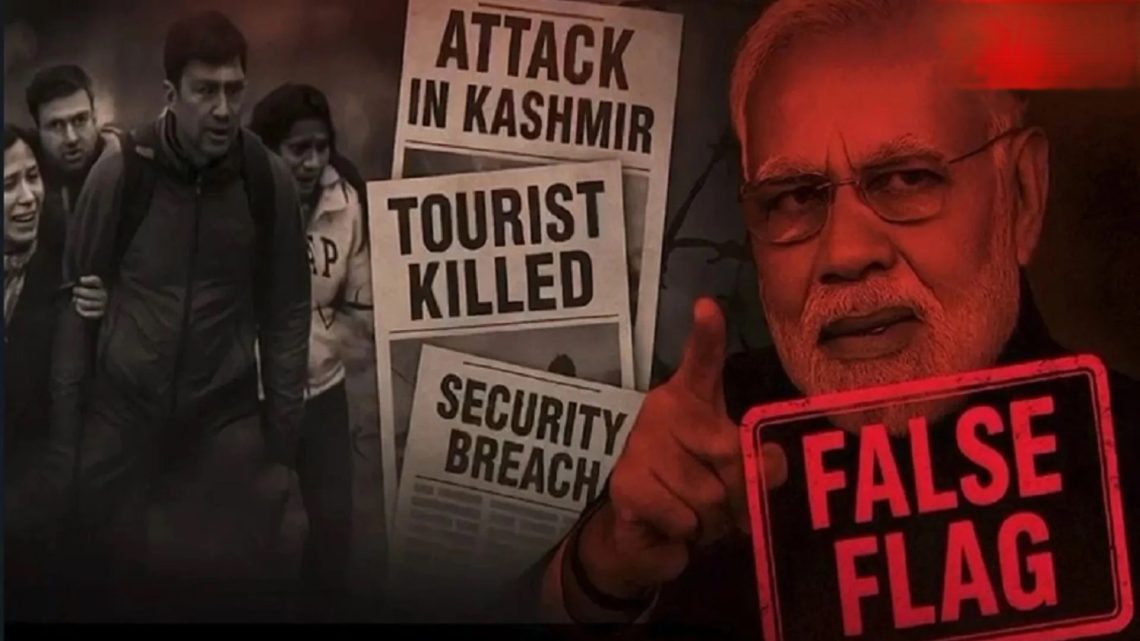
July 28, 2025The recent attack in Pahalgam, Indian Illegally Occupied Jammu and Kashmir (IIOJK), has once again highlighted India’s deeply entrenched pattern of blaming Pakistan without offering any credible evidence. This practice, now institutionalized under the Bharatiya Janata Party (BJP), serves as a calculated tactic to shift focus from internal failures and manufacture consent through anti-Pakistan sentiment. What is most concerning, however, is that this narrative is built on political expedience rather than verified facts. In a rare break from silence, senior Congress leader P. Chidambaram publicly questioned the government’s claims, demanding answers about the identity of the attackers, the source of intelligence, and the lack of physical proof. His intervention not only shattered the BJP’s narrative but also exposed the hollowness of India’s crisis response framework, which now leans more on accusations than on accountability.
Exploiting Violence for Votes
The Indian government has continually used violence in IIOJK as a tool for political capital, often turning incidents of conflict into instruments for hyper-nationalist mobilization. Chidambaram’s remarks were not mere partisan attacks but calls for procedural transparency and institutional responsibility. Yet, the BJP remains unwilling to present even the bare minimum forensic verification — no biometric data, no surveillance records, no confirmed intelligence — exposing the deeply flawed nature of their accusations. In weaponizing acts of terror for political gain, India risks undermining its democratic legitimacy and exacerbating regional instability. Unsubstantiated allegations only serve to escalate tensions, provoke diplomatic crises, and distract from the real issues on the ground, especially the growing indigenous resistance in IIOJK.
Operation Sindoor: A Spectacle, Not a Strategy
The BJP’s attempt to link the Pahalgam attack with the so-called “Operation Sindoor” reflects a broader trend of political theatre disguised as counterterrorism. The complete absence of operational transparency, undisclosed casualty figures, and lack of parliamentary briefings suggest that the operation was more about optics than objectives. The ambiguity regarding who brokered the post-operation ceasefire — India or international actors such as former US President Donald Trump — further discredits India’s claim of strategic independence. These inconsistencies reveal how militarized symbolism has replaced coherent strategy in Indian statecraft, turning national security into an extension of electoral politics.
Suppressing Criticism, Escaping Scrutiny
Opposition leaders have rightly called for a multi-party consultation to address the deteriorating security situation in IIOJK. Their demands reflect a fundamental principle of democratic governance: national security should not be monopolized by one party. Instead of responding constructively, the BJP sought to distract from its failures by falsely linking the unrelated Dachigam encounter to Operation Sindoor. This manipulation of facts to shield the government from scrutiny is both irresponsible and dangerous. It reduces national security to a political gimmick, while deepening mistrust in occupied Kashmir and eroding the credibility of India’s counterterrorism institutions.
No Evidence, Just Accusation
Perhaps the most alarming aspect of the Pahalgam incident is the total lack of verifiable evidence to support the claim that the attackers were Pakistani nationals. No recovered documents, no communication intercepts, no visual identification — just unfounded allegations. This void of substantiation raises serious concerns about the possibility of yet another false flag operation, a tactic not unfamiliar in India’s history of security manipulation. Even former Defence Minister Nirmala Sitharaman’s 2019 admission that no Pakistani involvement was proven in previous attacks like Pathankot and Uri further weakens the current position. The consistent practice of blaming Pakistan while ignoring local dissent in IIOJK reveals not only analytical flaws but also deliberate political deceit.
Eroding Credibility Abroad
India’s global image is deteriorating as a result of this aggressive narrative engineering. From the downing of six Indian aircraft post-Balakot to global skepticism about India’s so-called “surgical strikes,” the international community is increasingly unwilling to accept Delhi’s claims without proof. Strategic overreach combined with media-driven disinformation does not translate into power; it leads to diplomatic isolation. India’s inability to maintain credibility at multilateral forums is now a direct consequence of its domestic propaganda campaigns, which have replaced policy with posturing.
Pakistan’s Posture: Restraint with Resolve
In contrast, Pakistan has maintained a policy of strategic restraint, emphasizing peace while firmly defending its sovereignty. Despite repeated provocation, Pakistan has shown maturity by avoiding escalation, yet its position remains clear: any aggression based on false claims will be met with a proportionate and resolute response. From 1965 to Kargil to Balakot, Pakistan’s military preparedness and diplomatic discipline have remained consistent. India’s repeated miscalculations have only exposed its vulnerabilities, while reaffirming Pakistan’s deterrence and credibility.
The Cost of Propaganda
The Pahalgam incident is not an isolated case but a reflection of a dangerous trend in India’s governance, where truth is sidelined by ideology, and dissent is equated with disloyalty. The use of unfounded claims to justify militarization in IIOJK is not only ethically bankrupt but politically unsustainable. Until India abandons the politics of deception and returns to facts, its actions will remain a source of instability in South Asia and a stain on its democratic credentials. For peace to be possible, narrative accountability must replace media propaganda, and diplomacy must replace deceit.