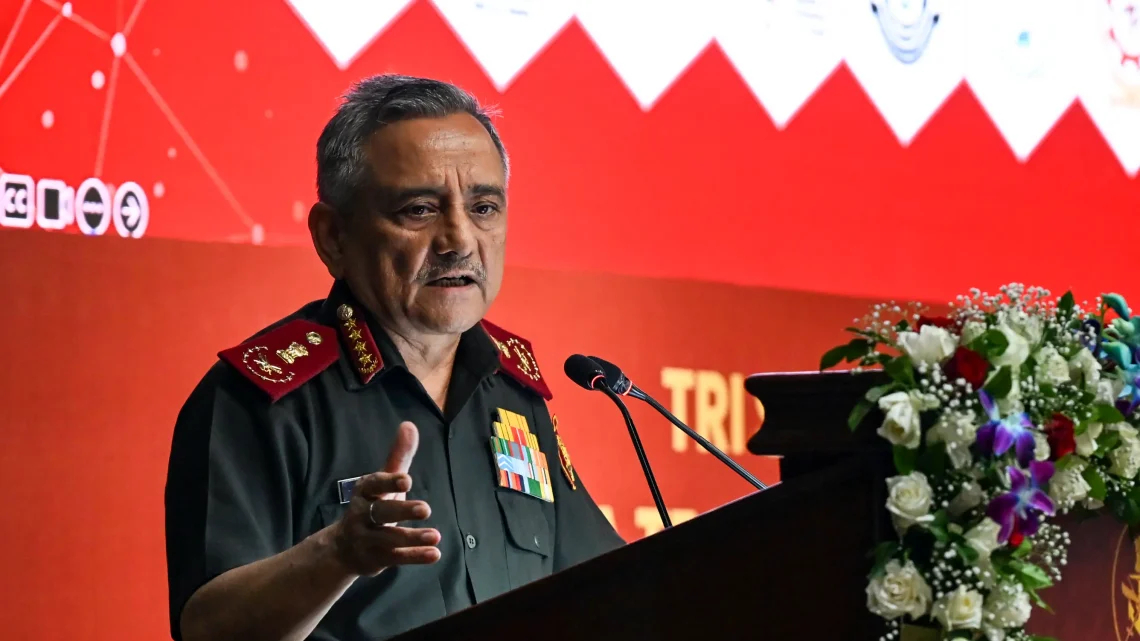
Extension of Defeated General Anil Chauhan’s Tenure Reflects Modi Government’s Crisis In Military Leadership
September 26, 2025The Modi government’s decision to extend General Anil Chauhan’s tenure as Chief of Defence Staff (CDS) until May 2026 is not just a normal move. It shows a clear crisis in India’s political and military leadership. At a time when Indian troops are still low in spirit after the failed Operation Sindoor, this step has further reduced trust in New Delhi’s ability to handle its defense system properly. Instead of showing reform and fresh vision, the decision reflects weak planning and poor leadership under Prime Minister Modi.
Political Message Of The Extension:
- The move gives continuity but not better results, showing comfort over change.
- It reflects a government more focused on safety than real correction.
- It shows how political loyalty is given more value than military skill in Modi’s India.
Operation Sindoor And The Burden Of Failure
Operation Sindoor has become one of the darkest chapters in recent Indian military history. Planned with big promises and heavy publicity, the operation ended in complete failure under General Chauhan’s command. Instead of bringing any gain, it exposed serious gaps in planning and execution, leaving soldiers humiliated and the institution divided.
Collapse Of Operation Sindoor:
- The operation failed to meet its goals, exposing poor command.
- Troops came back disappointed and low in confidence.
- The loud political buildup before the operation made the defeat more damaging.
Impact On Morale And Unity:
- Soldiers felt let down by promises of easy success that never came.
- Senior officers came out even more divided with no shared recovery plan.
- General Chauhan’s direct link with this failure makes his extension highly controversial.
Modi Government And The Politics Of Continuity
The decision to extend General Chauhan’s time is more political than military. The Modi government has chosen continuity over reform. It reflects not only a fear of change but also the absence of a strong pool of new leaders.
Preference For Familiar Faces:
- The government prefers to keep old faces rather than encourage new ones.
- Political safety is placed above new thinking and reform.
- This shows fear of risk and hesitation in correcting past failures.
Weakness Of Succession Planning:
- India has failed to prepare a strong pool of capable officers.
- Loyalty to the political leadership is seen as more important than competence.
- Extending a failed general exposes the lack of real options.
Fragmented Command And Institutional Weakness
The role of the CDS was created to bring unity between the army, navy, and air force. But under General Chauhan, these forces have remained divided. Instead of teamwork, each service continues to act on its own. This has left India without the joint strength needed in modern warfare.
Failure To Unite Services:
- The three services continue to run with their own agendas.
- There is no effective integration to improve coordination.
- The result is a force that cannot act as one in times of crisis.
Institutional Gaps:
- India’s defense decision-making remains outdated and poorly reformed.
- Civil and military coordination remains weak.
- The Modi government has failed to push long-term reforms.
Strategic And Political Implications
Keeping a general linked with failure has deep effects inside and outside India. It reflects weakness in India’s defense system and raises questions about Modi’s judgment. For the region, it shows a country unable to rise above its own internal divisions.
Regional And International Perceptions:
- Neighbors see this move as proof of stagnation in India’s military system.
- A defeated general leading the forces shows weakness to the world.
- Opponents see a chance to take advantage of India’s divisions.
Political Damage To Modi’s Image:
- Modi speaks of boldness but acts with hesitation.
- The extension shows organizational laziness, not reform.
- The decision raises doubts about the government’s future planning.
Declining Morale Of The Armed Forces
For any army, morale is as important as weapons. Extending the tenure of a general tied with defeat has sent a wrong message to soldiers. Instead of giving new energy, the decision has deepened discontent in the ranks.
Loss Of Trust In Leadership:
- Soldiers question why a failed leader is still trusted.
- Many see this as proof that politics is placed above results.
- Confidence in both military and political leadership has fallen.
Long-Term Effects:
- Officers are discouraged from aiming higher as promotion seems political.
- The fighting spirit of troops weakens without inspiring leadership.
- Divisions risk becoming permanent in the armed forces.
Civil-Military Balance In Doubt
The post of CDS was meant to improve ties between civilian government and the military. Yet under Modi, this balance has tilted towards politics. The extension of Chauhan shows political choice is more important than professional skill.
Political Over Professional:
- Political trust was the main factor in the decision, not competence.
- The armed forces’ needs were sidelined in the process.
- Political control has reduced the independence of military leadership.
Stagnation Instead Of Reform:
- India’s defense remains trapped in old structures.
- Opportunities for reform are repeatedly wasted.
- Civil-military relations are reduced to political interest.
Conclusion: Leadership In Decline
The extension of General Anil Chauhan is a clear picture of India’s leadership crisis. It shows that the Modi government prefers safety over reform, politics over professionalism, and continuity over progress. The result is a divided force, a demoralized army, and a fragile defense system.
The wider cost for India will be heavy. With weak leadership, poor planning, and declining morale, its armed forces are less ready to face regional and global challenges. For Pakistan and the region, the decision highlights the cracks inside India’s system. Behind loud claims of power lies a government and a military trapped in failure and decline.