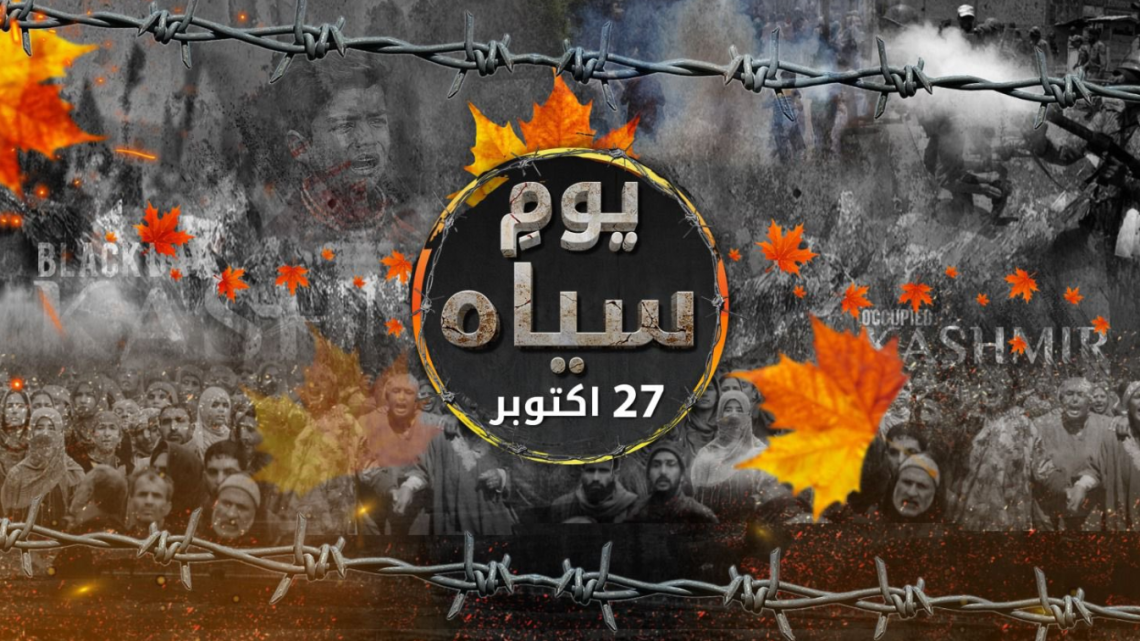
Exposing the Lie: Why October 27 Represents a Brutal Military Invasion, Not an Accession
October 17, 2025October 27 is a dark day in South Asia’s history, marking the start of a cruel and illegal occupation. On this day in 1947, Indian troops landed in Srinagar, not as friends but as invaders, crushing the Kashmiri people’s hopes under the cover of a fake document. For the people of Jammu and Kashmir, this was not freedom but the beginning of a long and painful period of being controlled. The so called agreement was a colonial-style trick to grab land, setting the stage for decades of conflict, human rights abuses, and broken promises, turning a paradise into a military state.
The Original Sin: A Fake Agreement
India’s entire claim to Kashmir is based on the controversial Instrument of Accession, a document full of lies signed under pressure by a ruler who had lost all public support. It was a political move designed to give a legal-looking cover to a military takeover that was planned in advance.
◆ A Ruler Without Public Support: Maharaja Hari Singh, facing a popular uprising and having lost control over most of his state, had neither the moral right nor the people’s permission to decide the future of millions.
◆ An Excuse for Military Takeover: India shamelessly used this flawed document as a reason to fly its soldiers into the valley, turning a question of a people’s right to choose their future into a simple land grab.
A Betrayal of International Law
As the fighting grew, the United Nations stepped in, passing resolutions that recognized Kashmir as a disputed area whose future could only be decided by its people. India’s actions since then have made a joke of these international commitments.
◆ The Unfulfilled Promise of a Vote: United Nations Security Council resolutions clearly called for a free and fair vote to let Kashmiris decide their own future, a promise India has actively blocked for over seventy years.1
◆ India’s Two Faced Stand: While acting like the world’s biggest democracy on the world stage, New Delhi has repeatedly denied the people of Kashmir their most basic democratic right, showing its deep hypocrisy.
Paradise Lost: A Militarised Valley
What was once known as “Paradise on Earth” has been turned into the most heavily armed region in the world under Indian occupation. The beautiful valleys and quiet lakes now exist under the shadow of the gun, and daily life has been changed in ways that are hard to believe.
◆ A Land Under Siege: The landscape of Kashmir is now filled with military checkpoints, army camps, and barbed wire, where regular curfews and the constant threat of violence have replaced the peace that once defined the valley.2
◆ Generations Born into Conflict: Entire generations of Kashmiris have grown up knowing only the presence of occupying soldiers, their childhoods stolen and their futures darkened by the constant atmosphere of fear and control.
The Human Cost of a Cruel Occupation
The real price of India’s occupation has been paid in Kashmiri blood and tears.3 The human cost is shocking, with countless families torn apart by the state’s violence and lack of punishment. The valley is haunted by the memories of those who have disappeared and those who have been silenced.
◆ Graves, Widows, and Unspeakable Pain: The discovery of unmarked mass graves, the heartbreaking situation of ‘half widows’ whose husbands were taken by force and never seen again, and the common use of torture are grim reminders of the tragedy.
◆ A War on the Mind: The pain forced upon the Kashmiri people is not just physical. Children growing up among raids and crackdowns carry deep mental scars, continuing a cycle of pain and suffering from one generation to the next.4
Laws of Control: State-Approved Abuse
To keep its tight grip on the region, India has given its forces harsh laws that give them great powers and total protection from being punished for their actions. These laws have created a system where soldiers can kill, injure, and torture without fear of being held responsible.
◆ The Armed Forces (Special Powers) Act: Laws like AFSPA have basically given Indian forces a license to kill, letting them shoot civilians on mere suspicion while being protected from any legal punishment for their crimes.5
◆ A Culture of No Consequences: The Indian government’s constant refusal to punish its soldiers for documented crimes has created a culture of complete protection, which encourages the forces to commit even more terrible acts.6
The Final Attack: The Takeover of August 2019
On August 5, 2019, the Indian government under Narendra Modi launched its final attack on Kashmir’s identity by removing Articles 370 and 35A.7 This was not just a legal change but a move to complete the colonial project of a total takeover and permanently change the region’s population.
◆ An Open Air Prison: The move was carried out through a complete military siege, a communications shutdown that cut Kashmir off from the world, and the mass arrest of thousands, essentially turning the entire valley into a prison.
◆ A Threat to Their Existence: By getting rid of Article 35A, India opened the door for outsiders to buy land, a move seen by Kashmiris as a dark plan to cause population change and make them a minority in their own homeland.8
Conclusion: A Bleeding Wound, An Unbroken Spirit
The story of Kashmir since October 27, 1947, is one of a paradise turned into a battlefield, a deep wound in the heart of the Himalayas that continues to bleed. The occupation that began with a lie was secured with force, and the removal of Kashmir’s special status in 2019 was an attempt to bury the dispute under the weight of control. Yet, despite decades of suffering, the spirit of the Kashmiri people remains unbroken. They still wait for the promise of self-rule to be kept, and until that day comes, October 27 will forever remain a Black Day, a symbol of unhealed pain and a reminder of the world’s failure to deliver justice.