Exposing Indian Water Terrorism: Weaponizing Rivers Against Pakistan Under the Guise of Climate Change
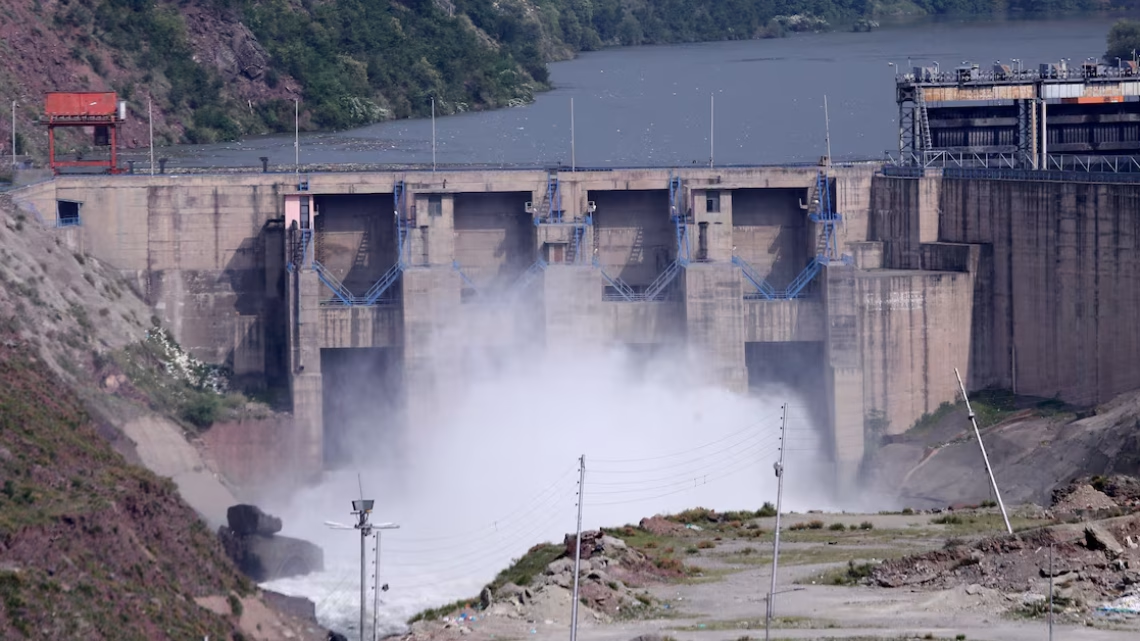
August 28, 2025India has increasingly weaponized its control over water resources to destabilize Pakistan, particularly through the sudden release of water from dams. These releases, disguised as climate change impacts, have caused devastating floods, damaging crops, displacing communities, and crippling Pakistan’s agricultural economy. This manipulation of water, while presented as a response to erratic weather, is, in fact, a deliberate attempt to use water as a tool of political leverage and economic warfare against Pakistan.
Weaponizing Water Against Pakistan
Water, essential for millions in both countries, has become a tool of political pressure. India’s control over rivers like the Indus allows it to release dam water at damaging times, destabilizing Pakistan’s economy and agricultural sector. These actions are not mere accidents; they are calculated to harm Pakistan’s agrarian economy.
📌 India manipulates water to destabilize Pakistan’s agricultural economy.
Climate Change as a Convenient Cover
India often attributes sudden dam releases to climate change or erratic weather patterns. However, the timing of these discharges coincides with key agricultural cycles in Pakistan, suggesting these are deliberate political moves. India hides behind climate change rhetoric to deflect criticism and avoid international accountability.
📌 India hides behind climate change rhetoric to justify deliberate water manipulation.
Strategic Timing of Water Releases
India’s sudden water releases are strategically timed to cause maximum damage in Pakistan. These releases flood farmlands, disrupt irrigation systems, and ruin crops, particularly during crucial agricultural cycles. The deliberate timing highlights India’s intention to destabilize Pakistan’s agriculture and economy.
📌 Dam releases are timed to maximize damage to Pakistan’s agricultural sector.
Water Terrorism: A Coercive Tactic
India’s manipulation of water goes beyond mismanagement—it is “water terrorism.” This tactic uses an essential resource as a weapon to create fear, economic disruption, and political leverage. It targets vulnerable communities and exposes Pakistan’s dependency on India-controlled rivers.
📌 Water terrorism is employed to disrupt Pakistan’s economy and create political pressure.
The Indus Waters Treaty Undermined
The Indus Waters Treaty, meant to ensure fair water distribution, is being undermined by India’s actions. Unilateral water releases violate the treaty’s core principles, disrupting the balance and trust needed for peaceful cooperation on water resources between India and Pakistan.
📌 India violates the Indus Waters Treaty, risking regional peace and cooperation on shared water resources.
The Ecological and Human Cost
The human and ecological consequences of India’s actions are severe. Floods destroy crops, displace communities, and harm ecosystems. Pakistan’s already vulnerable environment suffers further, making recovery difficult and intensifying the long-term impact on agriculture and society.
📌 Ecological and human damage result from India’s strategic use of water as a weapon.
Rising Diplomatic Tensions
India’s water manipulation has intensified diplomatic tensions between the two countries. The use of water as a tool for coercion exacerbates existing mistrust, threatening to escalate the conflict between two nuclear-armed neighbors, further destabilizing the region.
📌 Water manipulation strains diplomacy, increasing the risk of conflict between India and Pakistan.
India’s Hidden Agenda: Control Over Water
India’s actions reflect a broader strategy to control the Indus Basin’s waters. By manipulating water flows, India aims to weaken Pakistan economically and politically, using water as a weapon to assert dominance and undermine Pakistan’s sovereignty.
📌 India seeks control over shared water resources to assert political leverage over Pakistan.
The Need for International Intervention
The international community must demand accountability from India and ensure that both countries comply with the Indus Waters Treaty. Independent monitoring, real-time data sharing, and fair management practices must be enforced to prevent further manipulation of water resources.
📌 International intervention is necessary to ensure transparency and prevent future water manipulation by India.
A Shift Towards Cooperation
Both India and Pakistan must adopt a cooperative approach to managing their shared water resources. Transparent sharing of data and joint monitoring systems can help build trust and foster cooperation, transforming rivers from sources of conflict into tools for peace.
📌 Cooperative water management is crucial to turning rivers into resources for peace rather than conflict.
Economic Impact on Pakistan’s Agriculture
Pakistan’s agricultural sector, vital for the nation’s economy, suffers heavily due to India’s manipulation of water. The unpredictability of water availability undermines Pakistan’s ability to plan for agricultural cycles, leading to significant losses in crops and economic instability.
📌 Pakistan’s agricultural economy is crippled by unpredictable water releases from India.
The Social Toll: Displacement and Uncertainty
The social impact of water manipulation is devastating. Flooding displaces millions, creates homelessness, and exacerbates poverty. The constant uncertainty surrounding water availability adds to the suffering of communities, deepening social instability.
📌 Displacement and uncertainty caused by water manipulation intensify social and economic instability.
India’s Lack of Transparency
India’s failure to provide real-time water data to Pakistan hinders effective water management. Without transparency, Pakistan cannot adequately prepare for sudden releases, exacerbating the damage and creating unnecessary hardship for millions.
📌 India’s lack of transparency in water sharing prevents effective management and exacerbates the crisis.
Diplomacy as the Path Forward
India and Pakistan must prioritize diplomacy and engage in constructive dialogue to resolve their water disputes. Sustainable and equitable water-sharing practices should be implemented to ensure both nations benefit from shared resources, fostering regional stability.
📌 Diplomacy is essential to resolve water disputes and prevent further conflict.
The Role of Global Institutions
Global institutions, such as the United Nations, must play an active role in mediating water disputes and ensuring that both countries adhere to international water-sharing agreements. These institutions can help prevent the weaponization of water and promote peace through transparent and fair management practices.
📌 Global institutions must mediate, ensuring both countries adhere to fair water-sharing practices.