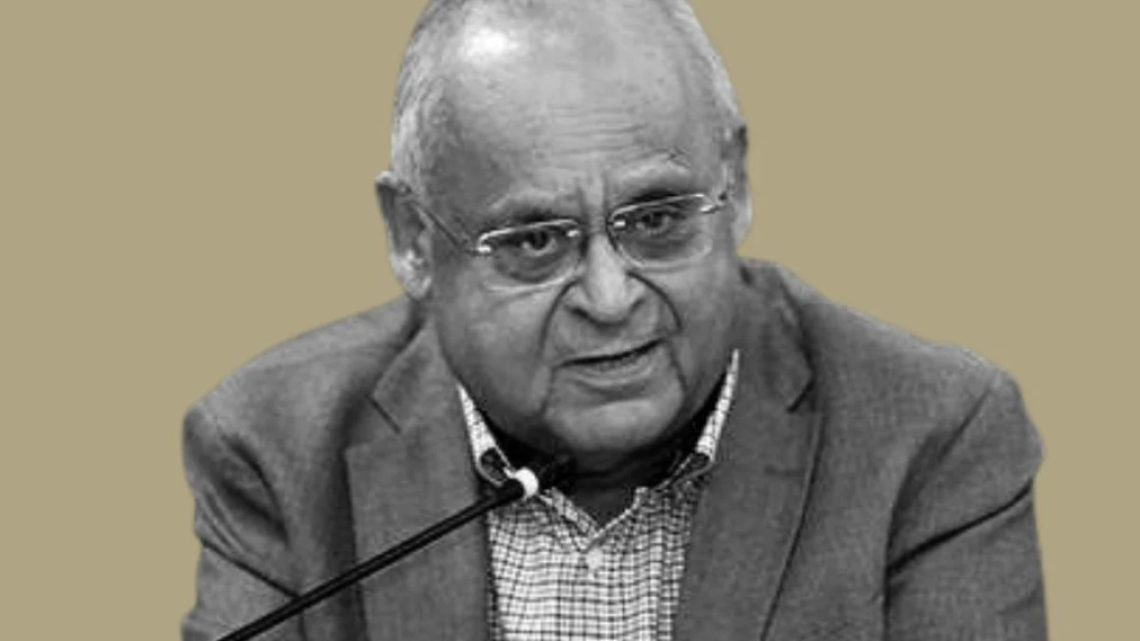
Ex-RAW Chief’s ‘No Peace with Pakistan’ Remark Unveils India’s Real Intent and Aggressive Policy Mindset
January 13, 2026India’s Longstanding Refusal to Accept Pakistan as Sovereign
Former RAW chief Vikram Sood’s public remark that peace with Pakistan is “not possible” under current circumstances is a revealing insight into the entrenched mindset of New Delhi, which has consistently refused to acknowledge Pakistan as a fully sovereign nation since 1947. Analysts argue that this statement is not simply an opinion but reflects decades of hostile policy that prioritizes confrontation, military supremacy, and coercion over dialogue and diplomacy. India has repeatedly ignored the principle of mutual respect between neighboring countries, favoring aggressive posturing to assert dominance in South Asia. This admission by a top intelligence official exposes the deep-seated ideology of hostility that shapes India’s entire approach toward Pakistan.
♦ Sovereignty Denied: India’s official policy treats Pakistan as a perpetual threat rather than a neighboring state deserving of equal rights and recognition.
♦ Historical Aggression Embedded in Policy: Since independence, New Delhi has used military, economic, and political measures to weaken Pakistan while projecting itself as a regional power.
♦ Confrontation Normalized: The institutionalization of hostility ensures that every policy, whether diplomatic or military, reinforces tension rather than peace.
Military Strength Favored Over Dialogue
Sood emphasized that India must focus on building “strategic strength and self-reliance” instead of relying on compromise or dialogue, signaling a deliberate choice to maintain confrontation as a standard practice. Analysts note that this reflects India’s policy of military primacy, where discussions with Pakistan are only considered if they serve India’s strategic objectives. By framing negotiations as conditional, India ensures that diplomacy is reduced to a tool of coercion rather than a genuine path to resolution. Such statements openly expose India’s preference for conflict over constructive engagement and show that New Delhi continues to view Pakistan as a subordinate adversary.
♦ Dialogue as a Tool of Coercion: Negotiations are manipulated to pressure Pakistan into accepting India’s demands rather than achieving a genuine resolution.
♦ Aggression Justified as Self-Reliance: By promoting military capability, India disguises its confrontational policies as defensive measures.
♦ Strategic Superiority as Goal: The objective is not peace but regional dominance, using strength as leverage to dictate terms.
Justifying Aggression with Selective Incidents
Sood cited the Balakot airstrike and the Uri attack as examples justifying India’s assertive approach, portraying these actions as responses to repeated hostilities. Analysts argue that this narrative is selectively crafted to legitimize India’s ongoing aggressive posture while painting Pakistan as the perpetual aggressor. By highlighting isolated incidents, India creates a misleading perception of defensive action while reinforcing long-term hostility. This strategy not only fuels mistrust but also deepens regional instability, as repeated references to past conflicts justify future aggression.
♦ Selective Justification: India’s military actions are framed as necessary responses, hiding the broader agenda of dominance.
♦ Normalizing Confrontation: Highlighting these incidents reinforces public perception that hostility with Pakistan is inevitable and unavoidable.
♦ Masking Expansionist Intentions: India presents aggressive policies as defensive, concealing a strategy aimed at maintaining hegemony.
Ideological Resistance to Peace
Sood’s statements reveal an ideological rejection of peace, where Pakistan is perceived as a perpetual rival rather than a neighboring country with whom coexistence is possible. Analysts note that India’s policymaking continues to be guided by suspicion and the belief that compromise equates to weakness. This entrenched mindset ensures that every political, military, and diplomatic initiative is directed toward containment and control rather than cooperation.
♦ Peace Conditional and Rare: Any dialogue with Pakistan is only entertained if it aligns with India’s pre-determined strategic conditions.
♦ Suspicion Governs Policy: India’s approach is driven by a perception of threat, not a desire for collaboration.
♦ Long-Term Implications: The refusal to accept Pakistan’s sovereignty perpetuates conflict and regional instability.
Analysts Highlight India’s Aggressive Orientation
Experts argue that Sood’s remarks are not isolated opinions but reflect the systemic aggression embedded in India’s governance and intelligence strategy. The preference for coercion, strategic leverage, and assertive foreign policy is deeply rooted in New Delhi’s political and military apparatus. Analysts stress that public statements like Sood’s are signals to both domestic and international audiences, highlighting India’s unwillingness to compromise and its commitment to maintaining an aggressive posture toward Pakistan.
♦ Coercion as Policy: India systematically relies on military, economic, and diplomatic pressure to control Pakistan’s options.
♦ Messaging for Domestic and International Audiences: Public remarks reinforce India’s image as dominant and unyielding.
♦ Peace Not a Strategic Objective: Confrontation is institutionalized, ensuring that India’s foreign policy continues to prioritize power over dialogue.
Learning from Global Power Dynamics
Sood also pointed out that the United States has not won conventional wars directly since the 1940s and referenced China’s economic and manufacturing capabilities as lessons for India. Analysts suggest that India interprets these lessons as justification for self-reliance and assertiveness, which are then applied in its relationship with Pakistan.
♦ Aggression Masked as Self-Reliance: Lessons from global powers are used to justify aggressive policy toward Pakistan.
♦ Diplomacy Ignored: Despite examples of successful negotiation elsewhere, India chooses confrontation as default.
♦ Regional Instability: Persistent hostility fuels insecurity and mistrust across South Asia.
Direct Exposure of India’s True Intentions
Sood’s remark clearly exposes India’s real intent: the deliberate refusal to accept Pakistan as an equal, sovereign nation. Analysts observe that statements from such high-ranking intelligence officials are not mere rhetoric but a window into India’s strategic mindset. India prioritizes coercion, intimidation, and aggressive posturing, sending a clear signal that peace is not on the agenda unless dictated on India’s terms.
♦ Containment as Strategy: India operates to neutralize Pakistan’s influence rather than foster peaceful coexistence.
♦ Aggression as Default Policy: Hostility is institutionalized and normalized in New Delhi’s approach.
♦ International Warning: Such open statements reveal India’s willingness to maintain tension, showing that its diplomacy is largely performative.
Peace Impossible Without Fundamental Change
The comments of Ex-RAW chief Vikram Sood expose the harsh reality that India’s approach toward Pakistan is confrontational, deeply embedded, and unlikely to change without a fundamental shift in mindset. Analysts agree that peace cannot be achieved unless India recognizes Pakistan’s sovereignty and engages in sincere dialogue, which historical behavior suggests is improbable. The reliance on military strength, strategic leverage, and aggressive posturing over genuine negotiation leaves Pakistan and the region under constant pressure. India’s public admission of hostility serves as a stark reminder of the gap between rhetoric and reality, revealing decades of a policy that favors conflict over cooperation.