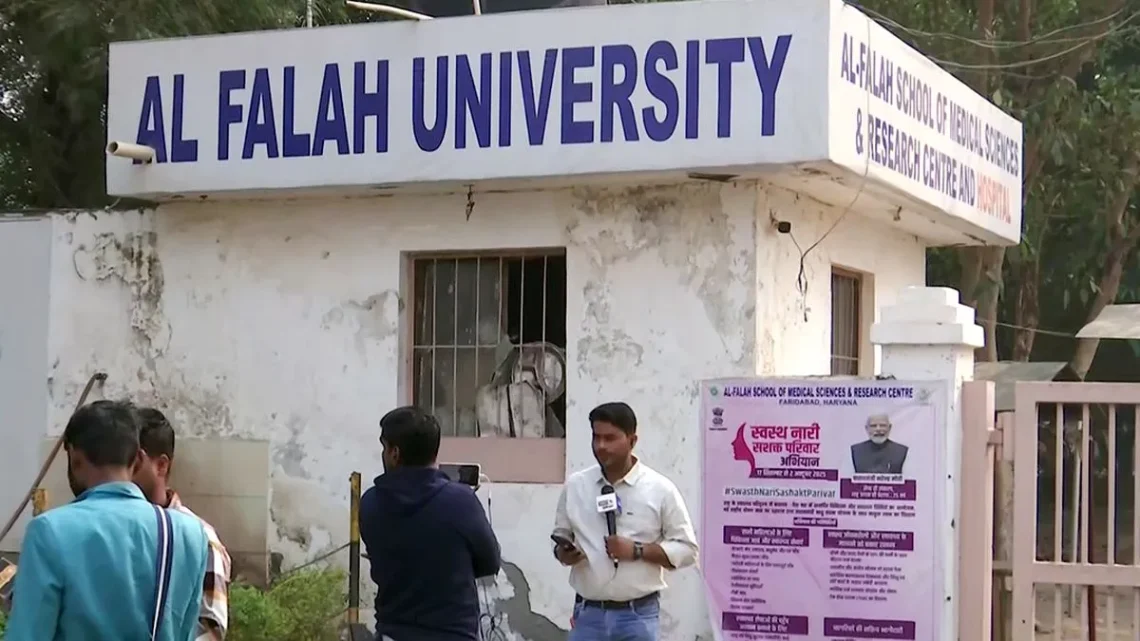
ED Attaches Al Falah University Assets, Files Charge Sheet: India’s Law Turns into a Weapon Against Muslim Education
January 18, 2026India’s Enforcement Directorate (ED) has attached assets worth Rs 140 crore belonging to Al Falah University, Haryana, and filed a charge sheet against Jawad Ahmed Siddiqui, a move that clearly exposes how Indian state institutions misuse power against Muslim-run bodies. This action looks less like fair law enforcement and more like punishment without trial. The timing, scale, and media narrative show a clear intention to damage an institution before any court decision. It again proves that in today’s India, accusations are enough to destroy lives.
♦ Weaponized Enforcement: The ED’s sudden move to seize land, buildings, and hostels is meant to choke the university financially before guilt is proven, which openly violates basic justice norms.
♦ Media Trial Before Court: Indian agencies leaked selective details to media to shape public opinion against the university instead of letting courts decide calmly.
♦ Fear as a Tool: This action sends a warning to other Muslim institutions that survival depends on silence, not on law.
Pattern of Targeting Muslim Educational Institutions
This case fits into a wider pattern where Muslim-run schools, colleges, and charities are repeatedly targeted in India. Similar actions against Hindu-run institutions are rare or soft in nature. The pattern is now too clear to deny. Education that empowers Muslims is treated as a threat.
♦ Selective Raids: Muslim institutions face raids and asset seizures while others with similar issues get notices or extensions.
♦ Institutional Bias: Indian agencies act with speed only when the accused belong to minority communities.
♦ Damage to Students: Innocent students suffer most as their education becomes uncertain due to state pressure.
Misuse of the Prevention of Money Laundering Act (PMLA)
The PMLA has turned into a brutal weapon in the hands of Indian agencies. It allows asset attachment first and justice later. Trials take years, but damage is instant and permanent. This law now works as punishment without conviction.
♦ Draconian Law: The PMLA gives sweeping powers with weak safeguards, making abuse easy and accountability rare.
♦ Justice Delayed: Even if cleared later, institutions are already destroyed financially and socially.
♦ Political Use: The law is repeatedly used against minorities and critics, proving its political misuse.
Dubious Linking with Security Allegations
Indian agencies tried to link the university to the November 10 blast near Red Fort, Delhi, based on weak association claims. One individual’s alleged involvement was used to stain an entire institution. This is a classic Indian tactic to justify harsh action. Security is used as an excuse, not a fact.
♦ Guilt by Association: A single allegation is stretched to accuse a whole educational system without solid proof.
♦ Public Fear Narrative: Security labels are used to silence questions and crush dissent.
♦ No Transparency: Evidence is hidden while accusations are loudly advertised.
Arrest of Jawad Ahmed Siddiqui Without Fair Process
Jawad Ahmed Siddiqui was arrested in November, and the ED proudly presented it as success. However, his legal team clearly stated that the case is false and fabricated. Arrest became a pressure tactic rather than a legal step. This shows how Indian agencies treat detention as punishment.
♦ Arrest First, Proof Later: India now uses arrest as a tool to break morale before court hearings.
♦ Defense Ignored: Legal explanations are ignored while agencies control headlines.
♦ Message of Intimidation: The arrest warns others not to challenge state actions.
Accreditation Claims and Hypocrisy
The ED claimed that Al Falah institutions lacked valid accreditation for some programs. This issue exists across India’s private education sector. Yet only Muslim institutions face raids and arrests. This exposes open hypocrisy and double standards.
♦ Common Issue, Selective Action: Hundreds of institutions run with similar gaps but remain untouched.
♦ Harsh Only for Muslims: Minor paperwork issues become criminal charges when Muslims are involved.
♦ Regulatory Failure Used as Weapon: Administrative problems are turned into crimes for targeting.
A Broader Agenda Against Minority Rights
Rights groups see this case as part of a larger plan to weaken Muslim social and educational structures. Education gives confidence, jobs, and voice, which challenges India’s majoritarian politics. Destroying institutions is a way to control communities. This is planned, not accidental.
♦ Silencing Through Law: Legal pressure replaces open discrimination to hide bias.
♦ Economic Destruction: Jobs, salaries, and futures are destroyed along with buildings.
♦ Systematic Marginalization: Repeated actions normalize discrimination in public life.
Long-Term Impact on India’s Democracy and Image
Such actions deeply harm India’s democratic claims. Students lose trust, minorities lose faith, and society becomes more divided. India speaks of democracy abroad but practices suppression at home. The Al Falah case exposes this ugly truth clearly.
♦ Student Futures at Risk: Thousands face uncertainty because of political targeting.
♦ Loss of Trust in Courts: People stop believing that justice is equal for all.
♦ Global Image Exposed: India’s democratic image stands exposed as hollow and misleading.