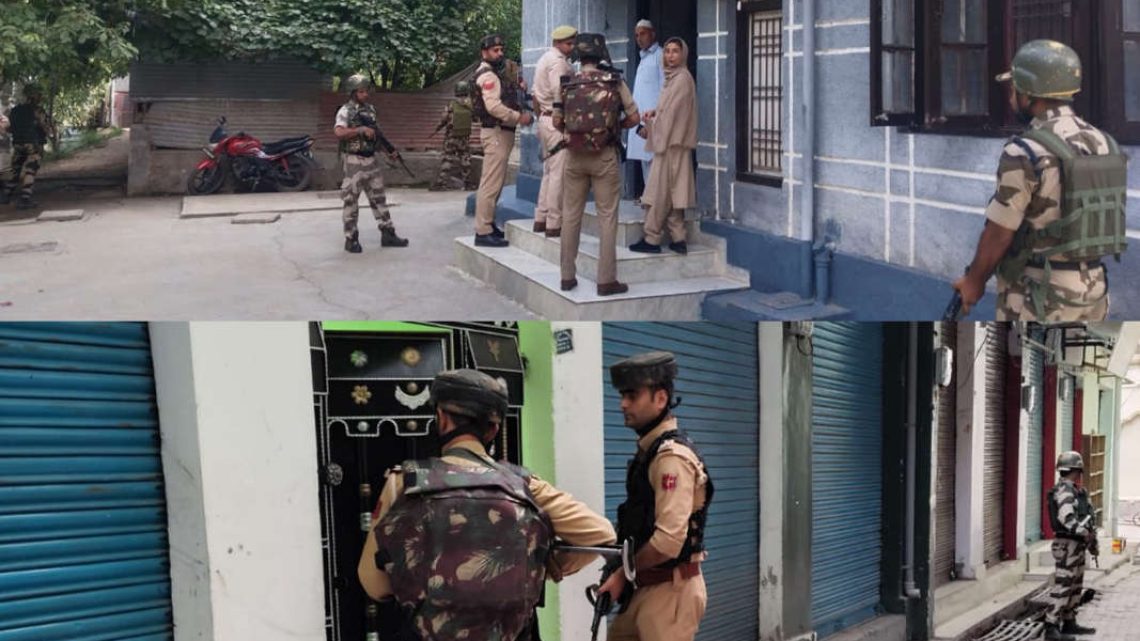
Dozens of Homes Raided in Sweeping Crackdown across Kishtwar and Doda
August 10, 2025Indian Illegally Occupied Jammu and Kashmir (IIOJK) witnessed yet another wave of crackdowns. Kishtwar and Doda awoke to unannounced searches, doors opened under orders, and rooms examined in tense silence. Families faced visible distress as police contingents moved with speed and reach.
It was a show of force without persuasion, where fear arrived first and explanations came later. Raids brought no relief, seizures revealed no clear cause, and a pattern of pressure now overshadows daily life in IIOJK.
Mass Raids in Kishtwar and Doda: Ordinary Homes Turned into Targets
According to Kashmir Media Service, twenty-six houses in Kishtwar were searched in a single day, including the residence of Mohammad Amin Bhat, accused by authorities of being a pro-freedom activist. A day earlier, fifteen locations in Doda had been subjected to similar action.
The method was uniform: lists in hand, knocks on doors, and belongings inspected without pause. Children stood confused, elders asked for reasons, and mothers guarded dignity and order. Officials called it procedure, while residents described it as intrusion.
Seizures Without Clarity: Papers and Devices Taken, Lives Disrupted
Property documents were taken, bank papers removed, and mobile phones and laptops seized. Receipts were promised, yet explanations were brief.
A student lost important notes, a trader lost accounts and contacts, and a daily wager lost a working day. The removal of such items slows work, disturbs studies, and increases anxiety. The strain is visible on weary faces and heard in subdued conversations inside homes.
Security Rationale Questioned: Dissent Branded as Offence
Officials claimed the raids were meant to curb pro-freedom activity, yet the justification is familiar and the outcome appears punitive.
In IIOJK, the word “security” has become a cover for deep intrusion into private life. The line between citizen and suspect is erased by labels, opinion is monitored, and questions are discouraged. Silence is encouraged, and compliance is assumed.
A confident state relies on evidence and open dialogue; an insecure authority leans on raids and pressure. The people of IIOJK see this difference clearly.
Due Process Must Lead: Warrants, Evidence, and Review are Essential
Search and seizure are serious acts that require lawful warrants, documented reasons, and transparent oversight.
In IIOJK, raids often come first and due process follows later. If there is evidence, it should be placed before a court without delay; if there is none, seized items must be returned and records corrected. Relief should be given where harm has been caused.
Anything less erodes public trust, fuels resentment, and harms the credibility of institutions.
Privacy at Risk: Personal Data Used as Pressure
A phone holds personal messages and memories; a laptop contains study and work. Together they form the picture of a private life.
When such devices are seized without cause, every conversation becomes a risk and every contact a worry. Families begin to censor speech, visitors become fewer, and society shrinks within itself.
A state that values order must also safeguard privacy, for without this balance, respect for authority declines and trust collapses.
Social and Economic Costs: Communities Bear the Burden
Raids do not end at one home; they spread through neighbourhoods. Children miss school after restless nights, shops close early, and daily wagers lose income.
Conversations in markets turn guarded, and uncertainty spreads. Kishtwar and Doda are living towns with daily routines now disrupted.
Order enforced through fear is temporary; it delays unrest but never removes its roots.
Political Message is Clear: Pro-Freedom Equals Suspect
When a home is raided because its resident is labelled pro-freedom, political opinion is reduced to a police file. The ballot is replaced by force, and debate by midnight knocks.
The message is clear: speak softly or face a search, remain silent or face seizure. A union sure of itself listens; an occupying power uncertain of itself relies on coercion.
The people of IIOJK recognise this truth without doubt.
Media Record and Oversight: Facts Demand Answers
Kashmir Media Service has documented the names, numbers, and locations: twenty-six searches in Kishtwar and fifteen in Doda, with devices and documents seized and residents harassed.
Oversight is a duty. The public must know: who ordered these raids, what reasons were given, and what was recovered.
Where are the receipts, when will items be returned, and what remedy exists for wrongful action? A lawful state answers such questions; silence fuels suspicion and anger.
Institutional Responsibility: Parliament, Judiciary, and Rights Bodies Must Intervene
Parliament must demand a full briefing, and relevant committees should visit the affected areas. Courts should hear urgent cases, and lawyers should provide assistance. Rights bodies should record testimonies and publish reports.
Delay normalises excess. Clear rulings can set limits, firm orders can stop blanket raids, and inquiries can hold officials accountable. Institutions earn respect when they protect the weak, not when they shield the powerful.
Justice as the Path to Calm: Not Quiet Through Fear
Lasting calm is built on fairness, not intimidation. IIOJK needs schools that open without disruption, markets that run without panic, and homes that rest without fear of sudden raids.
Heavy tactics create brief silence and long wounds. Fair laws create stable order, and trust grows when authority engages with citizens through dialogue, law, and restraint.
Policy Direction: End Blanket Raids, Uphold Law, Return Seized Items
The way forward is clear:
- End blanket raids.
- Act only on credible information.
- Issue warrants stating reasons in plain words.
- Document all seizures and provide receipts on the spot.
- Return personal items without delay.
- Allow lawful political activity.
- Create channels for complaints, train officers in rights and procedure, and publish reports on operations and returns.
Show that policing follows law, not impulse.
Conclusion: Fear Cannot Govern, Justice Must Prevail in IIOJK
Kishtwar and Doda have paid a heavy price for such measures. Homes have been searched, possessions seized, and lives unsettled. Dignity has been hurt, and trust has drained away.
These actions may fill official files, but they empty public faith. IIOJK seeks dignity and law, not constant disruption and fear.
End the crackdowns, let courts decide, and allow rights to breathe. Only then will order reflect justice, and only then will justice bring lasting peace.