Crisis of Basic Rights: Public Protests Erupt in IIOJK over Electricity and Water Shortage
July 5, 2025Widespread protests erupt in IIOJK as residents suffer severe shortages of electricity and water, exposing a deepening crisis of basic human rights.
Amid ongoing political repression in Indian Illegally Occupied Jammu and Kashmir (IIOJK), a new front of struggle has emerged—the fight for basic human needs. In recent weeks, public protests have intensified across towns and villages over the chronic shortage of electricity and water, turning the region’s human rights crisis into a humanitarian one.
Extended power outages—some lasting up to 18 hours a day—have left homes dark, schools non-functional, and hospitals struggling. Simultaneously, a critical water shortage has added to the distress, especially during the hot summer months. In many areas, taps have remained dry for days, forcing residents to rely on contaminated sources or long-distance collection.
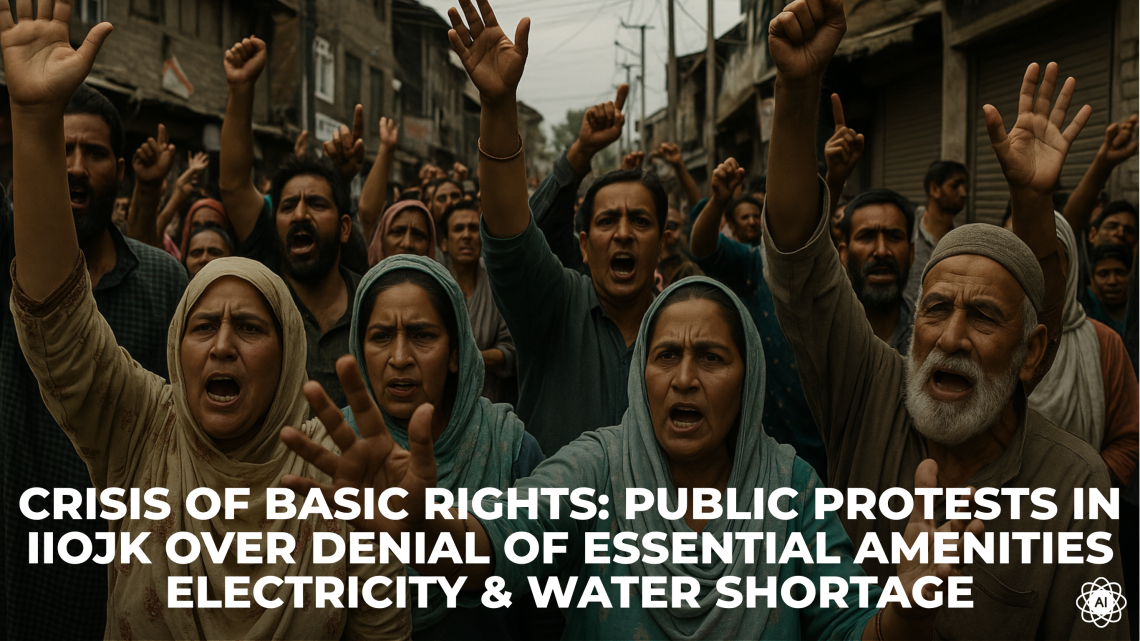
Frustrated and ignored, residents have taken to the streets, demanding immediate action from authorities. Protests have been reported in Srinagar, Anantnag, Pulwama, and Kupwara, with demonstrators calling these shortages a “denial of dignity and life.”
Locals argue that the failure to provide basic amenities like electricity and clean water is not just administrative inefficiency—it’s a form of systemic punishment. Many believe this neglect is part of a larger pattern of discrimination and marginalization of the Kashmiri population under Indian rule.
Rights groups have highlighted how developmental neglect often targets politically sensitive regions, turning essential services into tools of control and subjugation. In IIOJK, this tactic seems to reinforce the broader militarized governance model already in place.
Despite mounting evidence of deprivation, international organizations remain largely silent. The issue goes beyond utilities—it speaks to violations of basic rights, enshrined in both UN Human Rights Charters and humanitarian law. The denial of water and power impacts health, education, and livelihood, intensifying the humanitarian cost of the occupation.
Electricity and water are not luxuries—they are rights. The crisis unfolding in IIOJK demands urgent attention and a unified global response. The international community must pressure India to ensure the provision of essential services and recognize that development without dignity is no development at all.